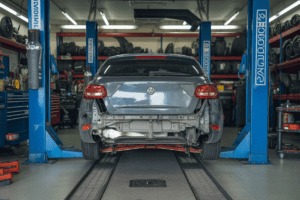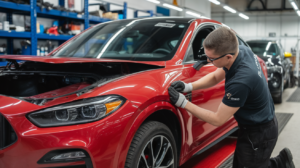
Ever looked at a used car and thought, what if the frame’s messed up but hidden just well enough to fool me? That feeling? It is real. Especially in Dubai, where polished exteriors can hide serious frame damage underneath. You would not see it in a quick walkaround or a casual test drive. But once you’re stuck with a twisted chassis or alignment issues, it is a nightmare. A proper car inspection isn’t about what shines; it’s about what warps, bends, and stays hidden until it costs you.
What Is Frame Damage in a Vehicle?
Let us get something straight: car frame damage is not just a cosmetic issue. It is the kind of problem that can quietly ruin how a vehicle drives, handles, and protects you. Yet, most buyers skip right over it, especially if the car looks clean on the outside. That’s where a proper car frame damage inspection makes all the difference. So what exactly is frame damage? At its core, it refers to any harm done to the structural integrity of a vehicle. This includes chassis distortion, where the metal skeleton underneath gets twisted or bent, and structural compromise, where the car’s ability to absorb impact is weakened. That’s not something a new coat of paint can cover up. Now, not all frame damage is equal:
- Minor frame damage might just mean small surface bends or dents from curb hits or low-speed bumps. Often fixable and not a major safety threat.
- Major frame damage, though, is a whole different story. We’re talking about crumpled sections, broken welds, or warped alignment. This affects suspension, steering geometry, and crash safety. If left unchecked, it turns into an expensive repair job or, worse, a safety hazard.
And here’s the technical side of it:
- Unibody frames (used in most cars and crossovers) integrate the body and frame into one piece. Damage to one part can ripple through the whole structure.
- Ladder frames (found in trucks and some SUVs) are built with two rails and cross-members. These are tougher but still prone to bending if hit hard.
The problem? A lot of this is invisible from the outside. Sellers clean it up. Panels get replaced. Bumpers get repainted. But the skeleton underneath? Still twisted. Unless you do a detailed car frame damage inspection, you will not see what is hiding beneath the shine.
Frame issues are like a crooked foundation in a house. You can decorate the walls all you want, but sooner or later, cracks will show.
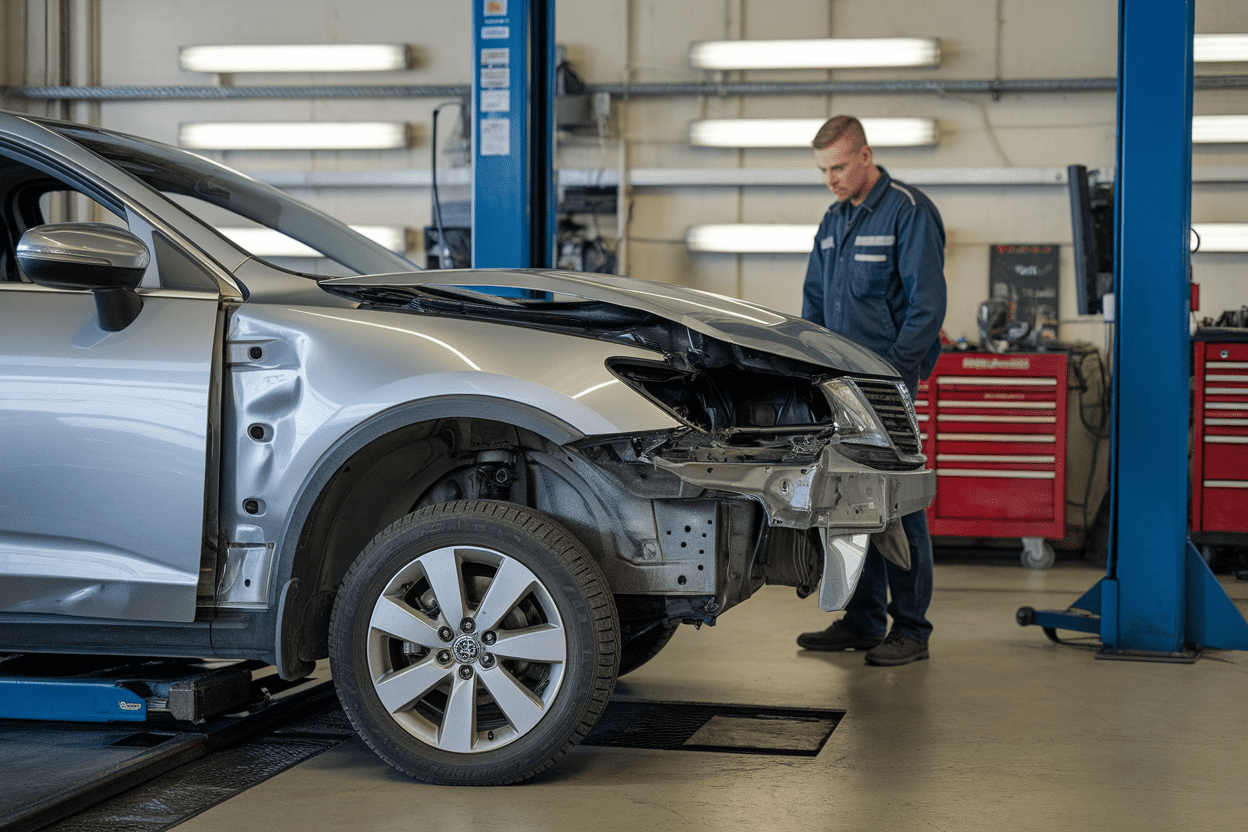
Common Causes of Hidden Frame Damage
You would be surprised how often frame damage hides in plain sight. Most people think it takes a major crash to mess up a car’s structure, but the truth is, even everyday situations can twist the chassis without anyone noticing. That’s why a car frame damage inspection is not optional; it is essential. Let’s break down the causes of frame damage in cars that often slip under the radar:
- Low-speed collisions
Even a small bump into a pillar or parking lot fender-bender can push structural points out of alignment. The body gets fixed, sure, but the frame underneath? Not always. - Undercarriage hits
Drive over a high curb or speed bump too fast, and you might hear a scrape. What you don’t hear is the impact bending parts of the underbody frame, especially in unibody cars. That damage lingers. - Improper jack usage
Jacking the car from the wrong spot, even once, can crush key areas of the frame. Happens more than you think, especially in roadside fixes or quick tire shops in older parts of Dubai. - Corrosion & rust
Not all rust is visible. Humid conditions, sea air, or poor drainage can eat away at the frame silently, weakening its ability to hold shape or take impact. One rainy season, and it starts. - Poorly repaired previous accidents
The car might look new, but if a past accident was fixed on the cheap, chances are the structural alignment is still off. Misaligned panels? Welds that do not match? Those are red flags.
A solid car frame damage inspection checks beneath the surface, not just for what’s broken, but for what’s been hidden. Because by the time frame damage shows up in the way the car drives, it is already too late.
Fact: A 2022 UAE insurance study found that nearly 40% of second-hand cars inspected after resale had undocumented frame damage from minor collisions.
Why Frame Damage Often Goes Undetected
Looks can lie, and when it comes to car frame damage, they usually do. You could walk around a freshly polished car and see nothing wrong, only to find out later the skeleton underneath is bent, misaligned, or worse, unsafe. That’s exactly why skipping a car frame damage inspection is one of the biggest mistakes buyers make in Dubai. Here’s why this kind of damage slips through the cracks so easily:
- Body panels hide the truth
Replaced bumpers. New fenders. A quick respray. All of these can make a previously damaged vehicle look flawless. Underneath, though, the frame may still be warped or twisted beyond spec. - You won’t catch it in a casual walkaround
From the outside, the car might seem fine. Doors close. Lights work. But unless you check alignment, suspension geometry, and undercarriage integrity, the structural issues stay buried. - Cosmetic fixes distract from deeper issues
Sellers often cover bent brackets or cracked welds with undercoat spray or fresh sealant. It looks clean, but the actual frame rails could be off by millimeters, which throws the whole chassis off balance. - No warning lights or alerts
Your dashboard will not tell you if the frame is damaged. Unlike engine or brake systems, structural problems do not trigger sensors. That silence? It is false confidence.
This is what makes frame damage so tricky. It does not shout; it hides. And without a car frame damage inspection, you are left guessing.
Idea: Always ask to lift the vehicle. You can’t judge a car’s bones by its skin.
If something feels too perfect for its price, check the frame before you check out.
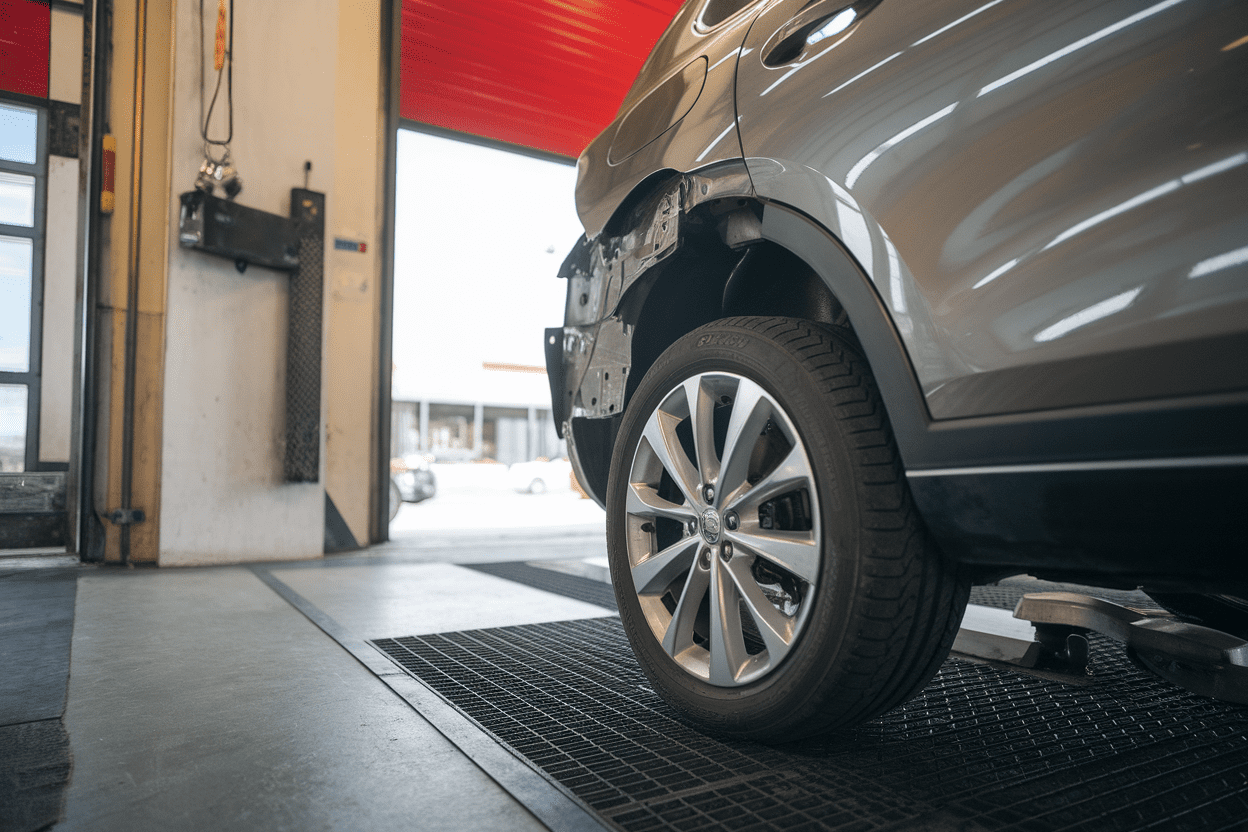
Early Warning Signs of Frame Damage During Car Inspection
Sometimes, the car looks fine until it starts driving like a shopping trolley with one stuck wheel. That weird pull on the highway? The door that needs an extra push to shut? These are not quirks. These are early signs of frame damage in vehicles, and they often show up before the problem is officially diagnosed. If you’re skipping a proper car frame damage inspection, you’re basically driving blind. Let’s break it down. Here’s what to look for, step by step:
Misaligned body panels
You know that moment when one door seems tighter than the other, or the hood does not sit flush? That’s not just bad craftsmanship.
- Check the gaps between doors, fenders, and bumpers.
- If they’re uneven or look “off,” it could mean the frame beneath is slightly bent or twisted.
- In a unibody vehicle, even a small shift can throw off the symmetry.
Steering pull or vibration
You’re driving straight, but the steering wheel thinks you’re on a roundabout. Sound familiar?
- If the steering wheel is not centered, or
- You feel a slight pull or vibration even on smooth roads;
it may be more than an alignment issue.
Bent frame sections affect the wheel alignment angles, camber, caster, and toe. These shifts cause subtle handling issues that worsen over time.
Uneven tire wear
Tires can reveal more than tread depth; they can expose hidden frame issues too.
- If one side of the tire wears down faster, especially on the inner or outer edges,
- It often points to suspension misalignment caused by frame stress.
You can rotate tires all day, but if the underlying chassis geometry is out of shape, the wear will return. This is one of the most ignored yet obvious signs of frame damage in vehicles.
Noisy suspension or creaking under load
You accelerate, creak. Turn a corner, clunk. These sounds are not normal, and no, they do not mean the car just “needs oil.”
- Listen for noises during acceleration, turning, or braking.
- They often come from stressed joints, misaligned struts, or twisted mounts.
Frame bends can shift how the suspension sits. Even a few millimeters off can cause binding and weird stress points that make noise.
Sagging or leaning posture
Park the car on level ground. Take two steps back. Does one side dip lower than the other?
- A lean to one side, even if small, can signal frame imbalance.
- The suspension might be working overtime to compensate for a crooked base.
It’s not just about looks. A tilted frame affects ride comfort, safety, and load balance. Ignore it, and you’re asking for long-term trouble. A proper car frame damage inspection is not about finding dents. It’s about spotting subtle, physical signs that the car is no longer holding itself together the way it should.
Fact: In a 2023 Dubai pre-purchase vehicle audit, over 60% of rejected vehicles had at least two early indicators of hidden frame damage, yet no previous inspection reports picked them up.
If the car drives weird, sounds off, or just “feels wrong,” trust your gut, not the polish.
Physical Inspection Techniques to Spot Frame Damage
You do not need to be a mechanic to catch frame damage, but you do need to look beyond the paint. Anyone buying a used car in Dubai should know how to check the car frame during inspection. Because once the deal is done and the cracks show up later… fixing a bent chassis is not cheap. That’s why a proper car frame damage inspection is your first line of defense, not a final afterthought.Here’s how to spot the clues with your own eyes and a bit of curiosity:
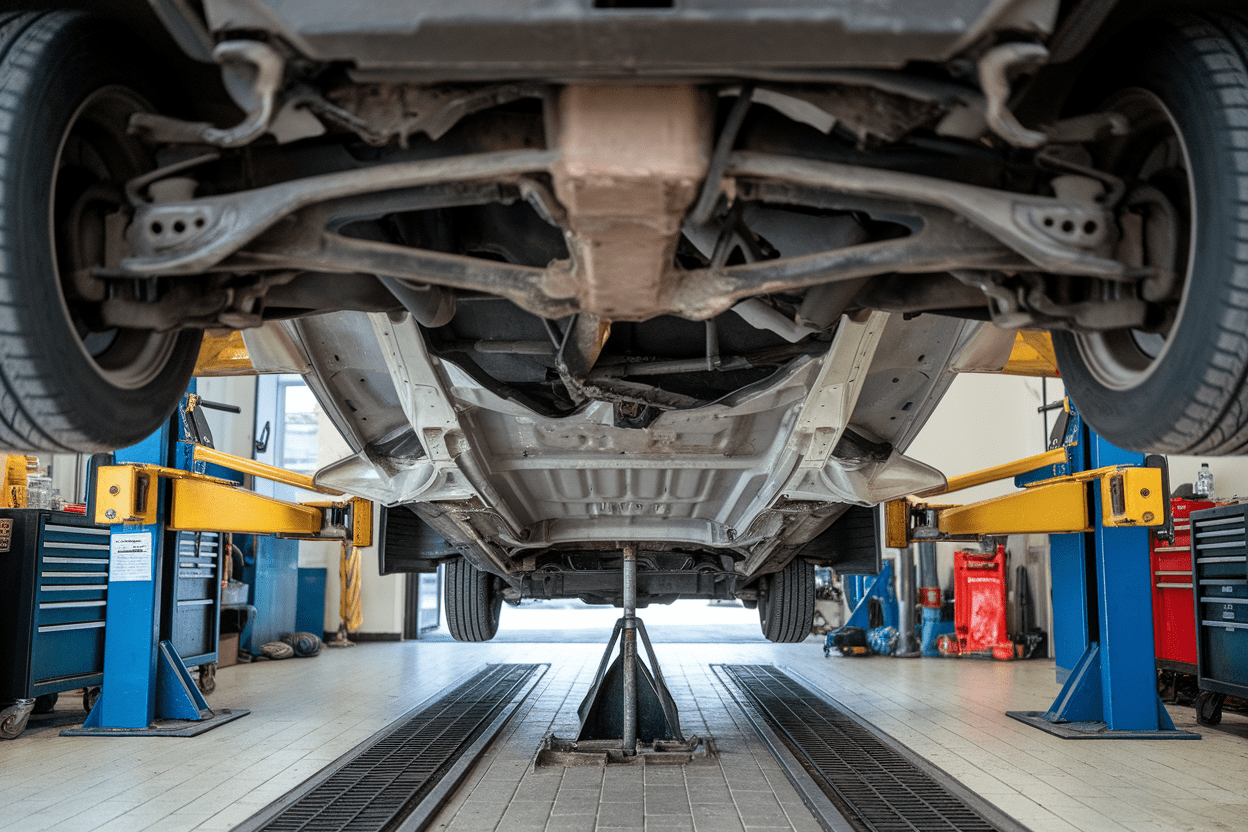
Visual frame & undercarriage check
Crawl under the car. Yes, actually get under it. Most frame issues hide where people never bother to look.
- Look for scratches, dents, or cracks in the welds.
- Bent or rusted frame rails, especially near jack points, are a giveaway.
- Also check for missing bolts or oddly fresh-looking parts in one section, which means something’s been messed with.
Tip: Use your phone’s flashlight. Focus around the control arms, crossmembers, and frame rail edges.
Check wheel alignment & suspension geometry
If one wheel looks like it is doing its own thing, trust your eyes.
- Misaligned wheels are more than bad alignment.
- They can signal twisted suspension mounts or a warped subframe.
- Also look at wheel spacing from the fender. If one tire is tucked in or poking out, it’s off.
Frame damage alters the caster, camber, and toe angles. Even half a degree off affects how the car moves.
Measure panel gaps
You do not need fancy tools here. A small ruler or caliper works just fine.
- Measure the gap between doors, hood, and trunk panels.
- Gaps should be even,if one side is 4 mm and the other is 8 mm? Not good.
- Run your finger along the edges. Feel for dips or bulges.
Idea: Open and close the doors. If one needs force or pops out, it’s not just the hinge.
Trunk & hood misfit
Pop the trunk. Open the hood. Now check how they close. If you have to slam them or they sit slightly tilted, it’s not a fluke.
- A trunk lid that sits high, or
- A hood that won’t line up with the fenders, is often due to misaligned hinge points from frame stress.
People repaint over this stuff. But they cannot fake the mechanical fit.
Use a straight-edge or laser
This one’s underrated but powerful. Carry a straight metal ruler or even a laser level.
- Place it along the chassis rails; you’ll instantly see if there’s a bend.
- A slight inward bow or wave means the frame took a hit and was never corrected.
- Professionals use frame machines, but you can still catch small irregularities with basic tools.
Car frame damage inspection is not guesswork; it is geometry, physics, and attention to the stuff others miss. If something feels uneven, creaky, or just oddly aligned, take a second look. Because once the car starts pulling to one side on Sheikh Zayed Road,you’ll wish you had checked underneath instead of just admiring the paint job.
Use of Diagnostic Tools in Frame Inspection
Not all damage can be seen with the naked eye. Some of it hides deep in the structure, masked behind perfect paint jobs and straight-looking panels. That’s where frame inspection tools for cars step in. These tools are designed to detect problems that visual checks alone would miss during a full car frame damage inspection. Let’s break down the tools professionals use and why they matter:
- Frame machine & measuring systems
These are heavy-duty tools that physically measure the car’s frame dimensions against factory specs. If even a few millimeters are off, the machine will catch it. Technicians can then straighten the frame using hydraulic force. Think of it as a giant straightening rack; it tells you where things went wrong and helps correct it.
- Laser alignment tools
These tools are used to check the position of the wheels and suspension points.
Even the slightest frame misalignment can throw the whole geometry off; laser readings catch what rulers can’t. If a car pulls to one side or feels unstable, these tools often reveal the real reason.
- Paint depth gauges
Ever wonder if that “original paint” is actually covering up something? This tool tells you.
It measures how thick the paint layer is; if one area is thicker than the rest, it usually means there was body filler or a repaint. Resprayed sections can be a sign of past impact or frame repair work done in secret.
- OBD diagnostic scanners
While these don’t detect frame issues directly, they’re still useful.
A hard impact can cause electronic sensors to misfire, especially airbag modules or suspension codes.
Plug in an OBD tool, and you might find hidden crash data that was never cleared.
When you’re going in for a proper car frame damage inspection, make sure the garage uses these tools, not just a flashlight and a guess. These devices do not lie. They uncover the hidden stuff that sellers hope you’ll miss.
Fact: In a 2024 Dubai auto report, cars inspected with both laser and paint-depth tools were 4x more likely to reveal past accident damage compared to standard walkaround checks.
How Professionals Detect Hidden Frame Issues
Most frame damage does not scream for attention; it whispers through small misalignments, twisted angles, and quiet resistance in places you wouldn’t normally check. That’s why a professional car inspection for frame damage is nothing like a quick walkaround or a test drive. The process is deeper, more technical, and based on real-world measurements, not assumptions. Here’s what trained technicians actually do during a proper car frame damage inspection:
- Multi-point inspection
This is not a checklist printed from Google. It’s a hands-on, section-by-section review of every part that could have taken impact: frame rails, strut towers, subframes, and mounting points. Technicians check each area visually and mechanically to look for misalignment, bends, or signs of poor repair.
- Structural measurements
Using frame machines or digital measuring arms, the structural dimensions are recorded and compared against manufacturer data.
Even if a car looks perfect, if one point is a few millimeters out of spec, it means something shifted, and the frame’s integrity is now questionable.
- Lift & ramp diagnostics
With the car raised on a ramp or hydraulic lift, pros can access the undercarriage, crossmembers, and weld lines. From underneath, they’ll look for damaged pinch welds, rusted seams, or signs of stress like cracked paint or twisted mounts.
- Use of factory specs to compare tolerances
Every vehicle has published OEM measurements: length, width, and diagonal frame points. A car frame damage inspection checks those specs to the millimeter. Any deviation tells the tech there’s been an impact or improper repair work.
A true professional car inspection for frame damage is built on precision, experience, and knowing where to look. It is not about paranoia; it’s about proof. If you’re putting real money into a car in Dubai, it makes more sense to invest in facts, not just surface impressions.
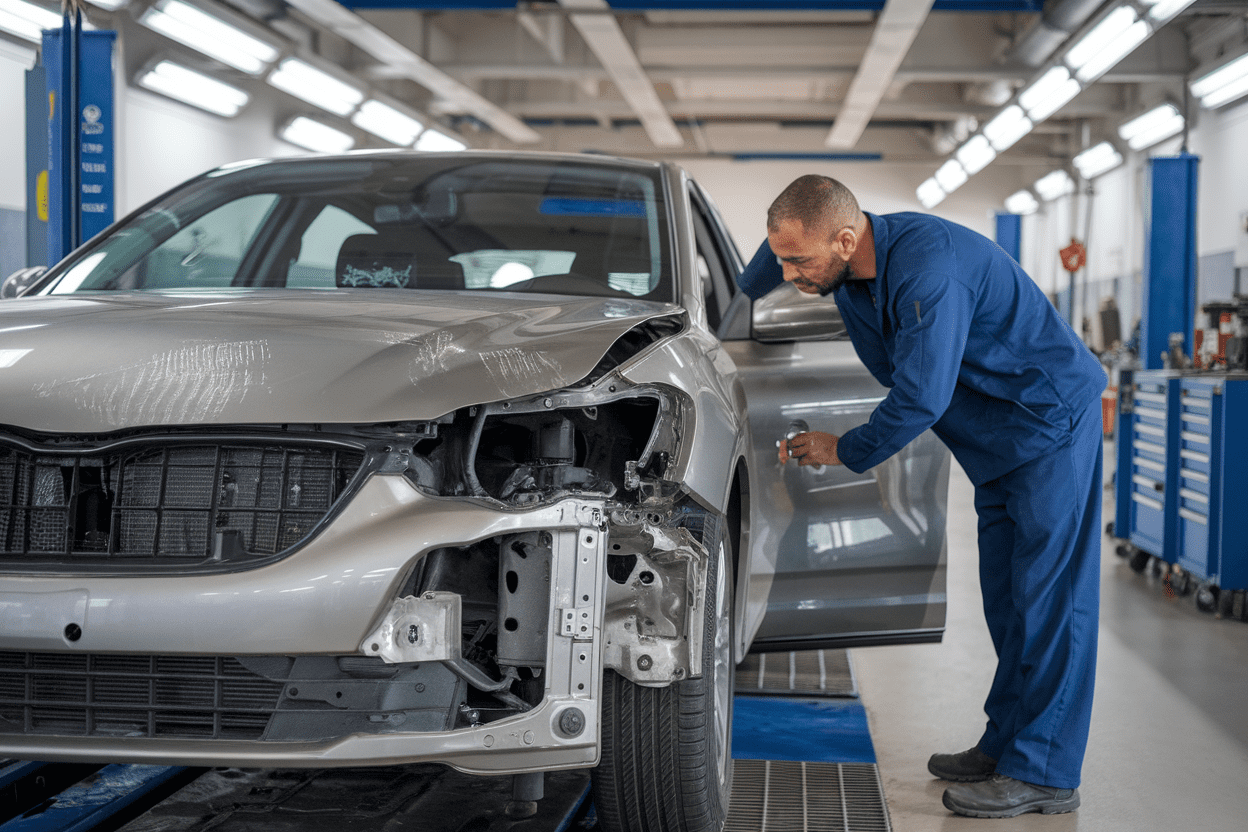
What to Do If You Suspect Frame Damage
Something just feels off. Maybe the car pulls slightly. Maybe that rear panel does not quite line up. You’re not a mechanic, but your gut says something’s not right. Before you shake it off, here’s what to do next. Because if the frame is compromised, acting early can save you a fortune later. A proper car frame damage inspection will either confirm your concern,or give you peace of mind. Let’s talk action steps, one by one:
- Book a second opinion
Even if the first inspection looked clean, bring it to a different shop. A fresh set of eyes may spot what others missed. Choose a garage that specializes in structural diagnostics, not just general service.
- Ask for repair records
If the seller’s being vague, that’s a red flag. Request any body shop paperwork, insurance claims, or frame reports. Repaired damage isn’t the problem,hidden damage is.
- Request a frame alignment check
Ask the shop to run full frame measurements. They’ll compare key chassis points against factory specs. This step alone can reveal structural shifts even when the body looks fine.
- Estimate repair costs
If damage is confirmed, get a breakdown of frame damage repair options. Some can be fixed with alignment pulls. Others? Full replacements.
Then compare that with the car’s market value. If the numbers do not add up,it’s time to walk away.
Frame issues aren’t always deal-breakers,but they are never “minor.” Use the right tools, ask the hard questions, and never rely on surface impressions alone.
Buying a used car in Dubai? Looks will fool you. Fresh paint, shiny tires, spotless leather seats,they don’t mean a thing if the car frame is twisted underneath. The truth is, frame damage rarely shows itself unless you go looking for it. And once you’re stuck with a car that leans, rattles, or steers like a boat, regret kicks in fast. That’s why a full car frame damage inspection is not a luxury,it’s protection.
So here’s the move: Don’t gamble with your money or your safety. Book a professional inspection that includes frame diagnostics, alignment checks, and undercarriage review. Get real answers, not assumptions. Whether you’re buying, selling, or just unsure,get the frame inspected before you sign anything.