
Find the cause of a braking problem
Car Brake Diagnostics Dubai
If braking feels weak, pulls to one side or makes a new noise, arrange a brake check. Inspector reviews pedal response, accessible hydraulic parts, brake hardware, warnings and related tire and wheel condition, then explains any further tests or repairs needed.
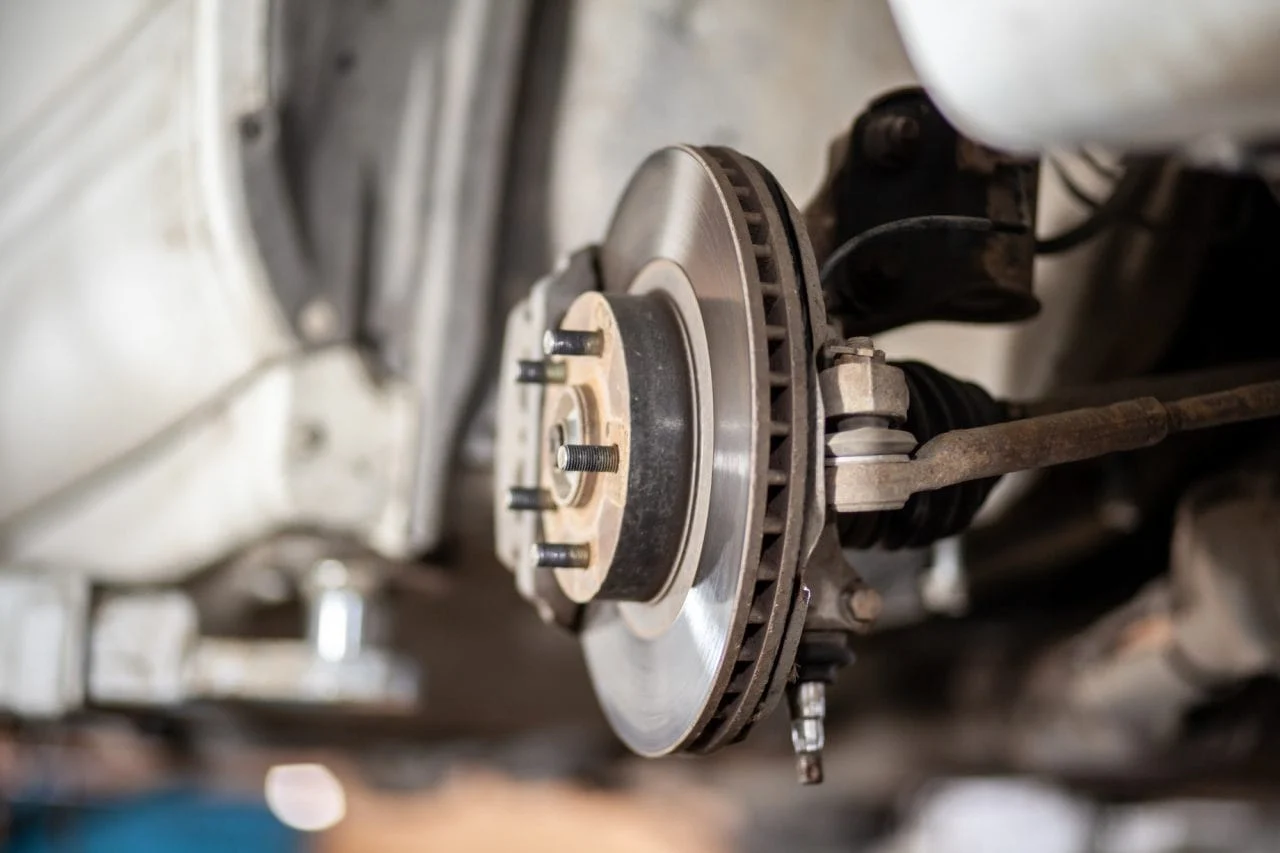
Do not continue driving with a sinking pedal, major fluid leak, grinding with reduced braking, severe pull, smoke or extreme heat at a wheel, a red brake warning, or noticeably longer stopping response.
Four braking layers
Several faults can cause a braking problem
A braking complaint can come from the pedal and hydraulic system, the components at the wheels, the tires, or electronic safety controls. Inspector follows that path to determine where the evidence changes. Hybrid and electric vehicles can also combine regenerative and conventional braking, so the exact vehicle design matters.
A useful diagnosis asks where the chain changed. A soft pedal is not the same as an ABS warning. A vibration only during braking points to different tests than a vibration at a steady speed. Noise does not prove that pads alone are worn, and a stored wheel-speed sensor code does not prove the sensor itself has failed.
Driver input
Pedal, booster assistance, pushrod relationship, master cylinder, switches, and electronic pedal interpretation where fitted.
Pressure path
Fluid, reservoir, pipes, flexible hoses, hydraulic control unit, valves, calipers, wheel cylinders, and leak integrity.
Friction and heat
Pads, shoes, discs, drums, hardware, parking-brake mechanisms, bearings, contamination, wear, and temperature behavior.
Electronic control
Wheel-speed sensors, tone rings, wiring, ABS, traction control, stability control, steering and yaw inputs, network data, and calibration.
Pedal-to-road sequence
How a brake problem is checked
Tests are chosen around the complaint and the vehicle. A car with a hydraulic leak should not be road-tested merely to confirm that braking is poor. A vehicle with an intermittent warning may need captured scan data, wiring checks, and a controlled reproduction after basic safety checks.
Interview
Record pedal feel, noise, vibration, warning lights, speed, temperature, weather, recent service, and any impact.
Safety check
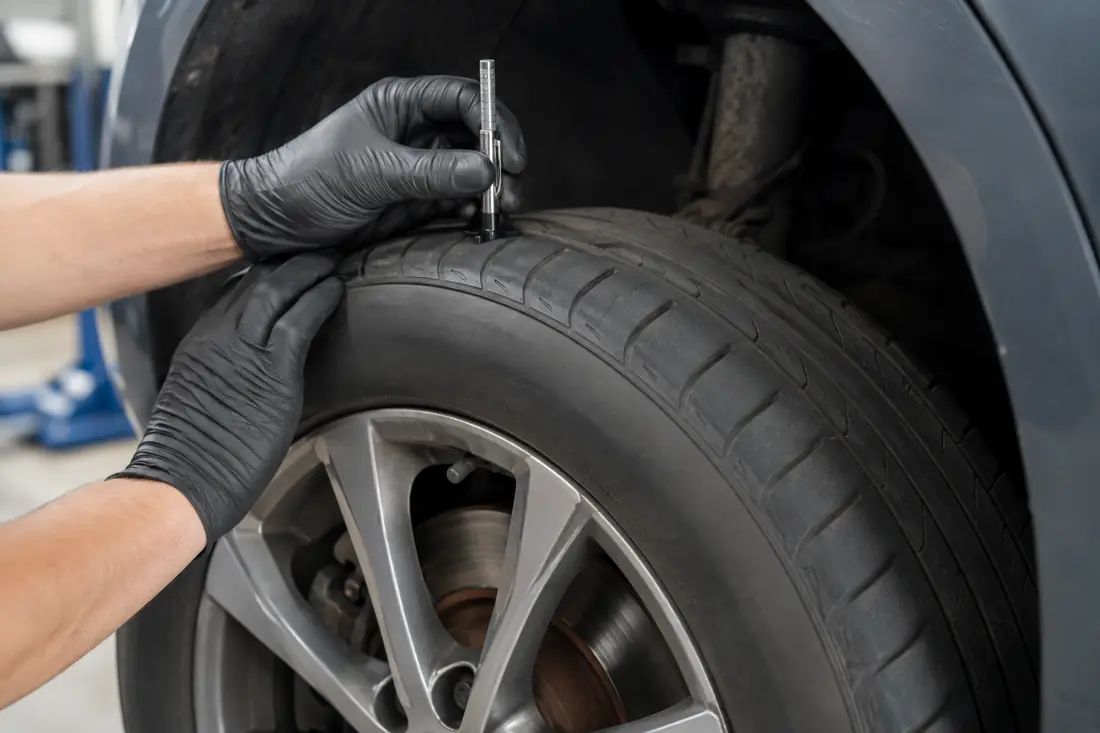
Inspect fluid level, leaks, tires, visible damage, pedal behavior, and overheated or loose components.
Wheel inspection
Assess friction thickness, disc or drum condition, hardware, movement, hose condition, and side-to-side differences.
System data
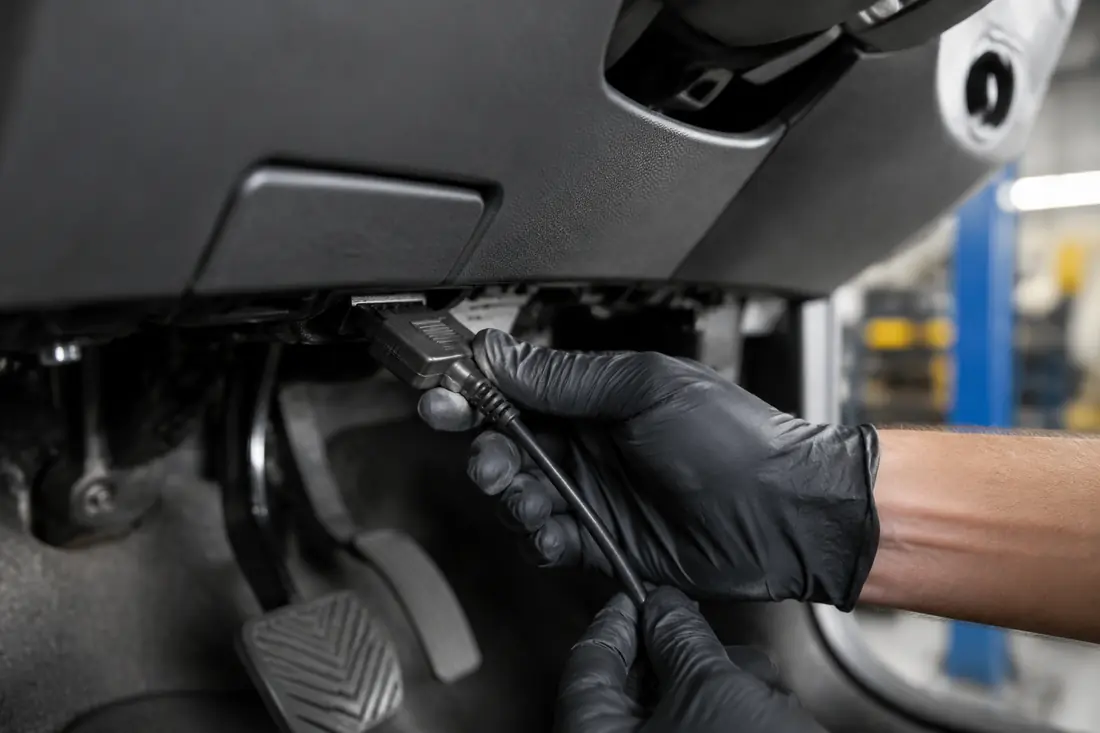
Read all related modules, freeze-frame records, live wheel speeds, voltage history, and network faults.
Controlled test
When safe, reproduce the complaint and compare pedal, stopping behavior, temperatures, and sensor response.
Decision
State the confirmed fault, contributing conditions, limitations, safe-to-drive result, and repair or further-test plan.
Symptoms are not diagnoses
Match the complaint to the confirming test
What gets inspected
The component map
Brake diagnostics may need measurements and tests as well as a visible pad check. The vehicle, symptom, access and safety determine the work possible.
Foundation brake hardware
Disc systems use pads, calipers, pistons, slides, brackets, discs, shields, hubs, bearings, hoses, and retaining hardware. Drum systems add shoes, springs, adjusters, wheel cylinders, backing plates, and drums. Wear must be assessed across each friction surface because inner and outer or left and right parts can differ.
Hydraulic supply and control
The reservoir, specified brake fluid, master cylinder, rigid pipes, flexible hoses, junctions, proportioning functions, and ABS hydraulic unit form the pressure path. Low fluid can reflect a leak or normal displacement as friction parts wear, so topping up without finding the reason can hide evidence. Moisture and boiling concerns require the correct test and vehicle procedure, not a conclusion based on appearance alone.
Booster and pedal assistance
Vacuum boosters, electric vacuum pumps, hydraulic boosters, integrated brake-control systems, pedal sensors, and switches vary by model. A hard pedal may involve lost assistance, a mechanical restriction, vacuum supply, pump control, or integrated system fault. Pedal height and feel must be interpreted with the exact architecture.
ABS, traction, and stability control
Wheel-speed data lets the controller identify slip. Tone rings may be visible, built into a bearing, or magnetically encoded. Stability control may also use steering-angle, yaw-rate, lateral-acceleration, brake-pressure, and engine or powertrain information. One implausible shared input can illuminate several warnings, so every relevant module and data relationship matters. Owners can use the warning light diagnosis page to identify what information to record before the assessment.
Parking brake and automatic hold
Parking brakes can be cable-operated, drum-in-hat, caliper-integrated, or electrically actuated. Electronic parking brakes may require service mode for approved repair procedures. Auto-hold behavior can involve brake control, door and seat-belt status, transmission information, and other network inputs. Owners should not force motors or bypass interlocks.
Hybrid and electric braking
Regenerative braking uses the electric drive system to slow the vehicle and recover energy, while friction brakes remain essential for stronger stops, low-speed control, stability intervention, and backup. Blended systems can change pedal feedback and wear patterns. High-voltage and electronically integrated brake systems require vehicle-specific safety procedures and should not be treated as conventional DIY work.
Drive or recover
A brake warning needs a decision, not reassurance
Stop using the vehicle
Choose recovery for a sinking or very soft pedal, major fluid loss, reduced stopping force, severe pull, smoke, burning odor with heat, grinding plus changed performance, damaged brake pipe or hose, loose wheel-area component, or a red warning accompanied by a brake symptom.
Move only to immediate safety
If a warning appears while driving, keep control, reduce speed without abrupt inputs, and stop at the nearest safe location. This is not permission to continue to a workshop. Hazard, traffic, and vehicle behavior determine the safest immediate action.
Arrange prompt diagnosis
An amber ABS or stability warning with apparently normal base braking may mean those support functions are unavailable. The vehicle has not been inspected, road conditions can change, and another fault may be present. Avoid assumptions and arrange assessment promptly.
Never test stopping performance on public roads, drive repeatedly to “see if the light clears,” clamp hoses, open hydraulic circuits, enter parking-brake service mode without the correct procedure, or work beneath an unsupported vehicle. Brake and high-voltage systems can create serious injury and control risks.
Location limits
Mobile checks and workshop tests serve different purposes
A mobile assessment can be valuable when the vehicle may be unsafe to move. It may identify an obvious leak, damaged hose, overheated wheel area after safe cooling, related warning information or a visible mechanical concern. Customers searching for brake diagnostics near them can share the symptoms and location first. Inspector can then advise whether mobile triage is suitable or whether recovery to the Al Quoz 4 workshop is the safer and more useful option.
It cannot replace every workshop procedure. Wheels may need removal. Lift access may be necessary to inspect pipes, hoses, mounts, and suspension. Disc thickness, runout, drum condition, hydraulic pressure, wheel-bearing behavior, and electronic waveforms may require controlled access and equipment. A safe road test may be needed for a speed-dependent warning, but only after the foundation brakes pass basic checks.
Some electronic brake systems require a stable power supply, vehicle-specific service mode, guided bleeding, coding, initialization, or calibration. These steps depend on the exact model and repair, and are not automatically included in a basic scan. A mobile result should state what was checked and what remains unconfirmed.
Diagnosis before quotation
Repair costs depend on the fault and work required
A generic price list can mislead because the same symptom can lead to a small wiring repair, friction service, hydraulic repair, bearing replacement, control-unit testing, or further fault reproduction. Diagnostic cost changes with access, wheel removal, intermittent behavior, required measurements, electronic architecture, and whether the vehicle must be recovered.
Repair cost depends on the exact vehicle specification, affected axle and components, extent of heat or metal damage, fluid and consumables, original or alternative parts choice, labor access, service-mode requirements, hydraulic bleeding, coding or calibration, and post-repair tests. A seized caliper can damage pads and a disc. A failed bearing can affect a wheel-speed signal. An incorrect previous installation can add corrective work.
Repair decisions must preserve axle balance and system compatibility
A written estimate should follow the diagnostic evidence. It should state whether diagnosis, parts, fluid, axle-related work, wheel alignment, programming, calibration, road testing and taxes are included, and identify anything that still depends on disassembly. This helps the customer compare the recommended work without confusing an initial diagnosis with a final repair price.
Friction parts are commonly considered by axle because unequal material, condition, or thickness can affect braking balance, but the exact replacement rule follows vehicle instructions and measured condition. Discs or drums should be assessed against service information, surface condition, and dimensions. A component should not be machined or reused merely to reduce the estimate if it cannot meet the applicable limit.
Electronic parts require equal care. A wheel-speed code can result from wiring, connector condition, bearing play, an encoded ring, tire mismatch, power supply, or module interpretation. Hydraulic control units and integrated brake modules can be expensive, so circuit and mechanical evidence should support the decision before replacement.
Verification
A repair is incomplete until the original complaint is retested
Post-repair checks should match the fault and procedure. They may include leak inspection, pedal reserve and stability, fluid level, friction and hardware installation, wheel fastener checks, free wheel movement, parking-brake operation, warning status, live wheel-speed comparison, code recheck, and applicable bleeding or calibration confirmation.
A controlled road test may verify straight stopping, noise, vibration, ABS or stability warning status, and normal pedal behavior. It should occur only after static safety checks. The final record should distinguish a verified repair from an unrelated advisory and should explain any symptom that could not be reproduced.
Cases that change the plan
Heat, water, storage, towing, and previous work matter
Heat and load can hide after cooling
Brake behavior can change after conditions that are easy to overlook. Long descents, repeated heavy stops, towing, or a dragging component can create heat that changes pedal feel, friction response, fluid behavior, and component dimensions. The inspection should consider odor, discoloration, surface condition, side-to-side temperature difference, and the conditions that preceded the event. A cool vehicle may no longer display the original problem.
Check after water exposure or storage
After washing, deep water, rain, or long storage, light surface corrosion and temporary noise can occur, but persistent grinding, pull, binding, or reduced response still needs inspection. Water exposure can also affect connectors or hidden parking-brake mechanisms. The diagnosis should not dismiss a warning simply because it appeared after wet conditions.
A vehicle that has been parked for weeks may develop corrosion, sticking mechanisms, low battery voltage, or tire-related vibration.
Specification changes the correct limits
A towed or heavily loaded vehicle places different thermal demands on the brakes. Performance packages, carbon-ceramic discs, oversized wheels, modified suspension, or nonstandard tire sizes require exact specification and appropriate service information. Generic measurements or parts assumptions may be wrong.
Previous repairs and collisions widen the inspection
Previous repairs are another major clue. Incorrect pad fit, trapped hoses, dirty mounting faces, reused hardware where replacement is specified, unsuitable friction materials, lost sensor routing, incomplete bleeding, missing service mode, or unperformed calibration can create new symptoms. This does not prove the earlier work was wrong, but it changes what must be checked.
Post-collision diagnosis should include visible and hidden effects on pipes, hoses, hubs, bearings, wheel-speed targets, wiring, suspension, steering, wheels, tires, and control-module data. A car can stop during a short yard test and still have a fault that appears under speed, load, heat, or stability intervention. The final safe-to-drive decision must reflect what was actually tested.
Common questions
Brake diagnostic answers for owners
Can I drive with the ABS light on?
An amber ABS light may indicate that anti-lock assistance and related stability functions are unavailable even if the base brakes seem normal. Because the cause and other brake conditions are unknown, arrange prompt diagnosis. If pedal feel, stopping, pull, noise, heat, or a red warning also changes, stop and recover the vehicle.
Does a brake warning always mean worn pads?
No. Different vehicles use fluid-level, parking-brake, pad-wear, hydraulic, ABS, stability, and integrated brake warnings. The symbol, color, message, model, and accompanying symptoms determine the correct checks.
Why does the steering wheel shake only when braking?
Brake-related disc or hub variation is possible, but loose steering or suspension parts, tires, wheels, bearings, and ABS behavior can contribute. The relationship to speed, pedal pressure, temperature, and measured runout helps separate the sources. A separate tire and wheel inspection may be appropriate when vibration also occurs without braking.
Can a scanner tell which brake part to replace?
No. A scanner reports codes and data from monitored systems. It cannot directly measure every friction surface, hydraulic leak, mechanical movement, connector fault, or mounting condition. Codes must be tested in context.
Why is one wheel much hotter than the others?
A sticking caliper, restricted hose, parking-brake issue, bearing condition, or operating pattern may cause unequal heat. Do not touch a hot wheel or brake and do not continue driving if there is smoke, odor, drag, or changed braking.
Can old brake fluid cause a soft pedal?
Fluid condition and boiling can contribute, but a soft pedal can also involve air, leakage, hose behavior, adjustment, master-cylinder operation, or the hydraulic control system. Fluid replacement alone should not be used to hide an unresolved pedal problem.
Are electric vehicle brakes diagnosed differently?
The friction components share familiar principles, but regenerative blending, integrated control, electric parking brakes, and high-voltage safety change the test plan. Exact procedures depend on the vehicle and should be followed by trained personnel.
Can mobile brake diagnostics complete a repair decision?
Sometimes it can identify a clear fault or recovery need. Wheel removal, lift access, precise measurements, hydraulic tests, guided bleeding, service mode, or a controlled road test may still require workshop conditions.
Report the stopping change before moving the car
For car brake diagnostics Dubai motorists can arrange, share the vehicle details, dashboard message, pedal behavior, noise or vibration conditions, recent work, and current location. If stopping response is reduced or uncertain, leave the vehicle parked and request the safest next step.