
Car inspection for insurance claims in Dubai
An inspection for an insurance claim records accessible damage and vehicle condition, and identifies concerns that need further testing. Ask your insurer which records and report format it requires before booking. Inspector can explain technical findings; the insurer decides coverage, liability, repair approval and settlement.
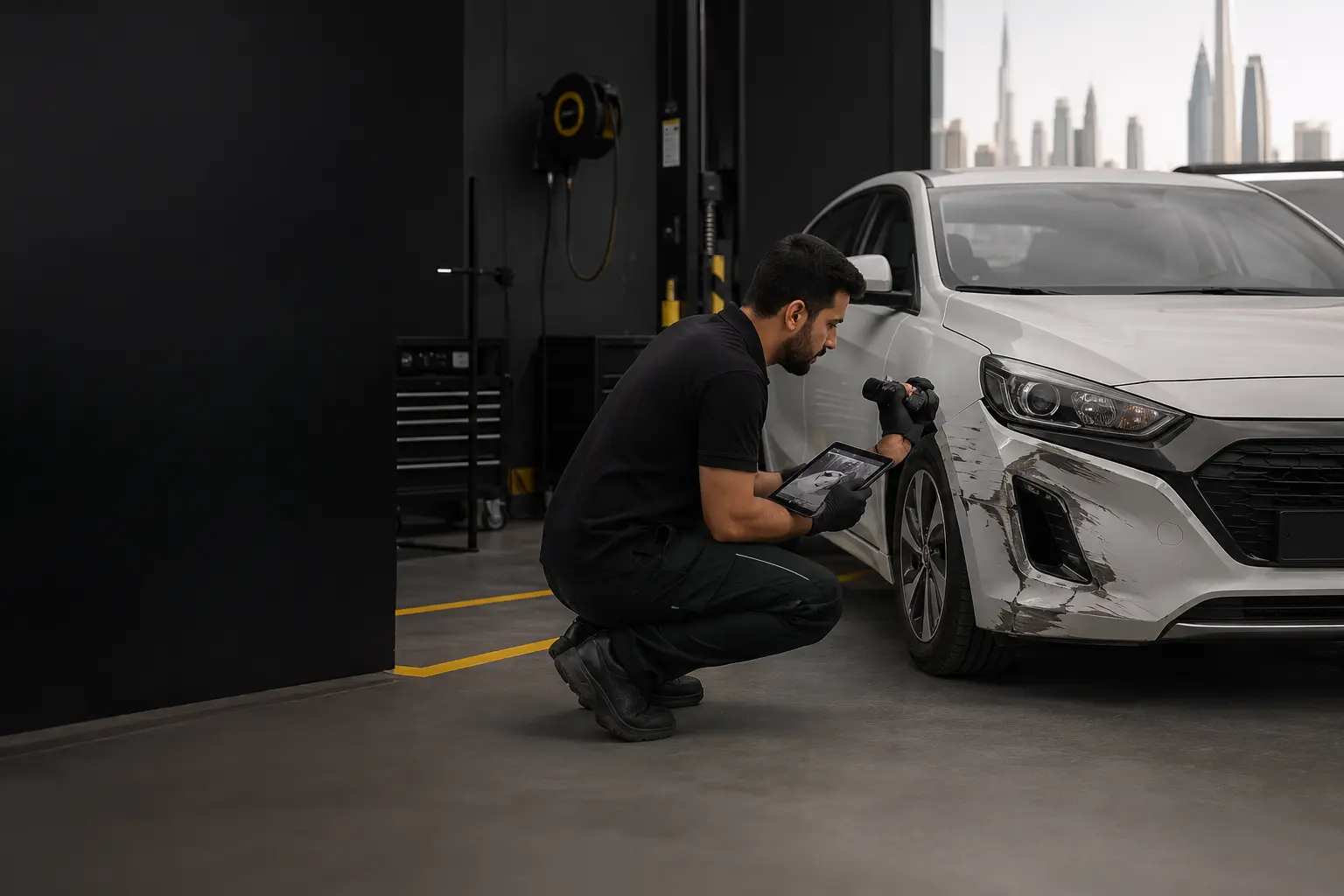
Car Inspection For Insurance Claims Starts With Purpose
Insurance-related requests can sound similar while requiring different access, records, and report wording. The purpose should be agreed before the vehicle is moved, dismantled, cleaned, or repaired.
Pre-Policy Condition
This may record identity, mileage, visible condition, fitted equipment, and photographs requested by the insurer. Inspector cannot confirm that a private report will replace the insurer’s own form, app, surveyor, or approved inspection channel. Ask the insurer which evidence is required before booking.
Post-Accident Condition
The focus may include impact location, accessible body and structural areas, wheel position, fluid loss, warning messages, restraint evidence, and affected mechanical or electrical systems. A separate car accident inspection is suitable when you need broader checks of collision damage and previous repairs.
Theft Or Vandalism
Locks, glass, trim, wiring, controls, missing parts, interior disturbance, and current operating condition may be documented where safely accessible. Do not clean, repair, reconnect, or disturb areas that police or the insurer may still need to examine. Follow their instructions first.
Repair-Stage Review
The useful evidence changes after dismantling or repair begins. Removed panels may improve access, while sanding, paint, replacement parts, cleared codes, and completed geometry work can conceal the original state. Pre-repair photographs, estimates, parts records, and invoices become essential comparison material.
Technical Disagreement
The inspection brief should state the exact disputed vehicle question, such as whether a current symptom is supported by impact evidence or whether another measurement is needed. A private vehicle inspection records technical observations. It does not interpret policy wording or resolve a legal or insurance dispute.
Keep Vehicle Findings Separate From Claim Decisions
A strong report is useful because it is specific about evidence and limits. It should never be presented as a guaranteed approval, official certificate, loss-adjuster decision, repair authorization, or promise of compensation.
What The Inspection Can Do
- Match the vehicle to the supplied identity and claim brief.
- Record visible and accessible condition at a stated date and repair stage.
- Connect an impact area or complaint with systems that may require attention.
- Use suitable scans, measurements, and functional checks when included and safe.
- Record findings, unanswered questions, test limits and recommended checks.
- Help the owner discuss vehicle condition with the repairer or insurer.
What Remains Outside The Inspection
- Policy interpretation, coverage, excess, liability, or settlement calculation.
- Police reporting, RTA testing, government certification, or legal opinion.
- Insurer appointment of a loss adjuster, surveyor, or approved repairer.
- Guaranteed acceptance of a private report, photograph set, or quotation.
- Proof that every hidden condition has been found without appropriate access.
- Repair approval or a promise that a vehicle will pass a later official test.
Check whether it is safe to approach or move the vehicle
Photographs and claim paperwork do not establish that a damaged vehicle is safe to drive. If the condition is uncertain, ask for qualified recovery guidance instead of creating a second hazard or causing more damage.
Stop when braking, steering, wheel position, visibility, or overall control has changed. Also stop for major fluid loss, smoke, overheating, a burning smell, exposed wiring, severe vibration, tire contact, an airbag concern, a high-voltage warning, or loose parts that may detach.
Cracked lamps, damaged glass, warning lights, underbody contact, unusual noises, shifted panel gaps, and unclear leaks need assessment based on the exact vehicle and event. Stable movement over a few meters does not prove road safety.
Take safe exterior photographs, record dashboard messages, retain incident documents, and note any towing or battery disconnection. Avoid clearing codes, washing away evidence, opening hot systems, or authorizing nonessential dismantling before insurer instructions are understood.
Build The Answer In An Order Another Reader Can Follow
The procedure changes with the vehicle and claim question, but the reasoning order should remain traceable. Each conclusion needs a source, and every unresolved point needs a named next step.
Identify
Match VIN, registration, model, year, mileage, specification, options, and supplied records.
Preserve
Record the starting condition, repair stage, warning messages, damage areas, and evidence already changed.
Trace
Follow the event through body, structure, wheels, mechanical systems, restraints, and electronics.
Confirm
Use suitable visual checks, scanning, measurements, lift access, or specialist tests within the agreed scope.
Direct
Separate findings from possibilities, state limits, and recommend the next safe technical action.
The first record should include the reported event in the customer’s own terms. It should also say what changed immediately afterward, whether the vehicle was driven or towed, when warnings appeared, what repairs have started, and which documents were supplied. This context helps distinguish a confirmed observation from an assumption about timing or cause.
A scan may retrieve stored conditions, network status, freeze-frame data, or module information. Those results must be interpreted with voltage history, repair work, battery disconnection, mileage, and physical evidence. A diagnostic trouble code identifies a condition detected by a control unit. By itself, it does not prove the failed component, when the condition began, whether the incident caused it, or whether replacement is justified.
Follow The Event Beyond The Most Visible Panel
The damaged surface is only the starting location. Impact direction, mounting points, vehicle construction, current behavior, and warning information determine which connected areas deserve attention.
Body And Accessible Structure
Panel gaps, closures, lamps, glass, paint evidence, fasteners, visible seams, floors, aprons, crossmembers, reinforcements, and mounting areas may be reviewed where access permits. Paint thickness can support a repair map, but repaint alone does not prove severe structural damage.
Wheels, Tires, Steering, And Suspension
Tire injury, wheel deformation, wheel position, arms, joints, struts, hubs, steering behavior, and accessible mounting areas can support a decision about repair, alignment, or deeper geometry measurement. A vehicle that tracks straight can still have a local defect.
Cooling, Fluids, And Powertrain
Radiator support, heat exchangers, hoses, reservoirs, fans, undertrays, mounts, exhaust, and drivetrain behavior may matter after a front, rear, or underbody event. Leaks should be located before parts are assigned, and an overheating vehicle should not be driven.
Restraints And Occupant Protection
Airbag warnings, visible deployment, seat belts, pretensioners, seat wiring, occupancy sensing, and impact-related trim damage require model-specific procedures. A warning-free instrument cluster does not prove that every restraint component, connection, or prior repair is correct.
Electrical, Lighting, And Driver Assistance
Harnesses, grounds, lamps, modules, parking sensors, cameras, radar brackets, and stored faults may add context. Bumper, windshield, wheel-alignment, or bracket work can change calibration requirements. Calibration is not added automatically; the configuration and repair trigger must support it.
Hybrid And Electric Vehicle Areas
Battery enclosure impact, high-voltage warnings, orange-cable damage, isolation concerns, charging symptoms, and thermal-system damage require qualified procedures. Do not touch exposed high-voltage parts or assume that a vehicle is safe because it still powers on.
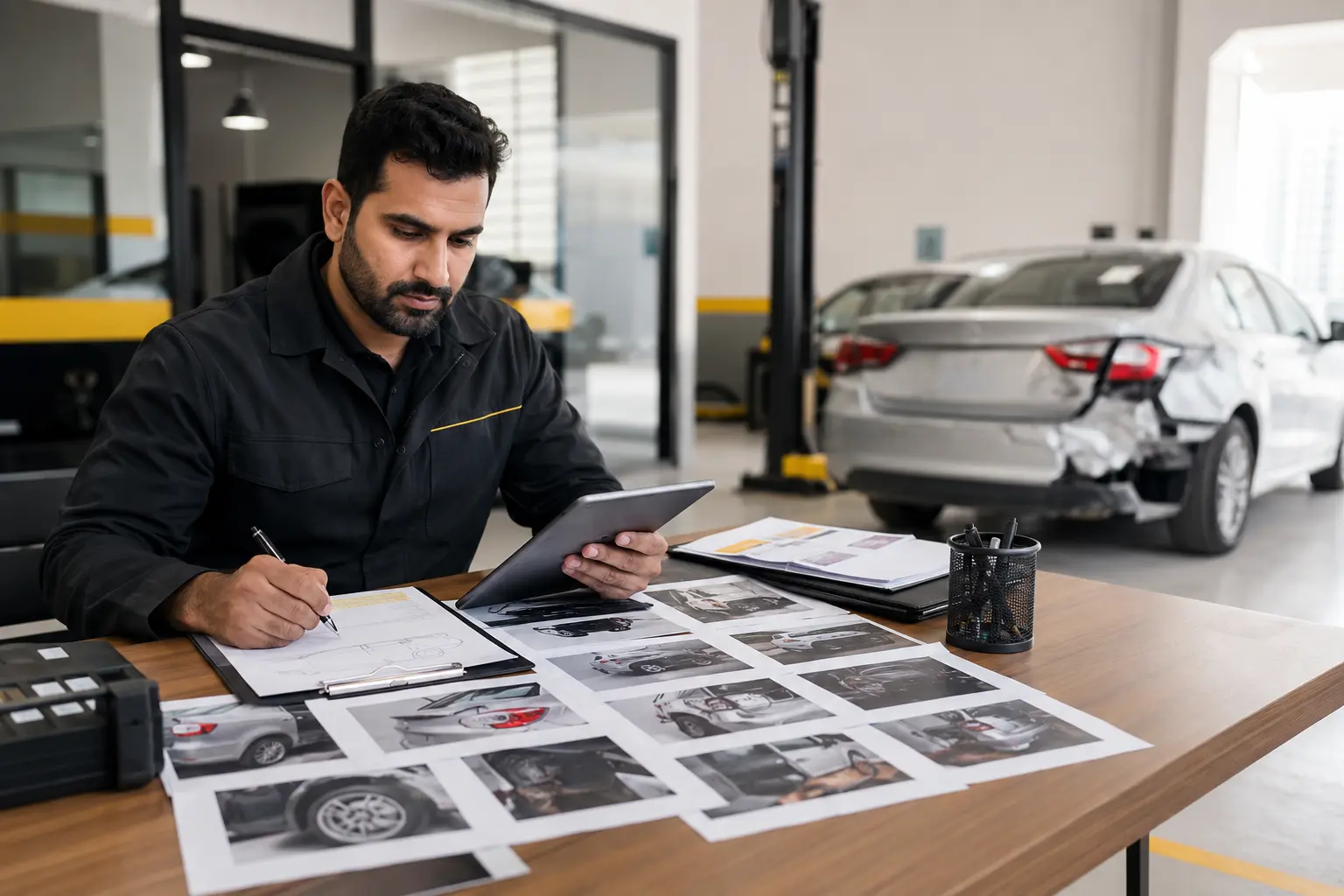
Separate The Complaint From The Confirmed Finding
One symptom can have several possible causes, including a pre-existing or unrelated condition. The inspection should show which evidence supports the next decision instead of jumping from complaint to replacement.
| Reported Or Observed Condition | Possible Causes | Tests to confirm the cause | Finding And Next Step |
|---|---|---|---|
| Vehicle Pulls Or Steering Feels Different | Tire damage, wheel deformation, alignment change, bent suspension, steering damage, shifted mounting point, or a condition unrelated to the event. | Tire and wheel inspection, steering position, suspension checks, safe functional observation, alignment data, or geometry measurement when justified. | Name the supported source of the change. Repair or replace confirmed items, then repeat the relevant measurement or road-behavior check. |
| Cooling Warning Or Fluid Loss | Heat exchanger, hose, support, fan, reservoir, pump area, underbody contact, or pre-existing cooling fault. | Cold visual inspection, leak location, pressure test when suitable, fluid condition, and operating data within safe limits. | Do not drive an overheating or actively leaking vehicle. The repair scope should follow the confirmed leak and any connected impact damage. |
| Airbag Or Restraint Warning | Impact event, pretensioner, sensor, wiring, seat component, clockspring, voltage event, disconnected part, or prior repair. | Manufacturer-specific fault information, visual evidence, repair records, and qualified circuit procedures. Unsafe probing is excluded. | State the detected system and evidence. Repair, replacement, coding, or further restraint diagnosis follows the confirmed fault and applicable procedure. |
| Parking Sensor, Camera, Or ADAS Fault | Moved bracket, bumper or windshield work, wheel-alignment change, wiring, obstruction, low voltage, or damaged sensor. | Mounting review, diagnostic information, alignment prerequisites, repair history, and configuration-specific calibration requirements. | Correct the supported physical or electrical cause first. Calibrate only when the vehicle procedure and repair trigger require it, then verify status. |
| Noise, Vibration, Or Contact | Loose trim, exhaust contact, tire or wheel damage, bearing, mount, driveshaft, undertray, or unrelated wear. | Location-based inspection, safe functional test, rotational check, lift access, and targeted mechanical testing as agreed. | Separate incident-supported damage from coincidental maintenance. Restrict driving if control, tire integrity, or a rotating component is uncertain. |
| Warning Light Without A Driving Symptom | Current fault, stored history, low voltage, disconnected component, network interruption, prior repair, or an intermittent condition. | Full code details, status, freeze-frame information when available, voltage history, visual evidence, and a repeat test under safe conditions. | Do not treat the light or code as a part order. Define whether the condition is current, supported, unresolved, or suitable for monitored retesting. |
Choose a location suited to the required checks
If you searched for a car inspection for insurance claims near me, a mobile visit can preserve the vehicle’s location and starting condition. An appointment at Al Quoz 4, Dubai can provide controlled access for evidence that is unavailable at ground level. Neither setting is automatically complete, so the claim question and required evidence should determine the location.
Where The Vehicle Is Parked
Mobile inspection may be suitable for identity checks, exterior photographs, accessible body and engine-bay observations, dashboard messages, some diagnostic scanning, and ground-level checks. The site must have permission, space, light, a stable surface, safe access around the car, and any required key or diagnostic access.
- Useful when moving the vehicle may disturb evidence or create risk.
- Weather, poor light, traffic, security rules, and crowded parking can limit documentation.
- Undertrays, low ride height, wheel access, and concealed areas may remain unresolved.
- A road test is not appropriate when safety, permission, insurance, or the route is uncertain.
Review the mobile inspection requirements before requesting attendance at a home, storage yard, repairer, or accident location.
Controlled Workshop Access
A workshop may be preferable when lift-supported underbody review, controlled lighting, wheel removal, dismantling, pressure testing, alignment, geometry measurement, calibration prerequisites, or other specialist procedures are needed. Availability and inclusion must be confirmed before the appointment.
- Lift access may reveal underbody, mounting, fluid, and impact evidence hidden from ground level.
- Wheel removal or trim removal changes the inspection from non-invasive review to a separately agreed operation.
- Scanning still requires interpretation and does not replace physical inspection.
- Some structural, restraint, high-voltage, or calibration work may require a specialist facility beyond the initial inspection scope.
The report should state which setting was used, what could be reached, and what remained inaccessible. A later workshop step does not make the original mobile observations invalid; it increases or changes the available evidence.
A Useful Report Makes Confidence And Limits Visible
A claim-focused report should let the owner, repairer, or insurer understand what was inspected and why the next action was recommended. More pages do not automatically mean better evidence.
Record VIN or other agreed identity, model, year, mileage, configuration, date, location, inspection purpose, reported event, repair stage, and supplied documents. Note any mismatch or unavailable record instead of filling the gap with an assumption.
Describe the component, location, condition, warning, measurement, code status, photograph, or behavior in neutral language. “Front-left wheel visibly displaced” is evidence. “Accident destroyed the suspension” is a conclusion that requires support.
Connect the observation with the decision it affects, such as safe movement, further dismantling, repair-method selection, geometry confirmation, restraint diagnosis, or post-repair verification. Keep possible causes separate from confirmed causes.
Use language that matches the evidence. A confirmed leak source is different from fluid residue with no active leak. A stored historical fault is different from a current fault that returns during a controlled test.
List inaccessible areas, unsafe procedures, missing records, previous repairs, cleared codes, battery disconnection, poor site conditions, unavailable test equipment, and specialist boundaries. Limits belong beside findings, not hidden at the end.
Recommend recovery, targeted diagnosis, lift inspection, dismantling, geometry measurement, repair-method review, calibration confirmation, repair, replacement, monitoring, or a post-repair recheck only when the evidence supports that route.
For help understanding the report and its findings, see the detailed car inspection report guide.
- Define The Repair Question
State whether the issue concerns a damaged part, mounting point, geometry, wiring, restraint component, calibration trigger, fluid system, finish, or another connected operation. A vague request for “full repair approval” is not a technical inspection scope.
- Match Method To Material And Damage
Repair may be considered when the component, material, damage location, access, and applicable procedure allow restoration. Replacement may be appropriate for severe deformation, cracks, torn mounts, one-time-use safety parts, damaged sensor housings, or items that cannot be restored to required function.
- Identify Separate Operations
Alignment, structural measurement, ADAS calibration, restraint diagnosis, coding, programming, refrigerant handling, high-voltage isolation, wheel removal, and dismantling are not automatically included. Each operation should be named, justified, and quoted.
- Record any change in condition
Record removed parts, repair-stage photographs, measurements, part numbers when relevant, estimates, and invoices. Once a panel is replaced or a code is cleared, the report may need to rely on dated evidence rather than the original condition.
- Retest The Original Complaint
A repair is incomplete until the original symptom or risk is checked again. Verification may include fit and finish, leak checks, warning-light status, targeted rescanning, alignment results, calibration records, coding confirmation, and a safe functional or road check when appropriate.
Insurance inspection prices
Inspector does not publish one verified fixed price for every claim-related vehicle inspection. The exact quotation should match the vehicle, location, access, methods, report output, and claim question.
Published Inspector ranges for basic, comprehensive, mobile, diagnostic, and other inspection types are available on the car inspection cost page. Do not add overlapping package ranges yourself. Ask Inspector to provide one coherent scope, exclusions, VAT treatment, and total payable amount in writing.
A lower quote may exclude photographs, diagnostic detail, lift access, measurements, specialist review, or a written report. A higher quote is not automatically more complete. Compare the named methods and deliverables that matter to the claim question.
Quotation Factors
Organize The File Before The Vehicle Is Inspected
A complete first message helps Inspector define the right route and reduces repeated questions. It also protects the line between customer-reported history and inspector-observed evidence.
Send the vehicle and claim details
- Make, model, model year, VIN or registration when requested, mileage, and regional specification.
- Policy and claim reference, insurer correspondence, incident date, and police or event reference when applicable.
- Vehicle location, storage conditions, keys, access contact, and whether moving it appears safe.
- The precise technical question that the report is expected to address.
Keep existing records
- Keep original photographs, videos, dashboard messages, tow records, and dated communications.
- Retain pre-repair estimates, repair-stage images, invoices, and removed-part information when permitted.
- Do not clear codes, disconnect power, wash the affected area, or authorize avoidable work just to prepare for inspection.
- Do not enter traffic, crawl under an unstable car, touch exposed wiring, or open a hot cooling system.
Confirm The Appointment In Writing
- Inspection purpose, location, included systems, photographs, scanning, measurements, and report format.
- Access limits, exclusions, specialist boundaries, and conditions that could stop a safe test.
- Price, approved additions, travel treatment, VAT status, total payable amount, and return-visit terms.
- Whether the insurer requires its own assessor, form, repairer, survey, or approval before work begins.
Some Claim Situations Need A Different Test Strategy
The same checklist should not be forced onto every event. Heat, water, storage, towing, previous work, and the elapsed time can change both risk and what remains observable.
Water Or Flood Exposure
Water line, odor, silt, connector condition, cabin modules, fluids, charging or starting behavior, and later corrosion risk may matter. Powering systems or starting the vehicle can create additional damage or risk. The inspection must state what was accessible and whether deeper electrical, mechanical, or high-voltage checks are needed.
Heat, Smoke, Or Fire Exposure
Heat can affect wiring, insulation, plastics, fluids, seals, glazing, paint, restraints, and structural material. Surface appearance alone cannot establish hidden thermal damage. Do not reconnect power or operate the vehicle until qualified safety guidance addresses the exact exposure.
Long Storage After The Event
Battery discharge, tire flat-spotting, corrosion, moisture, fluid seepage, seized components, pests, and environmental contamination can appear during storage. The report should distinguish storage-related change from evidence reasonably connected with the original event.
Towing Or Recovery Damage
Wheel-lift points, tie-down locations, underbody contact, bumper movement, steering lock, driveline state, and transport photographs may matter. Timing and recovery records are important because a condition found later may not automatically identify which event caused it.
Previous Damage Or Repair
Old paintwork, filler, non-original fasteners, replacement panels, wiring changes, alignment history, and earlier warning records can complicate causation. The inspector should record evidence of prior work without claiming when it occurred unless reliable dated records support that conclusion.
Intermittent Fault After Repair
Conditions such as temperature, vibration, moisture, load, road surface, steering angle, battery voltage, or time since startup can make a fault appear. A useful strategy preserves code status and symptom conditions, then repeats a safe, targeted check instead of replacing parts by guesswork.
Car Inspection For Insurance Claims Questions
These answers explain the inspection boundary. Your insurer’s current written requirements remain the authority for its own claim process.
Is This An Official Insurer Assessment Or Government Test?
No. Inspector provides a private vehicle-condition inspection that can document agreed observations, accessible damage, operating symptoms, photographs, and technical evidence. It is not a police report, RTA roadworthiness test, insurer loss assessment, legal opinion, repair authorization, or guarantee that a private report will be accepted.
Which Documents Should I Prepare?
Prepare vehicle registration, driving-license details when requested, policy information, police or incident reference when applicable, claim number, insurer correspondence, accident photographs, recovery records, repair quotations, repair-stage images, invoices, and the exact question you want the inspection to address. Requirements vary, so follow the insurer’s current checklist.
Can The Inspection Find Every Item Of Hidden Damage?
No non-invasive inspection can reveal every concealed condition. Trim, shields, sealant, insulation, body panels, batteries, and mechanical assemblies can hide damage. The report should identify what was accessible and state when dismantling, lift access, geometry measurement, pressure testing, or another specialist procedure is needed.
Is The Car Safe To Drive To The Inspection?
That cannot be confirmed remotely. Do not drive if braking, steering, wheel position, visibility, or control has changed, or if fluid loss, smoke, overheating, a burning smell, severe vibration, tire contact, exposed wiring, an airbag concern, or a high-voltage warning is present. Arrange recovery guidance when the condition is uncertain.
Should I Clear Warning Lights Or Disconnect The Battery?
Usually not. Clearing codes or disconnecting power can remove timestamps, freeze-frame information, readiness data, and fault history that may help explain the event. Photograph the messages and leave the electronic evidence unchanged unless a qualified person gives a safety-based instruction.
Will The Report Guarantee Claim Approval?
No. The insurer decides acceptance, coverage, liability, excess, repair approval and settlement under the policy and available records. The inspection can document the vehicle’s condition and recommend technical checks, but cannot guarantee a claim outcome.
Can The Vehicle Be Inspected After Repairs Have Started?
Yes, but the repair stage and evidence limits must be stated. Removed parts, sanding, paint, replacement panels, cleared codes, completed alignment, and calibration can change what remains observable. Send pre-repair photographs, estimates, parts records, and invoices so current findings can be compared with earlier evidence.
Does A Diagnostic Code Prove Accident Causation?
No. A code records a condition detected by a module. It may be current, stored, intermittent, voltage-related, repair-related, or pre-existing. Timing, status, freeze-frame data, physical evidence, repair history, battery events, and repeat testing may be needed before the cause can be supported.
Are Alignment And ADAS Calibration Always Required?
No. The requirement depends on the model, year, impact area, wheel geometry, removed or moved components, bumper or windshield work, diagnostic status, and manufacturer procedures. The report should identify the trigger and prerequisite evidence instead of adding every operation automatically.
Can Inspector Decide Whether A Part Is Repaired Or Replaced?
The inspection can document damage, access, material, function, and relevant procedural considerations. The insurer and repairer still have their own approval and repair responsibilities. A final method may require dismantling, measurement, manufacturer information, part availability, or specialist review beyond the initial inspection.
What If The Car Is At A Storage Yard Or Repair Shop?
Provide the full location, contact, permission, keys, site rules, vehicle state, and safe-access conditions before dispatch. Confirm whether photography, diagnostic connection, lift use, wheel removal, or dismantling is allowed. Restricted access must be recorded as a report limitation.
How Is The Quotation Decided?
The quotation depends on vehicle identity and configuration, claim question, damage areas, repair stage, location, access, safety, report detail, photographs, scanning, measurements, lift use, and specialist procedures requested and available. Ask for inclusions, exclusions, VAT treatment, and the total payable amount in writing.
Send The Claim Question Before Moving The Vehicle
Share the vehicle details, claim reference, event, current location, drivability, warnings, damage areas, repair stage, available records, and clear photographs. Inspector can then confirm the appropriate inspection scope, access, exclusions, price, and next step.