
Salvage car inspection in Dubai
Check an unrepaired, rebuilt or partly assembled car before buying or planning work. Inspector compares the known damage with visible repairs, checks accessible condition and flags questions about safety systems. The report explains which areas or records still need closer investigation.
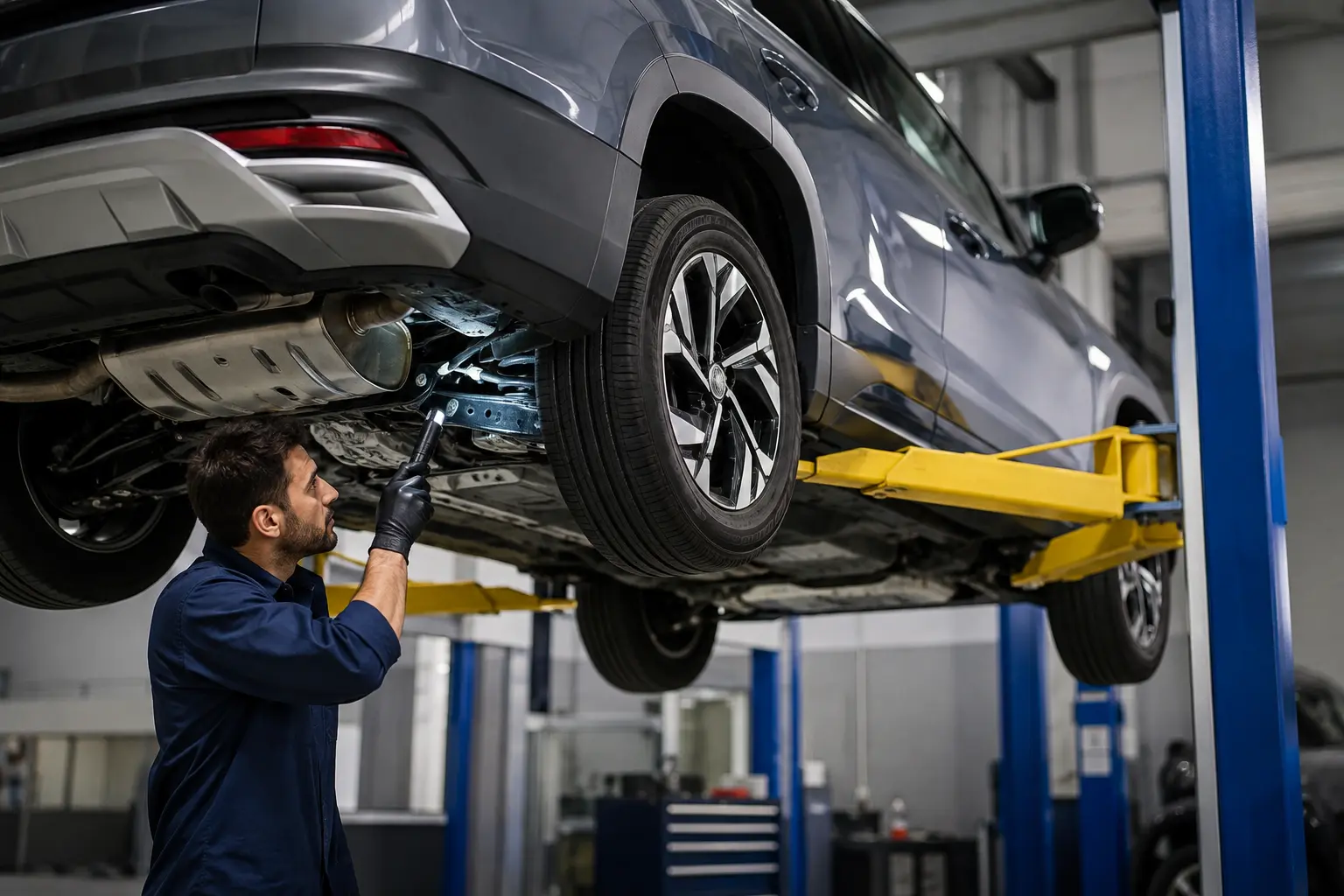
The vehicle state determines the work
Inspector’s current pricing authority lists salvage-condition inspection as quoted after the vehicle details are reviewed. A standard pre-purchase range should not be applied automatically because missing parts, unsafe condition, restricted access, incomplete repair and specialist testing can change the brief materially.
Four salvage states require different access
“Salvage” describes history or status, not one mechanical condition. Tell Inspector how the vehicle is presented before a quotation is prepared.
Impact zones may be exposed, but the vehicle can be unsafe to lift, power up or move. The brief should identify loose parts, fluid loss, deployed restraints and transport restrictions.
Some structure or wiring may remain visible while other areas are already concealed. Inspector needs to know what has been replaced, welded, painted, programmed or left incomplete.
Finished paint and trim can hide earlier work. Inspection may require paint readings, underbody access, operational checks, diagnostics and comparison with repair photographs or invoices.
When title documents, auction images, parts invoices or repair records are missing, the report must separate current observations from any unverified story about the original damage.
Match the repair to the damage
A useful assessment follows each known damage area through structure, restraints, mechanical systems and documentation. It also records where the chain of evidence breaks.
Underbody access can change the conclusion
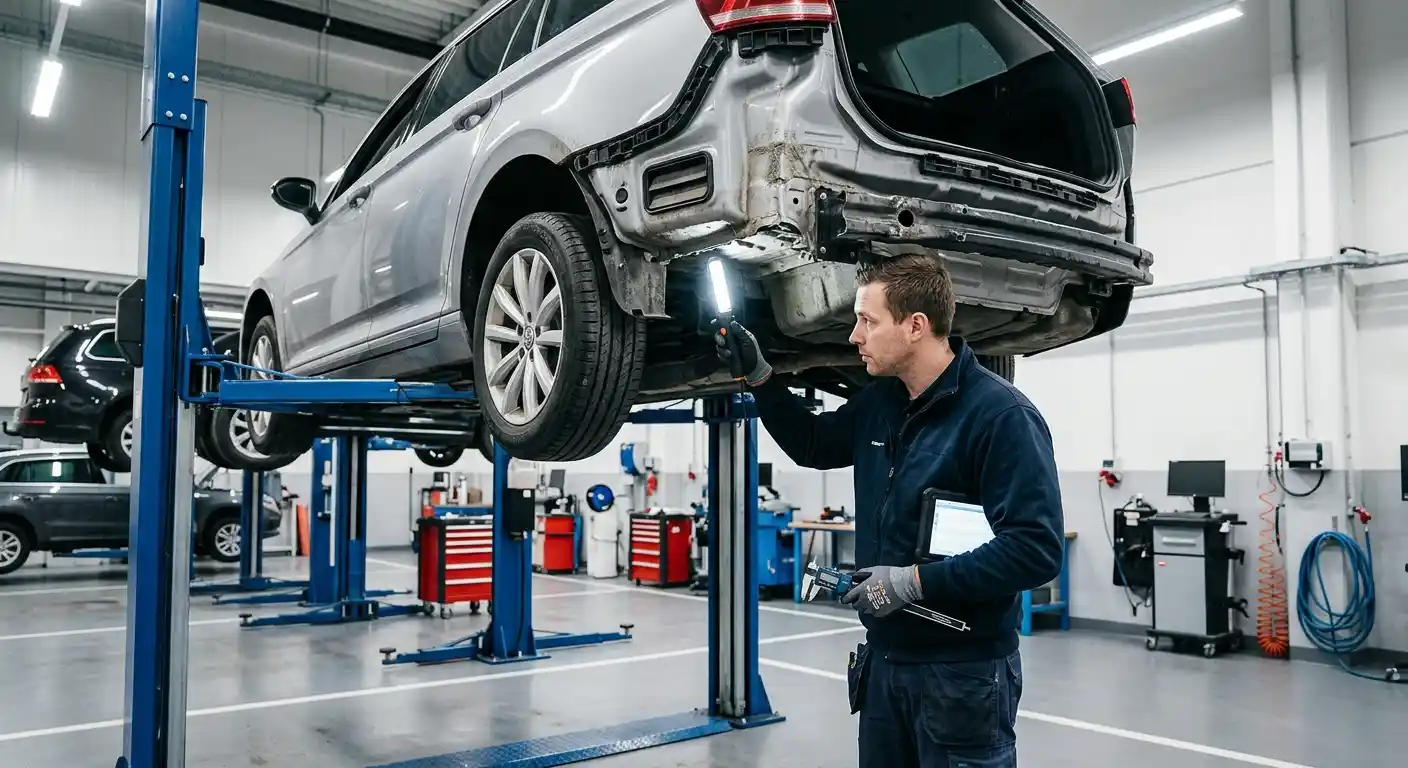
Salvage damage may affect rails, suspension mounting areas, floors, sills and lifting points. A ground-level exterior review cannot provide the same view as a vehicle safely supported on a suitable lift.
Before lifting, the available points must themselves appear suitable. Severe corrosion, distortion, missing subframes, loose components or an incomplete battery enclosure can make normal lifting unsafe. Inspector may need to limit the work or request a different handling arrangement.
Visible seams and welds can be compared for continuity, finish and protection. This is not the same as proving dimensional geometry or the strength of a repaired joint. Those questions require appropriate measurement or specialist engineering evidence.
A rebuilt shell can still contain unresolved systems
The body may look complete while cooling, suspension, restraint, electrical or powertrain conditions remain. The inspection should connect each system to the known damage rather than assume all faults have one cause.
Cooling and fluids
Front impacts can affect radiators, condensers, fans, hoses, supports and fluid lines. Visible repairs do not prove pressure integrity or correct operating temperature.
Steering and suspension
Wheel position, replaced arms, mounting points, tire wear and steering behavior can identify questions for geometry measurement or targeted diagnosis.
Airbags and restraints
Warning-lamp and scan observations are useful but cannot confirm every concealed airbag, pretensioner, sensor or controller is correct and serviceable.
Networks and modules
Missing modules, repaired wiring, poor power supply and coding differences can create several faults. A trouble code alone does not name the part to replace.
Start, move and road-test are separate decisions
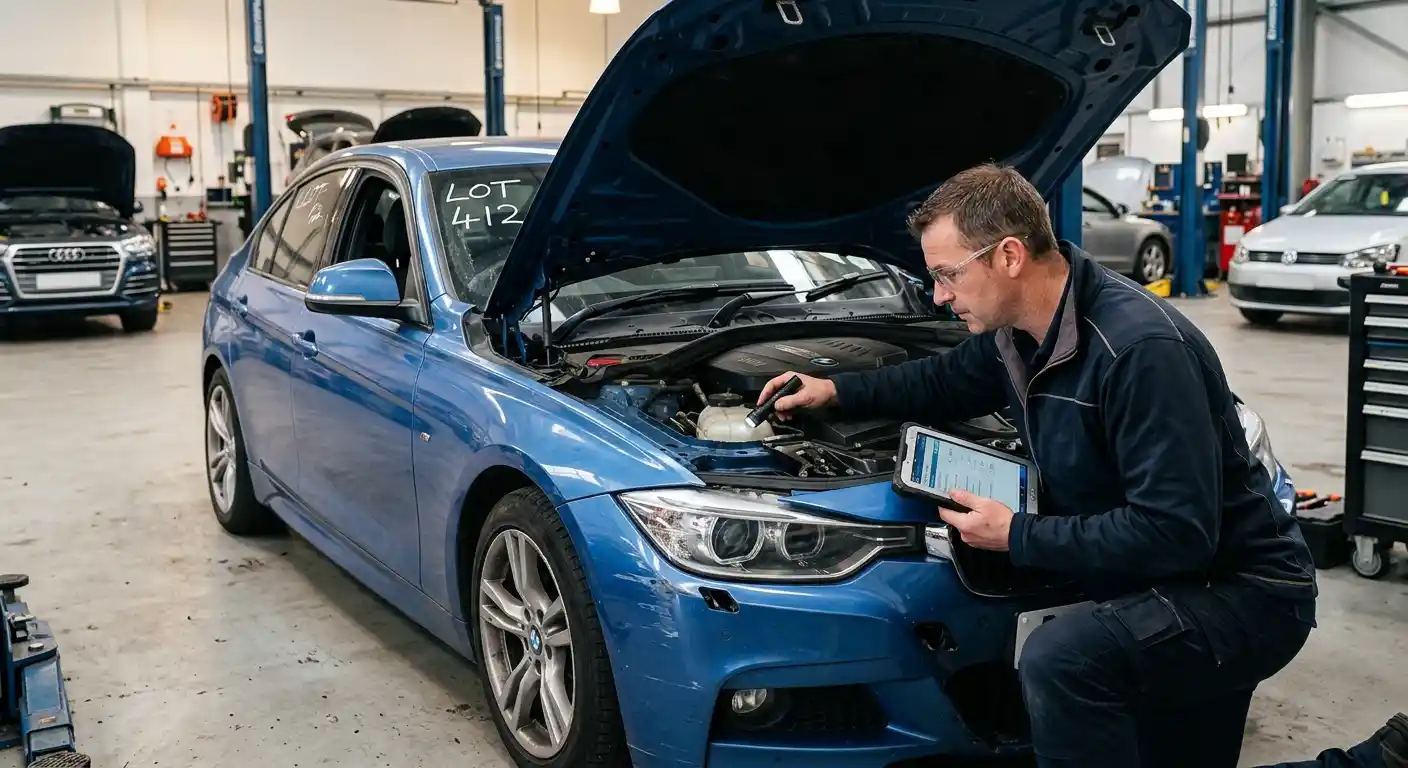
An unrepaired or partly assembled vehicle may not be safe to power up. Fluids, cooling, intake components, exposed wiring, loose suspension parts and battery condition should be considered before start-up.
A stationary start can provide noise, warning, leak and operating observations, but it does not load the transmission, steering, brakes or cooling system in the same way as driving. A road test requires owner permission, safe condition, suitable registration and insurance, fuel and an appropriate route.
If the vehicle cannot be operated, the report should say so and avoid treating missing driving evidence as a passing result. Further mechanical diagnosis may be recommended separately.
Paint readings need a repair map
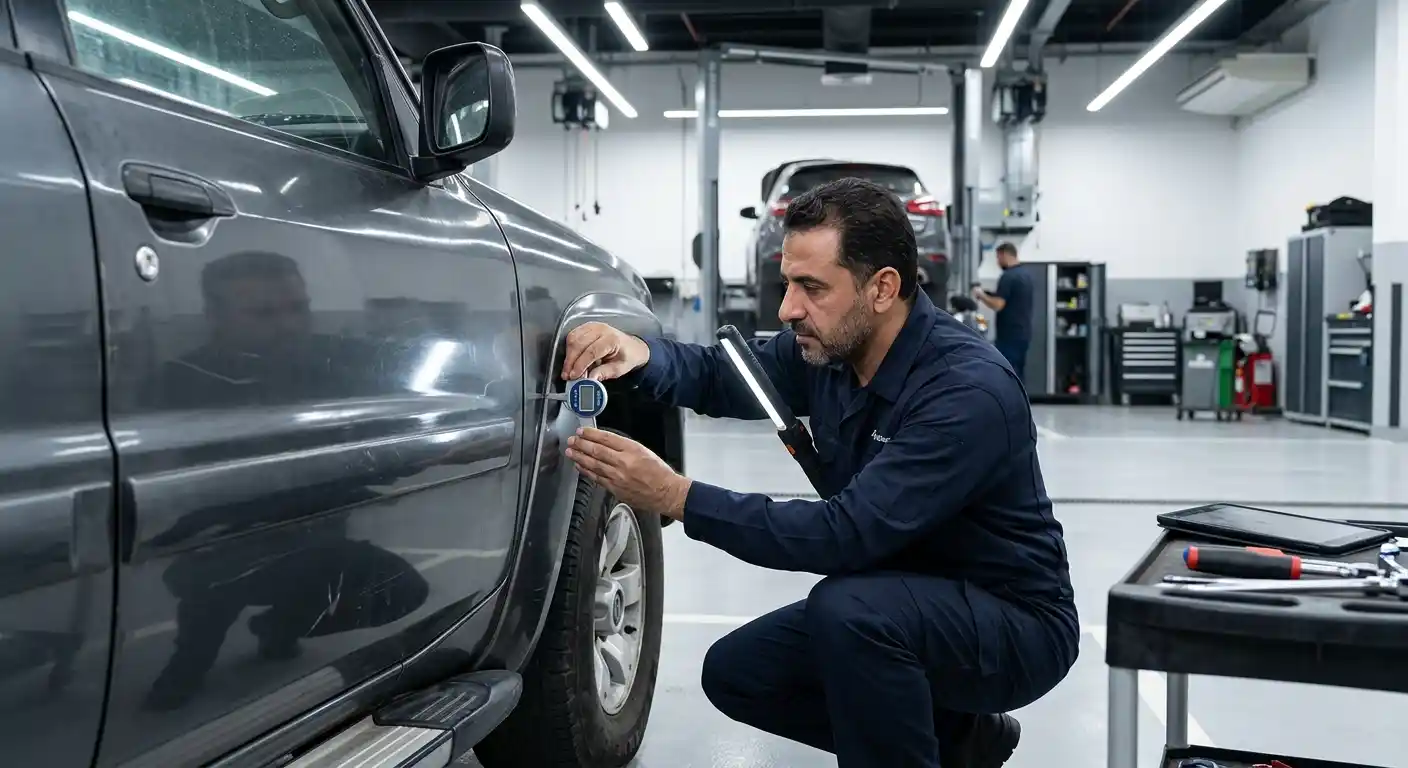
A single high or low reading is not a complete finding. The useful pattern compares materials and neighbouring panels, then relates refinishing clues to the stated damage and visible repair method.

Choose the setting around the vehicle state
If you searched for a salvage car inspection near me, the correct location depends on whether the vehicle runs, can be moved safely, and needs lift or diagnostic access. Inspector can assess mobile attendance at the vehicle location or arrange appropriate workshop access at Al Quoz 4, Dubai.
| Criterion | Workshop | Mobile or vehicle location |
|---|---|---|
| Quotation | Prepared after the vehicle, repair stage and required methods are known. | Prepared after the exact address, access and travel conditions are known. |
| Lifting | A suitable lift may permit better lower-body access if lifting points are safe. | Ground-level access is usually more limited unless another safe arrangement is confirmed. |
| Non-running vehicle | Arrange transport and vehicle positioning separately unless included in writing. | The vehicle must be accessible without unsafe movement or obstruction. |
| Diagnostic work | Power supply and specialist tests can be discussed before the appointment. | Portable scanning may be possible, but incomplete assembly and power conditions may limit communication. |
| Main benefit | Controlled light, access and equipment can support deeper physical observations. | Auction, seller or storage location may preserve the vehicle in its current state. |
| Main limitation | No automatic dismantling, geometry proof or repair certification. | Space, weather, lighting, lifting and site permission can materially restrict findings. |
A standard published mobile range does not automatically price a salvage visit. Request a salvage-specific quotation and review the mobile inspection access conditions when the vehicle cannot be brought to a workshop.
What the salvage report should preserve
The report should identify the vehicle, inspection date, location, repair stage, supplied records, areas examined, operating checks attempted, diagnostic access, photographs when included and every material limitation.
Findings should be organized by damage relevance and decision priority. The report can recommend geometry measurement, restraint diagnosis, electrical testing, pressure testing, dismantling or a repair estimate. Those recommendations are not proof of a defect until the relevant work is performed.
To see what the report should include, read how a vehicle inspection report separates observations and limitations.
Salvage inspection findings
- Vehicle state
- Unrepaired, partly repaired, rebuilt or unclear.
- Known damage
- Customer statement and supplied records, identified by source.
- Current findings
- Visible structure, repair, system and operating observations.
- Missing access
- Covers, trim, unsafe lifting, no power or refused movement.
- Next test
- The measurement or diagnosis required to resolve a named question.
- Decision limit
- No promise of future reliability, official approval or complete hidden-damage detection.
What a private salvage inspection cannot certify
Salvage inspection questions
How much does a salvage car inspection cost in Dubai?
Inspector lists salvage inspection as available by quotation. The repair stage, vehicle category, location, lift safety, diagnostic access, required report and specialist tests must be reviewed before a total is confirmed.
Why is there no fixed salvage inspection price?
An unrepaired auction vehicle and a fully rebuilt vehicle require different access and methods. Missing parts, unsafe lifting points, transport, electrical condition and documentation can change the work substantially.
Can Inspector inspect an unrepaired salvage vehicle?
It may be possible after the damage, location and safe access are reviewed. The scope may exclude starting, lifting or moving the vehicle when loose parts, fluid loss, structure or electrical exposure create a concern.
Can the inspection prove the repair is structurally safe?
No. Accessible visual observations can identify repair evidence and questions. Dimensional accuracy, material strength and weld quality may require specialist measurement, engineering evaluation or dismantling.
Are airbags checked on a salvage vehicle?
Visible restraint condition, warning behavior and diagnostic information may be included. These checks do not prove every concealed airbag, belt pretensioner, sensor or controller is correct or capable of future operation.
Does a diagnostic scan identify every missing module?
No. Communication depends on vehicle power, network condition, assembly and tool coverage. A code or missing response needs context and may require wiring, power-supply or configuration testing.
Is paint-depth measurement useful after salvage repair?
It can help map refinished areas when the material supports measurement. It does not prove the original impact, repair date or condition behind a finished panel.
Is lift access included?
Only if the quotation confirms it and the vehicle has safe lifting points. Incomplete or damaged structure can prevent normal lifting, while ground-level viewing provides less underbody evidence.
Can a non-running salvage car be inspected?
Yes, with a limited non-running scope where offered. The report should distinguish static observations from operating evidence that could not be obtained. Transport and positioning are separate unless agreed.
Will the vehicle be road-tested?
Only when the scope includes it and the vehicle is safe, authorized, registered and insured for the test. Many salvage or incomplete vehicles should not be driven.
Should I provide auction photographs?
Yes. Clear pre-repair images, damage descriptions, parts invoices and repair photographs can help compare the stated loss with current work. Their source and completeness still need to be considered.
Can Inspector verify a salvage title or complete history?
Do not assume access to every government, insurer, auction or overseas database. Inspector can review supplied information and current condition, while the report should identify any source that was actually used.
Will an inspection guarantee insurance approval?
No. Insurers decide eligibility and evidence requirements. Ask the intended insurer what it needs before commissioning a report for that purpose.
Is salvage inspection the same as an official RTA test?
No. Inspector’s service is a private condition assessment. It does not issue an official roadworthiness certificate, approve registration or guarantee a government test result.
Can Inspector calculate the repair budget?
Inspection findings can identify systems or areas that need further work. Dismantling, parts identification, geometry measurement and repair quotations are separate unless explicitly included.
What details are needed for the quotation?
Send the make, model, year, VIN or auction reference when available, current location, damage area, repair stage, running condition, missing parts, available records, access and required report purpose.
Ask for salvage-car checks
Share the damage photographs, repair stage, running condition, location and required evidence. Inspector can then confirm access, exclusions, VAT treatment and one payable quotation.