
Car Suspension Diagnostics in Dubai
Find the worn, damaged or misadjusted part before paying for replacements or another alignment. Inspector checks suspension condition, wheel and tire clues, ride height and relevant electronic information to explain what needs attention next.
AED 200–500 guide for the initial assessment. Alignment, repairs and specialist tests are separate.
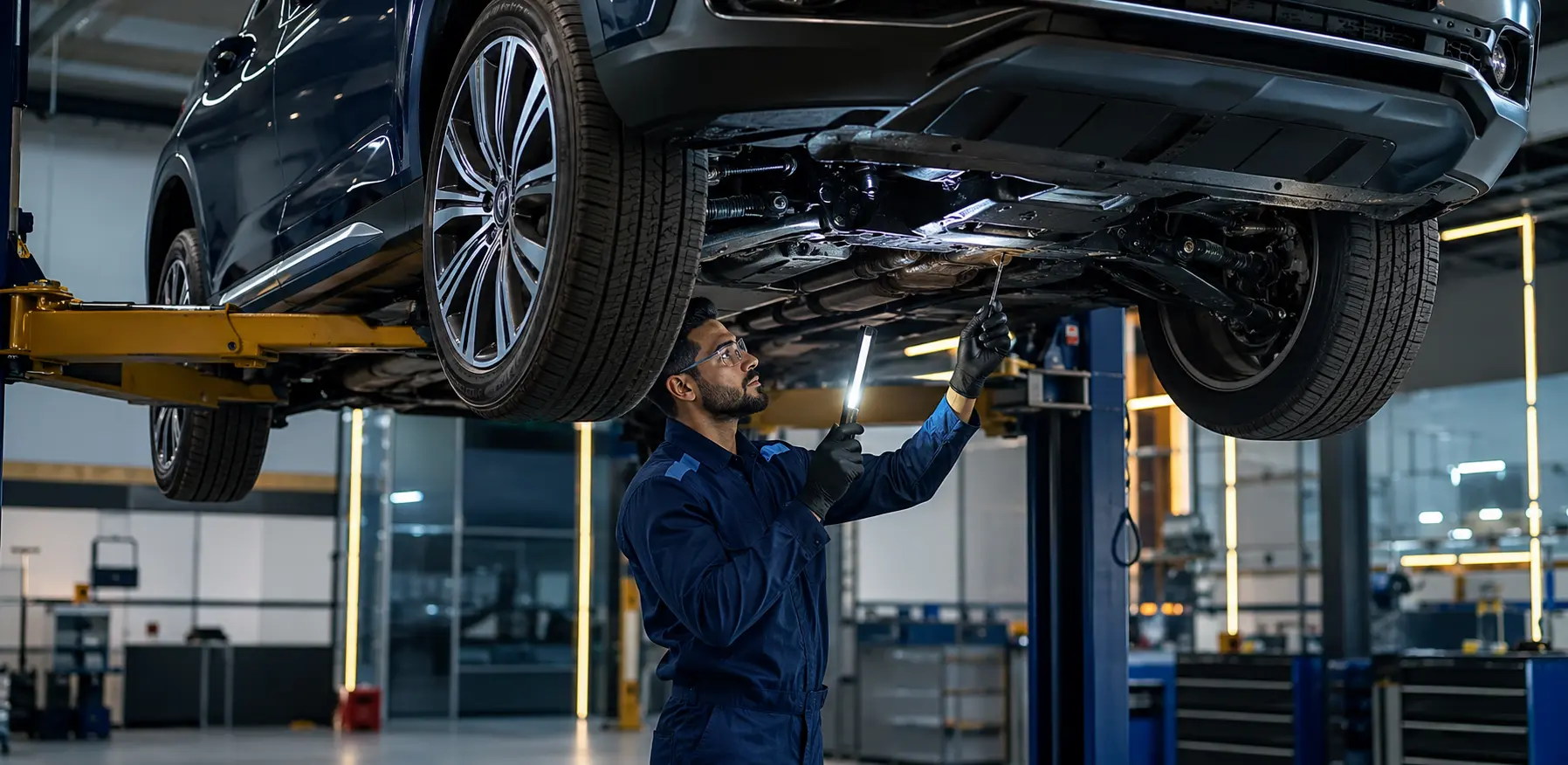
Suspension diagnostic prices
Use the initial diagnostic guide to plan your visit. The written quote confirms the actual checks, access, VAT treatment and total for your vehicle.
AED 200–500
Initial diagnostic assessment guide. Share the noise or handling change and the make, model and year. Confirm the appointment before bringing the car to Al Quoz 4.
Checking the cause before fitting tires or adjusting alignment can help avoid paying twice when an underlying worn part remains.
Suspension fault assessment
Discuss the complaint and agree relevant checks of accessible suspension parts, tires, ride height and movement. Confirm lifting, a conditional road test and any written findings in the quote.
Planning guide
Measurements and specialist tests
Alignment measurements, air-leak investigation, extended noise tracing, calibration and dismantling may need additional equipment or time.
Parts and corrective work
Replacement dampers, arms, bushes, joints, springs, tires and repair labour are separate. Confirm whether any quotation is per side, per pair or per axle.
Inspect before adjusting alignment
A pulling car or unevenly worn tire does not automatically need alignment alone. Tire pressure, wheel damage, a worn bush, a loose joint, ride-height differences or brake drag can influence the same symptom.
Find wear or damage
Check the tires, wheels and relevant suspension or steering components. Adjustment cannot restore a worn joint or straighten an impact-damaged arm.
Approve the necessary correction
Ask which component is responsible, what supports the finding and whether the quotation covers one side or the axle. Avoid replacing unrelated parts merely because they are nearby.
Measure and verify
Where required, alignment or ride-height calibration follows the mechanical correction. A road check and the relevant measurements help confirm that the original complaint has changed.
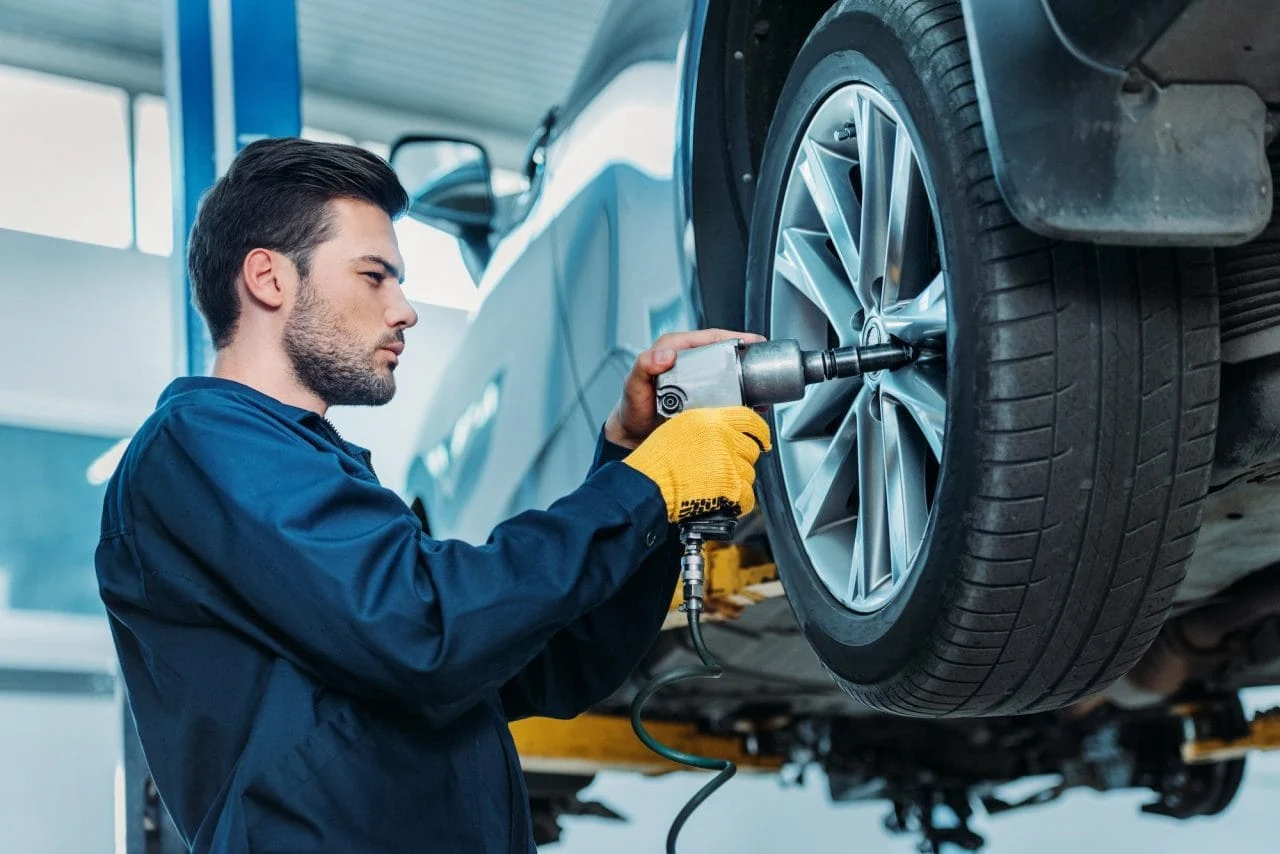
Three areas shape the ride
A suspension complaint can begin at the tire, pass through a joint or mount, and be felt in the body. Checking these areas together helps avoid an isolated guess.
Tires, wheels and hubs
Pressure, wear, damage, wheel fit and bearing condition can affect vibration, pull and harshness. A new set of tires may not solve the problem if the underlying movement remains.
Arms, bushes and joints
These guide the wheel through its movement. Wear, separation, loose hardware or impact damage can change geometry and create a knock. The part must be checked under suitable support conditions.
Springs, dampers and mounts
Springs support the vehicle and dampers control movement. Broken or displaced parts, leakage, worn mounts or incorrect replacement components can change ride height and body control.
Match the noise or handling problem
Include where you feel it and what the car is doing at the time. A sound recording can help describe a concern, but it cannot confirm the failed part.
| What you notice | Inspection priorities | Useful detail to share |
|---|---|---|
| Knock over bumps | Links, bushes, ball joints, damper mounts, spring seating and nearby loose hardware. | Front or rear, one side or both, and sharp bumps versus gentle movement. |
| Repeated bouncing or a harsh ride | Dampers, springs, mounts, tire pressure, vehicle load and recent modifications. | Whether the change was sudden or gradual, and whether a drive mode affects it. |
| Pulling, wandering or uneven tire wear | Tires, joints, ride height, steering, possible brake drag and measured geometry where required. | Recent impacts, tire replacement, alignment history and the exact wear pattern. |
| Vibration through the wheel or body | Wheels, tires, hubs, joints and related brake or driveline behaviour. | Whether it follows speed, braking, acceleration or steering angle. |
| One corner sits low | Spring condition, air system where fitted, height sensing and visible clearance. | Does it drop while parked, rise after starting, or stay low throughout? |
| Creak or click while turning | Top mounts, spring movement, steering joints, wheel contact and driveline joints. | Stationary or moving, left or right, and whether acceleration changes it. |
Most conventional suspension joints, bushes and mounts are assessed physically. Scanning adds useful information when the car has air suspension, electronically controlled dampers or relevant chassis warnings.
When to stop driving
Stop if steering or control changes suddenly, a wheel sits abnormally, a tire rubs heavily, a spring is displaced or a corner has collapsed. Avoid another road test to demonstrate the fault. Call from a safe location and discuss recovery.
What the inspection checks
Tire wear and ride height
The visit begins with the complaint, visible tire and wheel condition, ride height and recent impact or repair history. Vehicle load, unsuitable parts and modifications can change how the car sits and behaves.
Hardware and controlled movement
Accessible springs, dampers, arms, bushes, joints, links, mounts and fasteners are examined for relevant wear, damage, leakage and contact. Some joints need particular loading or lifting conditions. A quick glance at a hanging wheel is not enough for every design.
Electronic and road behaviour
Compatible chassis data is useful when electronic suspension is fitted. A road test can help locate a repeatable symptom only when it is safe and permitted. The quote should make clear whether scanning, road observations and any specialist measurements are included.
Findings you can act on
Ask which part or area needs attention, what supports that conclusion and what could not be checked. The next step may be replacement, a smaller repair, alignment after correction, a further measurement or monitoring a minor stable observation.
Air and adaptive suspension
A car that sinks overnight
Air springs, pipes, valves, the compressor, height sensing and control information work together. The lowest corner does not automatically identify the failed part. A leak or intermittent height complaint may need repeated observations or a separately agreed test.
Tell us how long the car has been parked, whether it rises after starting and which warnings appear. Do not keep cycling the system to make it lift if the vehicle is sitting abnormally.
A warning or changed damping
Adaptive dampers and active chassis systems add sensors, electrical supply and control functions to the mechanical inspection. Fault codes need physical and electrical context; a clear scan does not establish that a damper performs correctly.
Share the exact model and any modifications before booking. Lift kits, wheel spacers, non-standard springs and previous suspension repairs can change the checks and calibration requirements.
What happens after diagnosis?
Replace the failed component
A confirmed worn or damaged part can be quoted with the correct fitment and related items. Ask whether the price includes one side or a pair, fitting, mounts or hardware, and any alignment or calibration needed afterwards.
Repair an appropriate smaller part
Some concerns involve a serviceable bush, air line, connector or mount rather than a complete assembly. Suitability depends on the component design and an approved repair method. Structural or safety-critical damage must not be disguised with an unsuitable repair.
Adjust or monitor with a reason
Geometry adjustment is useful when the mechanical condition supports it. A minor observation may be monitored when no unacceptable movement or failure is established, with a clear reason to return. A repeat noise after repair should be checked under the original conditions.
Workshop access or mobile?
Al Quoz 4 workshop access is usually the more useful choice when lifting, loaded joint checks, concealed areas or measurements are needed.
Check mobile suitability first
A suitable mobile visit can document visible ride height, tires, wheels, accessible components and supported electronic information. Safe space and ground-level access limit what can be concluded. It does not replace a lift or alignment equipment when those are needed.
Send only the useful details
- Make, model and year.
- The noise, handling change or warning, and when it appears.
- Your Dubai location and whether the car can be moved safely.
- Recent tire, alignment or suspension work, if relevant.
Inspector confirms the work, price and appointment details after reviewing your request. A mainly steering-related complaint or a broader electronic warning may need these checks.
Suspension diagnostic questions
What the price covers, when alignment helps and which checks need workshop access.
How much does suspension diagnosis cost?
Use AED 200–500 as a guide for the initial diagnostic assessment, based on Inspector’s general diagnostic pricing. The exact quote depends on the vehicle, complaint and checks required. Confirm lift access, any road test, VAT and the total before booking. Alignment, calibration, dismantling and replacement parts are separate unless included in writing.
Is suspension diagnosis the same as wheel alignment?
No. Diagnosis looks for the cause of noise, movement, poor ride or uneven tire wear. Alignment measures and adjusts wheel geometry where adjustment is possible. Worn or damaged components may need attention before alignment can produce a useful lasting result.
Can you check knocking over speed bumps?
Yes, describe whether the knock comes from the front or rear, one side or both, and whether it changes during braking or turning. Links, bushes, joints, mounts, springs, brake hardware and other nearby parts can make similar sounds. Physical checks help locate the cause before parts are selected.
Can a computer scan find a worn suspension joint?
A conventional worn joint, bush, spring or mount may not create a fault code. It normally needs physical inspection. Electronic scanning is more useful for air suspension, controlled dampers and related warnings, and still needs to be interpreted alongside mechanical condition.
Can suspension checks be carried out at home?
A suitable mobile visit can record ride height, visible tires and wheels, accessible components and supported electronic information. It may not provide the lift access or component loading needed to assess joints and hidden areas. Send your location and symptom so Inspector can confirm whether mobile or workshop attendance is appropriate.
What should I do if one corner drops?
Do not drive if the wheel position, tire clearance or handling is abnormal. Share a photo taken from a safe position and arrange advice about recovery. A low corner may involve a spring, air leak, valve, sensor or related control issue; it does not by itself identify the part that needs replacement.
Are shock absorbers always replaced in pairs?
The appropriate replacement depends on the component, axle condition and vehicle manufacturer’s guidance. Ask whether the quote is per side or per axle and whether mounts, boots, alignment or calibration are included. Diagnosis should establish the condition before a parts package is selected.
How long will the inspection take?
Ask for the expected appointment length when the required checks are confirmed. A straightforward visible concern and an intermittent noise need different amounts of observation. Air leaks, repeated ride-height checks or a fault that only appears on a particular road surface may need a longer or separate visit.
What will I receive after the assessment?
Confirm the findings format when booking. The result should identify the complaint, areas checked, supporting observations, any tests that could not be completed and the recommended next step. Ask whether photographs, scan information or a written report are included. Alignment readings are only available if that measurement is part of the agreed work.