
Car safety inspection in Dubai
A safety inspection checks accessible brakes, steering, tires, visibility and restraint systems. Tell us what has changed so we can assess the concern and explain what needs attention. This private check does not replace an official RTA test or rule out every hidden fault.

What the safety check answers
Arrange a safety check if braking, steering, tires, lighting or restraints concern you, after an impact or safety-related repairs, or before a long trip.
Describe the symptom and when it happens: pulling under braking, steering play, vibration at a certain speed, an ABS warning, uneven tire wear or a damaged belt. The inspector records what can be seen or reproduced and what needs further testing.
For a wider review of the car’s condition, consider a car roadworthiness inspection . An annual car inspection helps you plan regular maintenance. For checks before registration renewal, see the car registration renewal inspection service.
Four groups of safety checks
The map groups connected systems by the job they perform on the road. It prevents a warning lamp or visible wear item from being assessed without the physical context around it.
Stop and hold
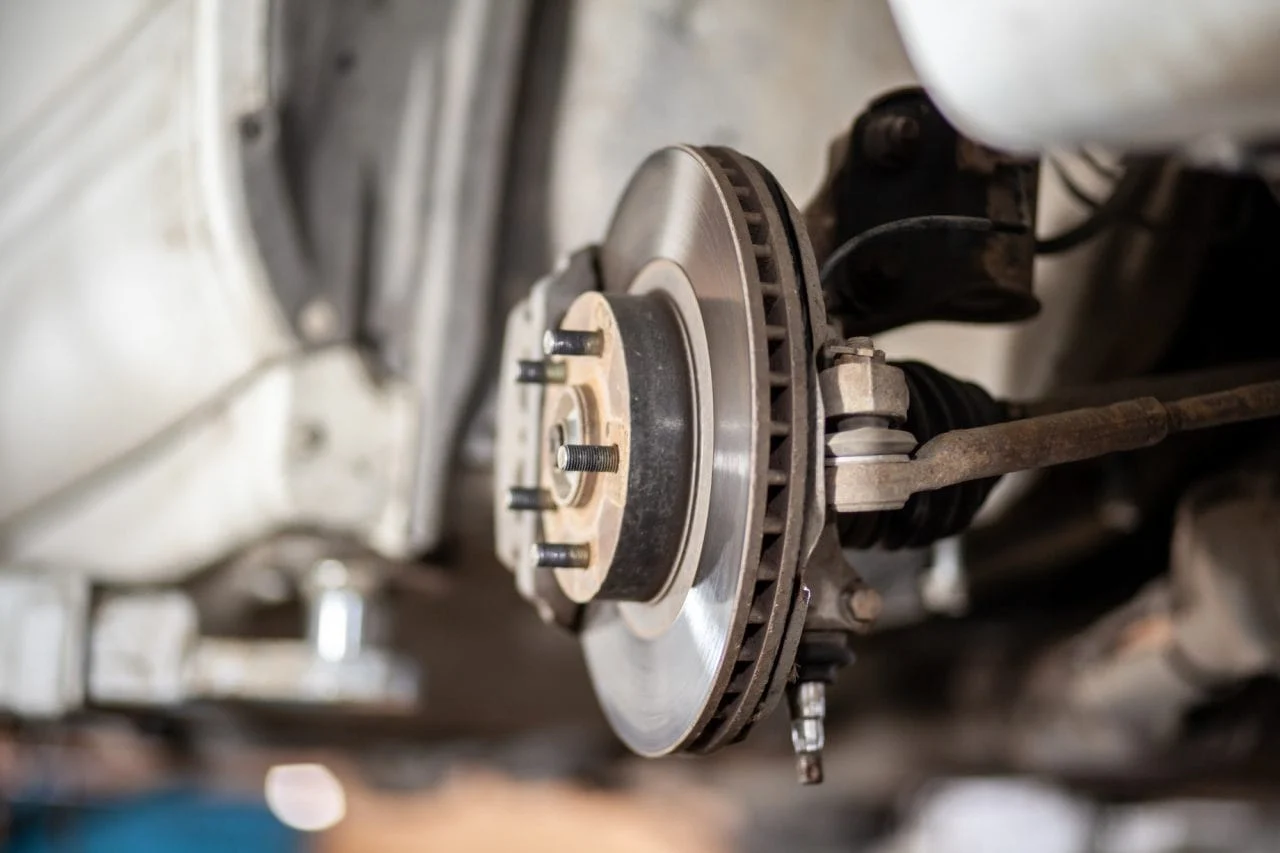
Brake pedal response, visible friction components where accessible, fluid condition, hoses, parking-brake operation, ABS or stability warnings, pulling, vibration and abnormal noise. Wheel removal, thickness measurement, pressure testing and hydraulic dismantling require agreement.
For system-specific fault investigation, use the brake and ABS diagnostics.
Steer and remain stable
Steering response, visible boots and joints, power-assistance warnings, suspension leakage, damaged springs, ride-height differences, wheel condition and alignment-related wear. A short observation cannot prove internal rack, damper or bushing condition.
Contact the road
tire tread, inner and outer shoulders, sidewalls, bulges, cracking, repair evidence, pressure context, manufacturing date markings and rim damage. A tire may look acceptable from outside while the inner edge or hidden face requires better access.
The car tire inspection checks explains tire-specific measurements and limits.
See, signal and protect
Headlamps, indicators, brake lamps, hazards, mirrors, glass, wipers, washers, warning indicators, seat belts and accessible restraint-system evidence. Airbag and pretensioner diagnosis requires fault context and physical checks, not code wording alone.
What needs attention first?
A worn service item, an unexplained warning and a loss of vehicle control need different responses. Each finding should explain how urgent it is and what to do next.
Restrict use
Use when stopping, steering, tire integrity, visibility or another observed condition makes continued driving inappropriate pending recovery or specialist assessment.
Confirm the cause
Use when an active warning, intermittent symptom or visible clue needs measurements, lift access, wheel removal, circuit tests or other focused diagnosis.
Schedule repair
Use when the condition is understood well enough to plan repair, replacement or maintenance and then verify the result.
Record and monitor
Use when evidence is currently stable and continued observation is reasonable, with a defined trigger for earlier reassessment.
Wheel access changes the answer
With the wheel installed, the view of friction surfaces, inner tire condition, hoses and suspension areas may be incomplete. Wheel removal can improve access, but it is not automatically included. The booking scope should state whether removal, brake measurements or lift use is required and safe for the vehicle.
Brake-disc surface appearance alone does not establish remaining service life. Pad thickness, disc thickness, runout, hydraulic operation, electronic parking-brake state and road behavior may each require different checks. Likewise, uneven tire wear can be a result of pressure, alignment, worn joints, damaged wheels, driving use or more than one condition.
Do not continue a road test merely to reproduce severe pulling, a soft pedal, tire damage, steering looseness or instability. If the vehicle may be unsafe to drive, arrange appropriate transport and a controlled assessment.
Choose the setting by the concern
Mobile and workshop inspections can both provide useful evidence. The right choice depends on the safety question, the vehicle’s condition and the equipment or access needed to answer it.
Workshop inspection
Better suited to lift access, controlled light, safe wheel work, stable electrical supply and follow-up equipment. Dismantling and specialist measurement still require explicit agreement.
Mobile inspection
Useful for an immobilised or location-bound vehicle when the surface, space, light, permission and safety support the work. Underbody and road-test evidence can be restricted.
Road observation
Useful only when the car can be driven safely and legally, the route can reproduce the concern and permission and driver arrangements have been confirmed.
A diagnostic scan may support ABS, stability, power steering, tire-pressure or restraint-system questions. It can show stored or active conditions, module communication and selected data. A code identifies a condition or circuit, not a confirmed failed component. Low voltage, wiring, wheel-speed signals, calibration, prior repair and mechanical conditions can create related faults.
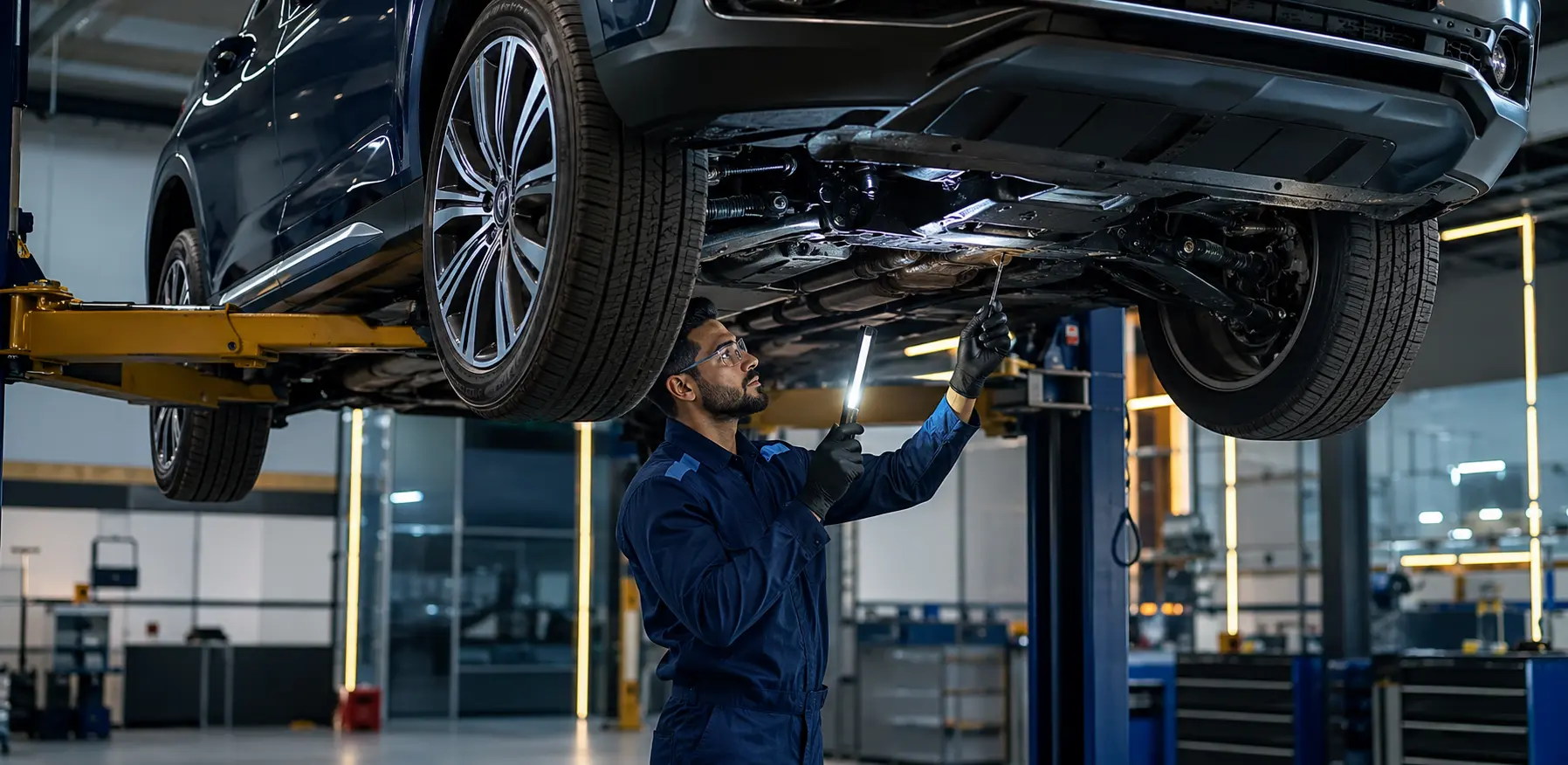
After a collision, kerb strike or pothole impact, checks may need to cover the underbody, chassis and suspension as well as visible bodywork. The damage may call for paint measurements, alignment checks, subframe checks or dismantling; agree these tests before work begins.
Report facts before conclusions
The report should identify the vehicle, your concern, the checks completed and any access limits. Each important finding should explain what was observed, which driving function it affects, how urgent it is and what to check next.
Photographs and measurements should be tied to a position, such as front-left inner tire shoulder or right-rear belt buckle. Diagnostic results should identify the module and status where available. A recommendation for diagnosis is different from a confirmed repair instruction.
Review the car inspection report interpretation guide for help reading the findings and understanding which issues need attention.
Seat belts and restraint checks
A warning light, seat-belt concern or previous collision may justify restraint-system review. Visual condition and scan information should be connected carefully because concealed components and prior repairs can change the diagnosis.
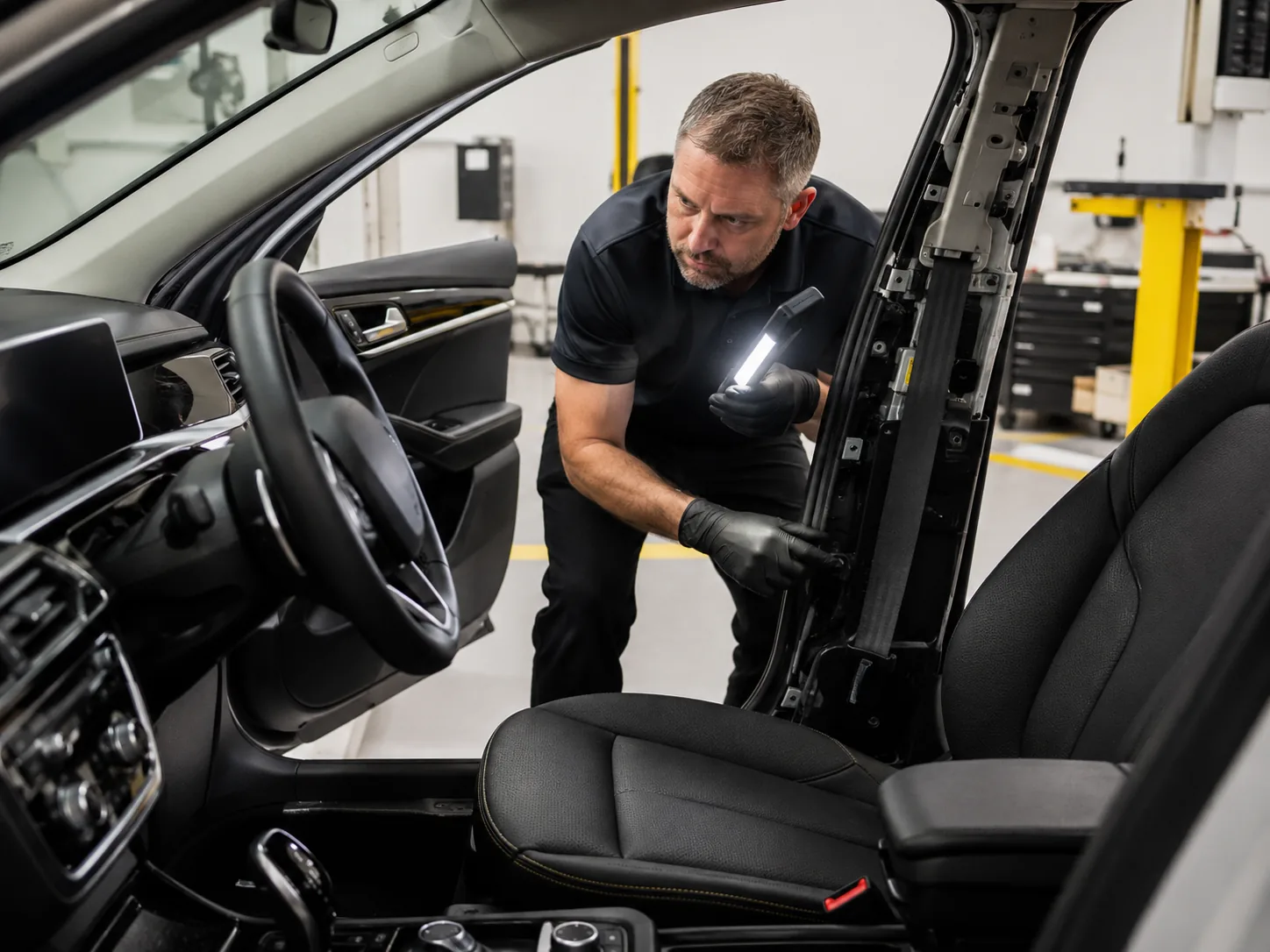
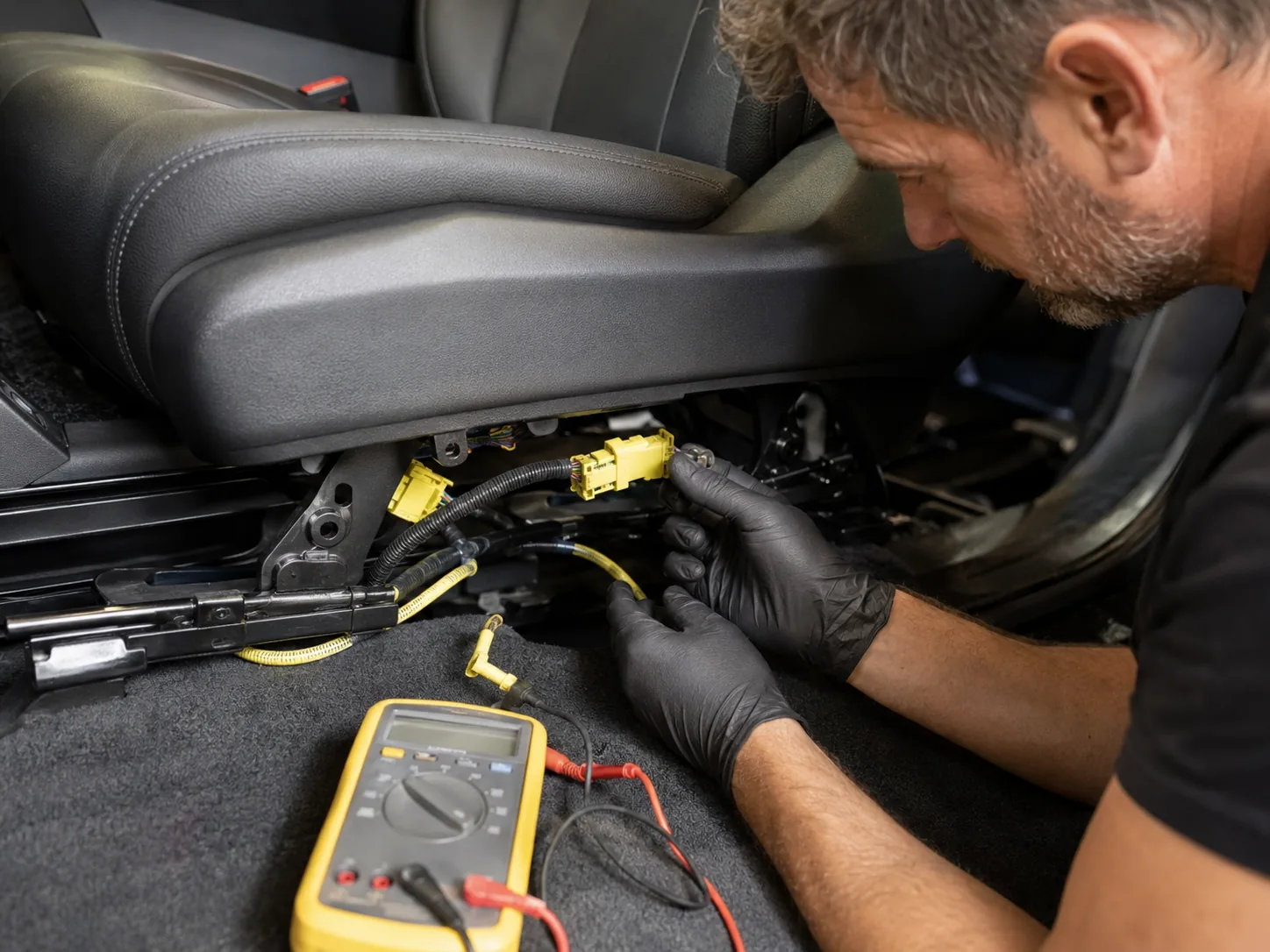
Seat trims, airbags, pretensioners and wiring may be concealed or unsafe to disturb without a defined procedure. A general safety inspection does not imply component deployment history can always be proven. When the concern is specifically the SRS warning or airbag system, use the car airbag diagnostics service for checks of these systems.
Safety inspection cost
No fixed standalone price for this safety-focused service was verified on Inspector’s current pricing authority. It is therefore available by quotation. The team needs the vehicle, symptom, location, access and requested methods before confirming the total.
| Checks covered | Published range | Important distinction |
|---|---|---|
| Basic inspection | AED 150–300 | May fit a defined essential-condition question only after the included safety systems and report are confirmed. |
| Comprehensive inspection | AED 400–600 | May fit a broader safety and condition review with agreed access, methods and reporting. |
| Warning-light or component diagnostics | AED 200–500 | Separate fault investigation when a warning or symptom cannot be resolved by condition observations alone. |
The ranges are not cumulative and are not fixed safety-inspection prices. Request one written quotation. The full Inspector car inspection pricing guide remains the authority for current package ranges and specialist conditions.
Prepare the safety concern
Describe the concern so we can discuss a suitable location and safe access. The booking is confirmed when Inspector agrees the checks, location, price and date.
What to know before the check
What does a car safety inspection cover?
It focuses on accessible evidence connected to brakes, steering, suspension, tires, wheels, visibility, lighting, driver controls, seat belts and relevant warning systems. The exact list depends on the vehicle, concern, access and agreed methods.
Is this the official RTA safety test?
No. Inspector provides a private condition review. It does not issue an RTA pass, registration approval or government technical-inspection certificate, and it cannot guarantee an official result.
When should I arrange a safety inspection?
Arrange one after a significant impact, before a demanding trip, after relevant repairs or when you notice braking, steering, tire, warning, visibility or restraint concerns. Do not wait for a routine date if vehicle control is affected.
Should I drive the car to the inspection?
Not when braking, steering, tire integrity or another condition may make driving unsafe. Describe the symptoms before moving the vehicle so an appropriate workshop, mobile or recovery route can be discussed.
Can the inspection identify every safety defect?
No non-destructive inspection can expose every concealed, intermittent or internal defect. Wheel removal, lift access, dismantling, measurements, specialist tests or repeated operating conditions may be needed.
Are brakes measured during the inspection?
Measurement is included only when agreed and supported by the equipment and access. Pedal feel, warnings and visible condition are different from pad thickness, disc thickness, runout, hydraulic pressure or official brake-lane testing.
Will all four tires be checked?
The agreed scope should state the positions and access. Inner shoulders and hidden wheel faces can be difficult to see with the car on the ground. Pressure, tread, damage, age and wear patterns may each need different observations.
Does a warning light prove a component has failed?
No. A diagnostic trouble code describes a detected condition or affected circuit. Voltage, wiring, calibration, communication, mechanical faults and previous work can lead to similar code wording. Physical and electrical checks are needed.
Are airbags and seat belts included?
Accessible belts, warning indicators and selected restraint evidence can be reviewed. Concealed airbags, pretensioners, wiring and deployment history may require a focused SRS diagnostic scope and controlled access.
Is underbody inspection included?
Ground-level evidence is limited. Workshop lift access should be confirmed when suspension, impact or underbody concerns matter. Covers and vehicle construction can still conceal components even on a lift.
Can the safety check be mobile?
If you searched for a car safety inspection near me, mobile service may be suitable when the location has permission, level safe ground, enough space, and suitable light. Lift access, wheel removal, controlled testing, and some diagnostic methods may require an appointment at Al Quoz 4, Dubai.
How much does a car safety inspection cost?
Safety inspections are quoted for the checks required. General guide prices are AED 150–300 for a basic inspection, AED 400–600 for a comprehensive inspection and AED 200–500 for warning-light or component diagnostics.
Is VAT included?
Ask for a written quote stating the checks, location, extras, VAT and total payable.
What will the report contain?
It should identify the vehicle and concern, state the access and methods, record observations and measurements, classify priorities, identify unavailable checks and recommend a specific next action where further work is needed.
Can the report guarantee the vehicle is safe?
No. It records accessible evidence at a point in time and supports a decision. It cannot promise future condition, expose every intermittent fault or certify legal roadworthiness.
What details should I send when booking?
Send your name, number, make, model, model year, location, purpose, symptoms, recent impacts or repairs, preferred date, workshop or mobile preference and permission for any intended scan, lift, wheel removal or road test.
Arrange a suitable safety check
Describe the vehicle, symptom, location and recent event before moving the car. Inspector can then confirm suitable access, methods, VAT treatment, total quotation and appointment availability.