
Lexus Inspection in Dubai
Check a Lexus before buying, selling or planning work. Inspector reviews the agreed bodywork, mechanical and diagnostic checks, including relevant hybrid systems and road observations where supported. The report explains important findings and anything that still needs testing.

Choose the Lexus inspection around your decision
The right scope depends on what you need to decide. A buyer assessing an RX 450h, an owner investigating a warning, and a seller documenting current condition need different priorities. Tell us the purpose first so the inspection focuses on the evidence that could change your next step.
Share the model, year, mileage, GCC or import specification where known, gas or hybrid powertrain, location, and reason for inspection. Mention collision disclosures, warnings, recent repairs, modifications, unusual sounds, overheating history, or seller restrictions before booking.
Buying a used Lexus
Review condition, repair evidence, current faults, likely near-term needs, and unresolved limitations before money changes hands. Lexus UAE’s pre-owned buying guidance also highlights service history, major repairs, matching VIN or chassis details, and modifications. Inspector evaluates the individual vehicle for your decision.
Planning ownership or sale
Check wear and maintenance needs before a long trip, warranty expiry, sale or heavier use.
Investigating a symptom
A warning, vibration, noise, weak cooling, or charging concern may need a focused diagnostic step beyond a general condition inspection. The report should tell you when that is the case.
Reviewing visible repairs
We assess accessible workmanship, operation, and panel fit without claiming to certify concealed repairs or internal component condition.
Lexus models that need different inspection priorities
Vehicle size, platform, powertrain, fitted equipment, and previous use change what matters. The exact Lexus model is the starting point, not the complete checklist.
ES and IS
For ES and IS sedans, we check straight-line behavior, tire-wear patterns, steering response, cabin functions, paint consistency, and evidence of fleet or high-mileage use. Hybrid ES variants add battery-cooling and powertrain-transition observations.
RX and NX
Family SUVs combine powered equipment, cameras, parking aids, tailgate functions, suspension wear, and possible hybrid complexity. We confirm the drivetrain and whether available testing can meaningfully address high-voltage concerns.
GX and LX
Large 4×4 models need careful underbody, tire, brake, suspension, and transfer-system evidence. Heavy use, towing, rough access, modifications, and previous off-road exposure can change the priorities.
LS and luxury sedans
Comfort electronics, powered seats, climate functions, adaptive systems, ride behavior, and quiet-cabin expectations make small faults commercially important, even when the car remains drivable.
RC, LC and F models
Performance-oriented models need suitable tires, brake condition, underbody evidence, cooling behavior, modification context, and an authorized road test. A short drive cannot reproduce every load or temperature condition.
Hybrid variants
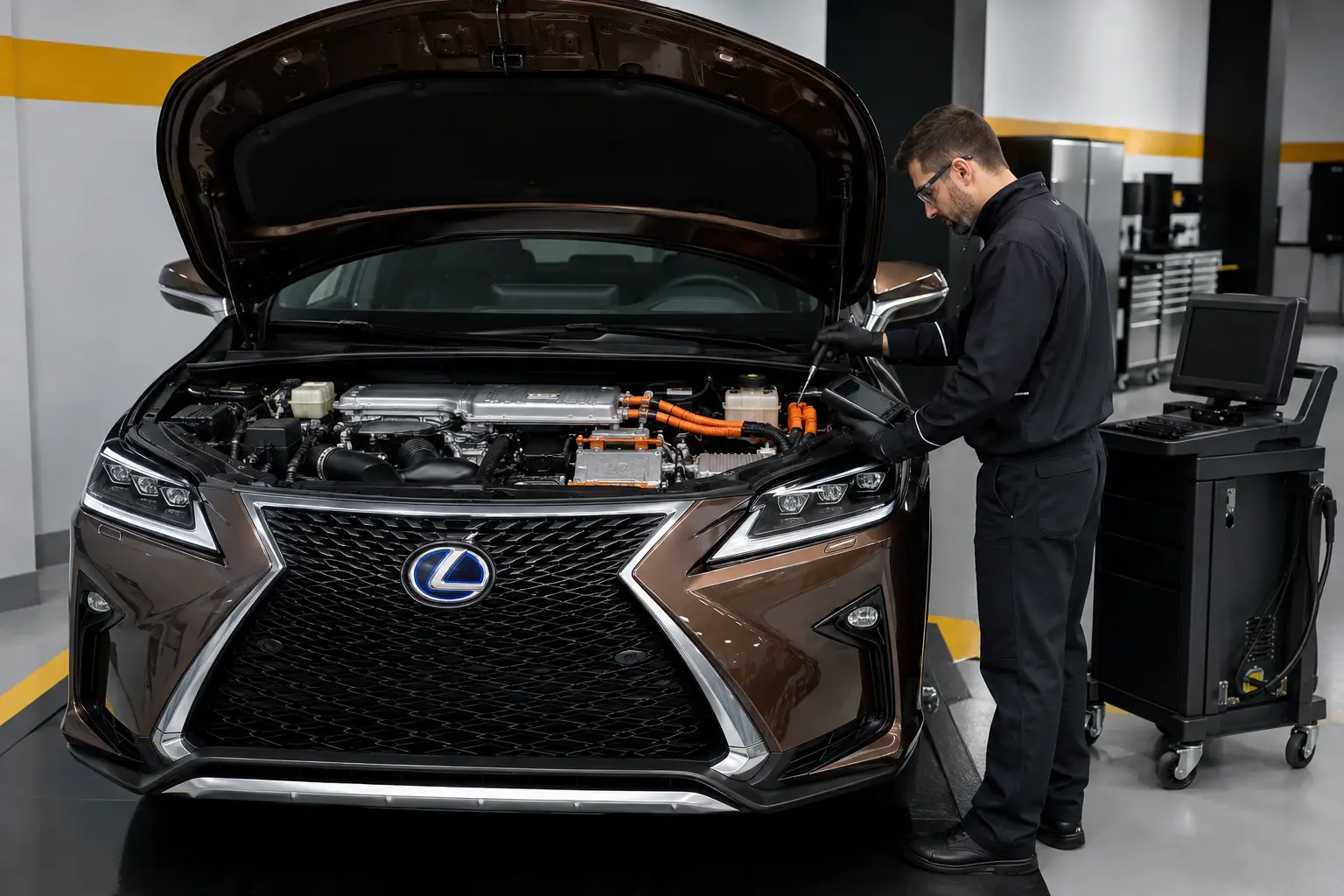
On a hybrid Lexus, we review warnings, engine-to-electric transitions, cooling paths, charging behavior where relevant, and accessible data. These observations do not automatically prove traction-battery capacity or remaining life.
Use body and paint patterns, not one reading
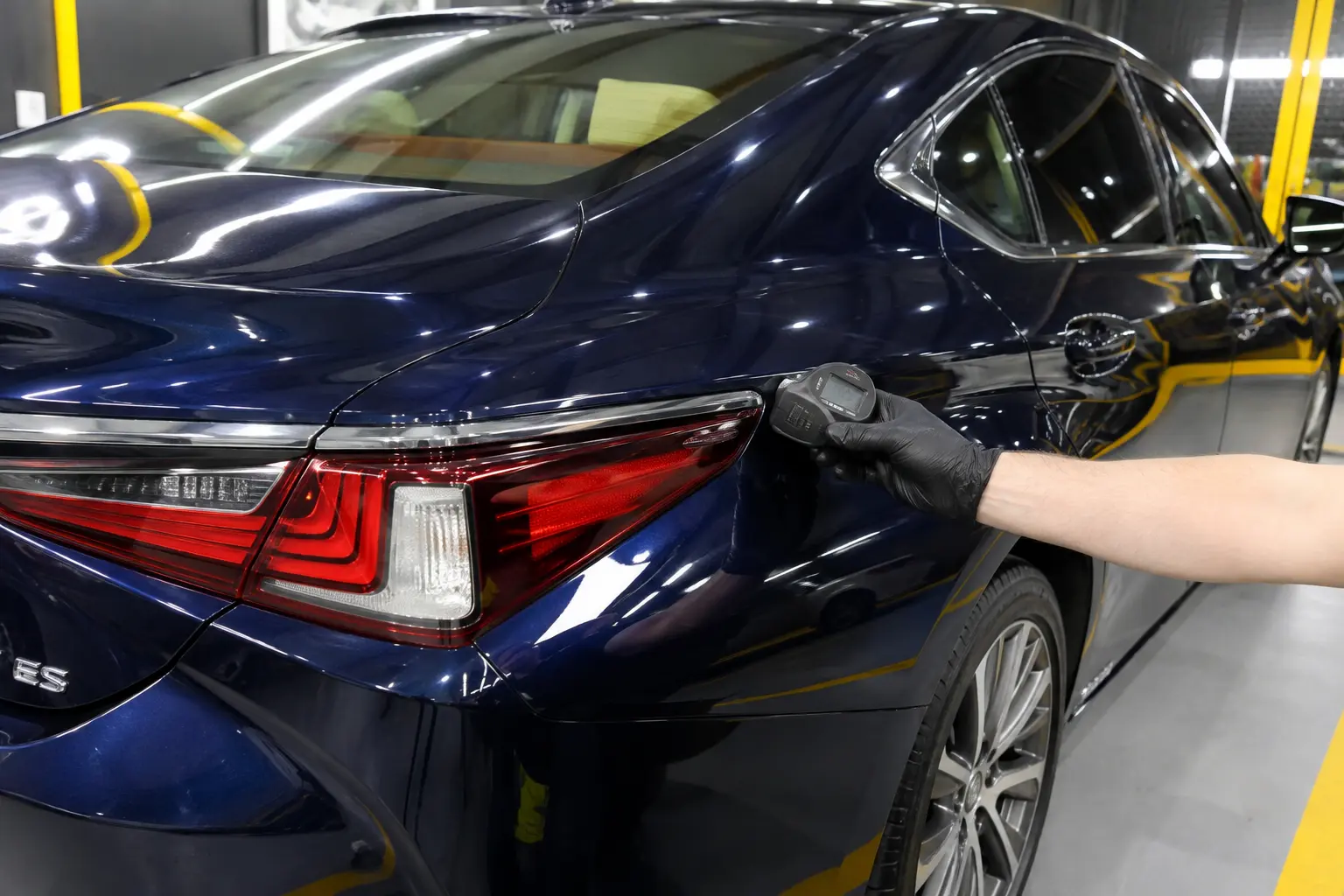
One paint-depth reading cannot prove an accident, and one consistent panel cannot prove an untouched car. We compare readings across panels and connect them with finish, alignment, fasteners, glazing, and accessible structural evidence.
- Compare paint-depth trends across neighbouring panels rather than relying on a universal threshold.
- Look for texture changes, overspray, masking edges, polish marks, dust inclusions and colour variation.
- Review panel gaps, lamp alignment, bumper fit, door operation, seals and trim attachment.
- Check accessible bolts, hinges, labels, seams, weld areas and underbody points for disturbance or repair clues.
- Record cracked glazing, lamp moisture, wheel damage and cosmetic work separately from structural concerns.
High-quality refinishing, panel replacement, or concealed repair can remain difficult to identify without deeper access. Your report describes the observed pattern and confidence level rather than turning a meter reading into a complete accident-history claim.
What a Lexus hybrid check can tell you
Lexus hybrids combine a gas engine, high-voltage battery, power electronics, electric motors, cooling paths, control modules, and a conventional low-voltage system. We separate accessible observations from questions that need model-specific equipment or longer diagnosis. Lexus UAE’s hybrid maintenance guidance also notes dual-voltage systems, battery checks, fluids, and specialist safety around high-voltage work.
Heat exposure, blocked cooling paths, long storage, repeated short trips, and 12-volt battery weakness can affect behavior or stored codes. We use those possibilities to guide checks, not as automatic diagnoses.
What your Lexus inspection can cover
Confirm the booked checklist before the appointment. The matrix below shows common evidence areas, why each can affect your decision, and where a non-invasive inspection has limits.
| Area | Checks that can help | Decision relevance | Important limitation |
|---|---|---|---|
| Identity and specification | VIN visibility, registration details, displayed mileage, model, powertrain and obvious equipment | Confirms what is being assessed and highlights inconsistencies | Does not authenticate complete ownership, mileage or accident history |
| Body and structure | Paint patterns, finish, gaps, fasteners, glazing, lamps and accessible structural areas | May indicate refinishing, replacement, poor fit or further investigation | Concealed and skilfully finished repairs can remain undetected |
| Engine and cooling | Start behavior, noises, visible leakage, residue, hoses, mounts, fluids and supported data | Overheating, lubrication or mounting concerns may change purchase risk | A short check cannot predict internal life or reproduce every intermittent fault |
| Transmission and driveline | Selection, engagement, shift quality, vibration, noises, boots and visible leaks | Abnormal operation can affect usability, repair planning and value | Internal wear is not proven without specialist testing or dismantling |
| Steering and suspension | Play, bushes, joints, dampers, air or adaptive functions where fitted, ride and tire clues | Condition affects control, comfort, alignment and tire life | Ground-level access may limit the view; one road test is a snapshot |
| Brakes and tires | Visible friction condition, fluid evidence, warning status, tire age, tread and matching specification | Highlights immediate attention, replacement planning and unsuitable fitment | Wheel removal, measurement and road testing must be agreed |
| Electrical and diagnostics | Battery condition where tested, warning messages, functions, supported module scan and live data | Networked faults can affect several systems and require further diagnosis | Cleared, dormant, unsupported and mechanical faults may produce no useful code |
| Cabin and comfort | Climate, displays, cameras, seats, windows, tailgate, locks and moisture clues | Luxury equipment faults may materially change repair priorities and value | Identify the fitted options and confirm which will be checked |
Why the road test matters
A static check can reveal useful evidence, but steering feel, braking, driveline response, temperature behavior, and intermittent noises may only appear while driving. A road test still depends on permission, registration, insurance, vehicle condition, traffic, and a suitable route.
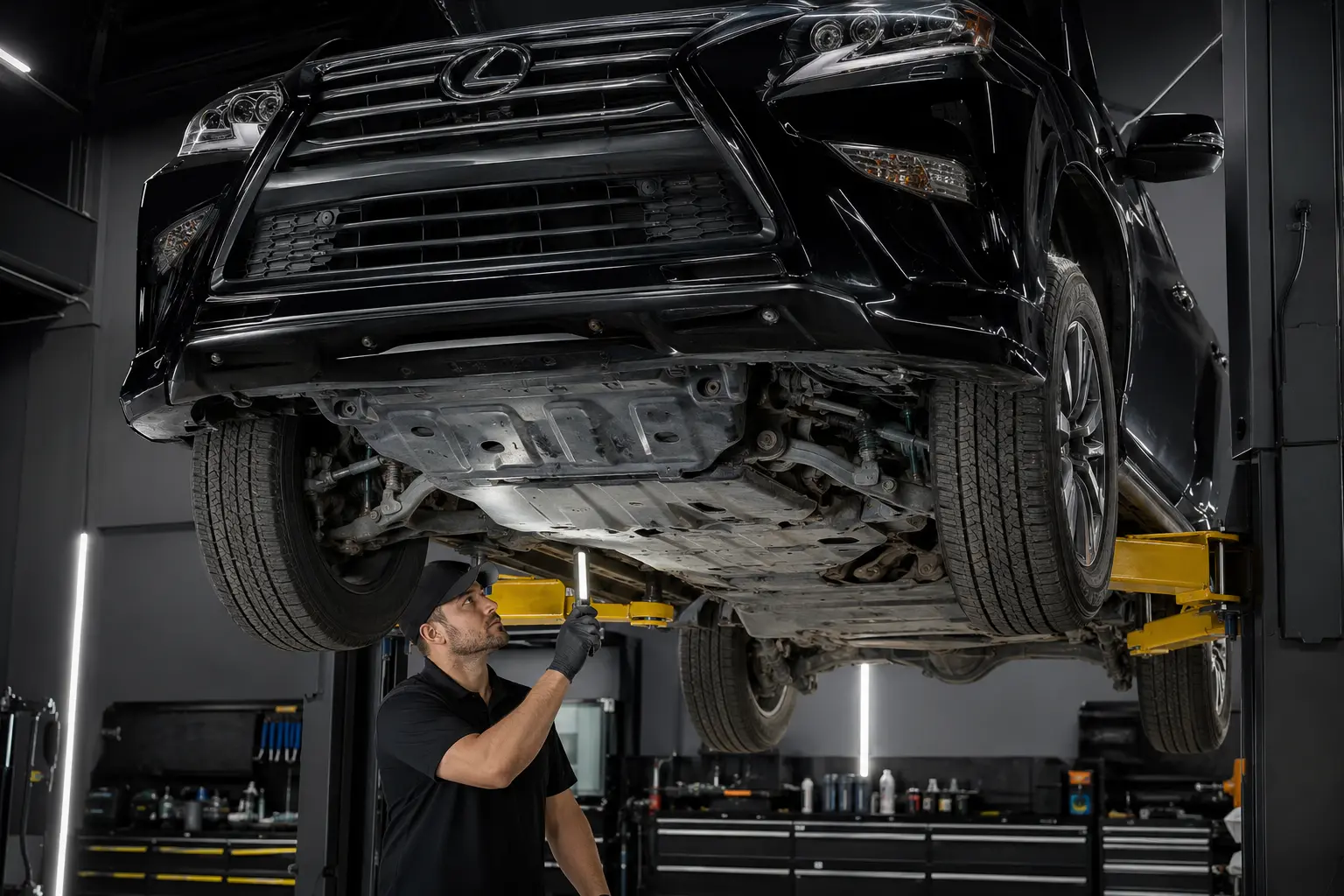
Underbody view
We look for impact evidence, corrosion, fluid traces, damaged covers, disturbed fasteners, exhaust condition, and accessible suspension or driveline concerns.
Low-speed control
Where conditions permit, we observe steering assistance, parking sensors, cameras, brake response, abnormal clunks, and driveline take-up.
Road response
We assess straight-line behavior, vibration, braking, transmission response, gas-engine or hybrid transitions, noise, and warning changes.
Post-drive review
After the drive, we recheck warning status, temperature, visible leakage, odor, and any symptom that appeared.
How the inspection moves from checks to a decision
A consistent sequence helps prevent clean presentation, brand reputation, or one warning code from dominating the conclusion.
Define the purpose
We record whether the inspection supports a purchase, ownership plan, sale, symptom review, or visible repair assessment.
Confirm identity
We note model, year, market, powertrain, displayed mileage, keys, records, equipment, and any inconsistency.
Check and record
We complete the agreed physical, functional, diagnostic, underbody, and road checks that access safely allows.
Connect findings
We compare body, mechanical, electronic, and documentary clues before suggesting an interpretation or next test.
Set priorities
We separate urgent concerns, diagnostic needs, maintenance, negotiation points, cosmetic matters, and unresolved limitations.
Read the Lexus report by consequence
A long list without priorities leaves the hardest work to you. Each important finding should state what was observed, where it was found, why it matters, and what next action could reduce uncertainty.
A warning message may require diagnostic investigation, while a cosmetic scuff may affect only the price discussion. Assess active driving faults alongside old codes. A clear scan does not rule out visible leaks, poor repairs or abnormal driving behaviour.
Immediate concern
Safety, legal-use, or inspection-stopping concerns should be clearly separated and explained without exaggeration.
Diagnosis before decision
An unresolved symptom, warning, leak, overheating clue, or network fault may need measurement or specialist testing before you judge price or suitability.
Planned maintenance
Tires, brakes, fluids, wear, and service evidence help you plan near-term costs even when the Lexus remains usable.
Cosmetic or contextual
Finish defects, trim wear, and minor equipment issues can affect value, but they should not be presented as equal to a mechanical or structural concern.
Dubai heat, storage, and specification
A Lexus in Dubai can face high ambient temperature, extended idling, short urban trips, long storage, and heavy air-conditioning use. Import specification, tire choice, and incomplete records can also change the inspection context.
Compare temperature-related symptoms
Cooling residue, hose condition, fan behavior, and temperature stability deserve attention, but a visual check cannot guarantee future cooling-system reliability. Inspector’s cooling-system and radiator inspection guide explains when pressure, temperature, or leak testing may go beyond a general inspection. Hybrid cooling inlets and warning history also matter, while battery capacity requires an appropriate method.
Do not assume GCC specification
We record available labels, documents, and equipment rather than judging market origin by appearance. Import vehicles can have different options, lighting, infotainment, driver-assistance calibration, or repair histories. The report confirms what the evidence supports and identifies inconsistencies.
Checks for a car used infrequently
Long storage can leave a weak 12-volt battery, flat-spotted tires, brake-surface corrosion, or incomplete readiness monitors. Tire dates, matching sizes, load ratings, condition, and pressure evidence matter especially on heavy SUVs and performance variants. The car tire inspection guide explains why tire age, damage, specifications and wear patterns also need checking.
Dubai conditions change the inspection priorities, but they do not prove a fault. The report connects heat, storage, specification, and tire evidence to this Lexus.
Check whether the records match the Lexus
Service records add value when they match the correct VIN, date, mileage, and work performed. A thick folder or a long digital list is not enough by itself.
Compare invoice dates and recorded mileage with the odometer display, tire dates, visible wear and any information available through the agreed inspection. Look for repeated cooling, battery, suspension, brake or warning-light work that may reveal a pattern. A replaced component is not automatically a problem, but the reason for replacement, quality of work and evidence of follow-up can affect confidence.
A stamped book, seller summary or screenshot may be incomplete. The inspector should describe what was supplied rather than claiming access to a complete dealer, insurer, police or government history. Official records must come from the relevant legitimate source. If service evidence cannot be verified, it can still be recorded as seller-provided material, but its limitation should remain clear.
For hybrids, ask whether there are invoices for cooling-system cleaning, 12-volt battery replacement, high-voltage work or warning diagnosis. For GX and LX models, review evidence related to suspension, steering, transfer systems, underbody damage, tire replacement and modifications. For luxury sedans, repeated electrical or climate-control work may be commercially important even when it does not prevent the car from moving.
The strongest conclusion comes when documents, physical condition, diagnostic status, and road behavior tell a consistent story. If they conflict, the report records the inconsistency and names the next document, measurement, or specialist test that could resolve it.
Used Lexus shortcuts to avoid
A reliable inspection joins multiple evidence sources. It should not let brand reputation, one scan result, one measurement, or low displayed mileage replace the full condition picture.
Do not assume reliability
Lexus has a strong market reputation, but that cannot describe one car. Maintenance gaps, collision repair, unsuitable tires, leaks, warnings, and modifications still need individual evidence.
Do not equate low use with good condition
Low displayed mileage can coexist with long storage, repeated short trips, overdue time-based maintenance, heat exposure, or repaired damage. Mileage is context, not a verdict.
Do not count codes
Several historical voltage-loss codes may matter less than one active fault affecting drivability or safety. We record the module, status, warning state, and related symptoms. Clearing codes before inspection removes useful evidence and is not a repair.
Do not price an unknown cause
A vibration, coolant trace, warning, or network fault may need pressure testing, electrical measurement, or system-specific diagnosis before a responsible repair quote is possible. The report separates confirmed defects from suspected causes.
The report should help you identify your own threshold. Cosmetic repair may be acceptable at the right value, while unclear overheating history, poor structural repair, or an unresolved hybrid warning may need further investigation before commitment. An owner can use the same priorities to plan maintenance.
Check the Lexus features you are paying for
Lexus ownership expectations extend beyond basic transportation. Climate control, powered seating, cameras, parking assistance, infotainment, lighting, and convenience equipment can materially affect value even when the engine and transmission operate normally.
We operate the features fitted to the individual vehicle and record what was tested, unavailable, or not present. A generic option list should never turn missing equipment into a failed check.
Air-conditioning deserves its own observation because Dubai cabin cooling is both a comfort expectation and an operating load. Weak cooling can have several causes, so one vent reading is not a complete diagnosis. The report should identify which zones and features were actually tested.
Long idling and low-speed use can reveal fan, charging or temperature behavior that a quick visual check misses, but inspection time remains limited. Likewise, a clean engine bay may reflect careful ownership or recent detailing. It must not be treated as proof that no leak exists. Fresh cleaning, disturbed covers or missing fasteners should be recorded neutrally and connected with other evidence before a conclusion is made.
Non-standard wheels, suspension, lighting, entertainment equipment, software, or body parts can affect ride, tire clearance, warnings, calibration, and insurability. We document accessible condition and operation, but do not approve a modification for registration, insurance, warranty, or legal compliance.
What affects Lexus Inspection in Dubai cost
The price depends on the selected package, vehicle location, model complexity, lift access, diagnostic coverage, hybrid capability, road-test conditions, and report format. A Lexus inspection in Dubai should be quoted against the actual work, not an unsupported figure copied from an old page.
Ask for the current total, VAT treatment, travel charge, included methods, exclusions, and likely duration before booking. Inspector’s car inspection cost guide explains what can affect the inspection quote.
Vehicle complexity
Large SUVs, performance variants, extensive comfort systems and hybrid drivetrains can require more preparation and evidence.
Inspection location
A mobile site may limit lighting, lift access, road testing or diagnostic conditions compared with a suitable workshop.
Selected methods
Paint readings, supported diagnostics, underbody viewing, road testing and specialist checks must be explicitly included.
Reporting needs
Photographs, diagnostic extracts, priority explanation, delivery timing and follow-up discussion should be confirmed in advance.
Prepare the Lexus for a useful inspection
Send exact details
Provide the model, year, mileage, powertrain, registration details where appropriate, location, and reason for inspection. Mention modifications, warnings, leaks, collision disclosures, or recent repairs.
Arrange safe access
Confirm keys, seller or owner permission, a safe inspection area, enough fuel or charge, and whether the Lexus can be moved, lifted, or road tested.
Gather documents
Collect service invoices, repair orders, tire receipts, previous reports, and campaign or recall information from legitimate sources. Lexus UAE provides an official 17-digit VIN recall search for manufacturer recalls and service campaigns. Missing records should remain marked as missing.
Agree the report
Confirm the checklist, exclusions, photographs, diagnostic information, priority format, delivery channel, timing, and whether follow-up explanation is included.
If a seller restricts scanning, photographs, lifting, a cold start, or the road test, the report states what could not be checked, why it matters, and the proportionate next step.
Lexus Inspection in Dubai questions from customers
These answers explain what the service can and cannot establish before you book.
Share the exact model, year, powertrain, location, and inspection purpose before confirming the appointment.
What is included in a Lexus inspection?
The agreed scope may cover identity, body and paint evidence, engine bay, cooling, tires, brakes, steering, suspension, accessible underbody areas, electrical functions, warnings, supported diagnostic data, cabin equipment, and road behavior. Confirm lift access, wheel removal, road testing, hybrid battery testing, and history verification separately.
Can you inspect a used Lexus before purchase?
Yes. A Lexus pre-purchase inspection, or Lexus PPI in Dubai, can focus on current condition, repair evidence, diagnostic context, likely near-term work, and unresolved limitations. It supports the purchase decision but cannot guarantee future reliability or prove every concealed fault is absent.
Does a clean diagnostic scan mean the Lexus has no faults?
No. A clean supported scan means no relevant code was retrieved from the modules reached under those conditions. Mechanical wear, recently cleared codes, dormant conditions, unsupported modules, and intermittent faults may remain. Scan data must be interpreted with physical and operational evidence.
Can a Lexus hybrid battery be tested?
Hybrid capability must be confirmed for the exact model and booked scope. Warnings, cooling condition, operational behavior, and accessible module data are different from an independent capacity or state-of-health test. Remaining battery life should not be claimed unless an appropriate model-specific method is included.
Can the inspection verify accident history?
The inspection can identify visible evidence consistent with refinishing, replacement, or repair, including paint patterns, finish differences, panel gaps, fasteners, and accessible structural clues. It cannot authenticate a complete accident history or exclude concealed and professionally finished repairs.
Is a road test always included?
No. Confirm the road test in the package. It also requires permission, suitable registration and insurance, safe vehicle condition, practical traffic, and an appropriate route. A short drive may not reproduce every speed, load, temperature, or intermittent symptom.
How long does a Lexus inspection take?
Time depends on model complexity, scope, condition, location, lift availability, diagnostic communication, road-test access, and the number of findings. Ask for a realistic appointment window after sharing the exact Lexus and your purpose.
How much does a Lexus inspection cost in Dubai?
Cost depends on the package, model, location, lift needs, diagnostic coverage, hybrid testing, and reporting requirements. Confirm the current total, VAT treatment, and inclusions before booking instead of relying on old ranges.
Book a Lexus Inspection in Dubai
Send the model, year, gas or hybrid powertrain, mileage, location, purpose, known warnings, and preferred time. Inspector can confirm the appropriate scope, access requirements, report format, and current price before the appointment.
Send these Lexus details
- Exact Lexus model and model year
- Gas or hybrid powertrain
- Current mileage and known specification
- Purchase, ownership or diagnostic purpose
- Vehicle location and seller permission
- Warning messages, symptoms or disclosed repairs