
Car accident inspection in Dubai
An accident inspection checks visible repairs, accessible structure, panel alignment, paint, safety warnings and mechanical concerns after a known or suspected impact. The report explains what was found and whether closer measurements, diagnostic tests or dismantling are needed.
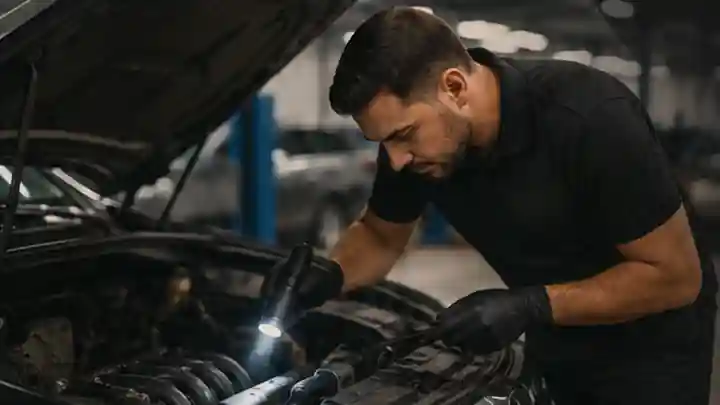
Price follows the damage question
Guide prices start from AED 250 for checks of a particular repair concern and AED 750 for a detailed accident inspection. Luxury-car checks can extend to AED 1,200, depending on the vehicle and required tests.
Follow the impact through the vehicle
A repaired bumper or painted panel is only the starting point. The useful inspection question is whether the visible repair is consistent with the reported damage and whether connected mounting points, systems or operating behavior show another concern.
- Look for
- Panel gaps, finish differences, fasteners, lamps, glass, seals, trims and deformation around the reported area.
- Meaning
- The pattern helps define which adjacent structure and systems require attention.
- Limit
- A clean exterior cannot prove that concealed reinforcement or mounting points are undamaged.
- Look for
- Paint-depth variation, filler clues, replaced panels, altered seams, disturbed corrosion protection and inconsistent fixings.
- Meaning
- These signs can identify repairs and areas that need closer access.
- Limit
- Paint readings vary with material and factory process; they do not date a repair or prove its complete extent.
- Look for
- Steering position, tire wear, suspension noise, cooling leaks, restraint warnings, lighting faults and diagnostic conditions.
- Meaning
- An impact can affect systems beyond the visibly repaired panel.
- Limit
- A code or symptom identifies a condition, not automatically the failed component or accident cause.
- Escalate to
- Geometry measurement, alignment, targeted electrical tests, pressure tests, restraint diagnosis or controlled dismantling when justified.
- Record
- The report should name the unresolved question and the test needed to answer it.
- Limit
- Further diagnosis and repair estimates are separate unless the quotation explicitly includes them.
What an accident inspection may examine
The agreed brief should start with the reported impact, repair invoices or auction photographs when available. It can then extend across the connected mechanical, structural and electronic areas that are accessible.
A buyer seeking a transaction-wide mechanical review may also need a separate pre-purchase inspection checks. Accident evidence alone does not describe the complete condition of an unrelated engine, transmission or convenience system.
Panel fit, paint texture, color match, overspray, filler clues, fasteners, glazing, lamps, trims and weather sealing around accessible areas.
Visible rails, aprons, floors, crossmembers, jacking points, seams, welds, reinforcements and mounting areas, subject to covers and access.
Visible arms, joints, struts, wheels, tires and steering behavior that may relate to impact position or alignment concerns.
Radiator support, cooling components, fluid leaks, mounts and operating observations where the collision area could have affected them.
Airbag, seat-belt and warning-lamp observations plus diagnostic evidence when included. A lamp-off state does not prove every restraint component is original or correct.
Lighting, cameras, parking sensors, harness routes and relevant modules where damage or repair work could affect operation.
Compare fault codes with the damage
Diagnostic results can identify control units that recorded active, stored or pending conditions, where supported by the vehicle. They may help connect a warning, communication problem or disabled function to the impact area. They cannot prove that a named part failed because of the accident.
Recently cleared faults, low voltage, disconnected components and incomplete drive cycles can change the information available. If a restraint, brake, steering or network fault is the main concern, request the relevant vehicle diagnostic investigation or airbag diagnostics rather than relying on a general code printout.
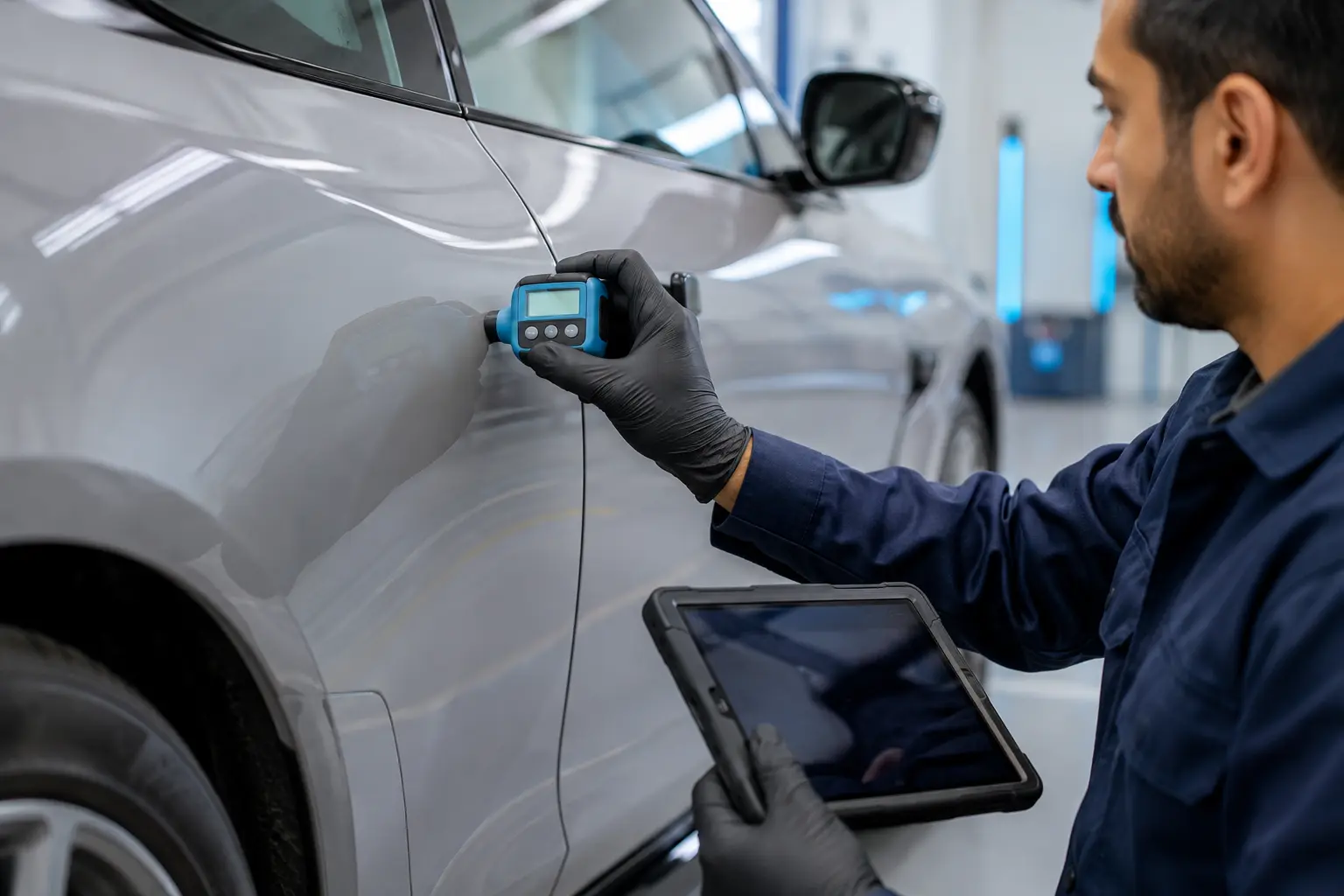
Paint and underbody methods answer different questions
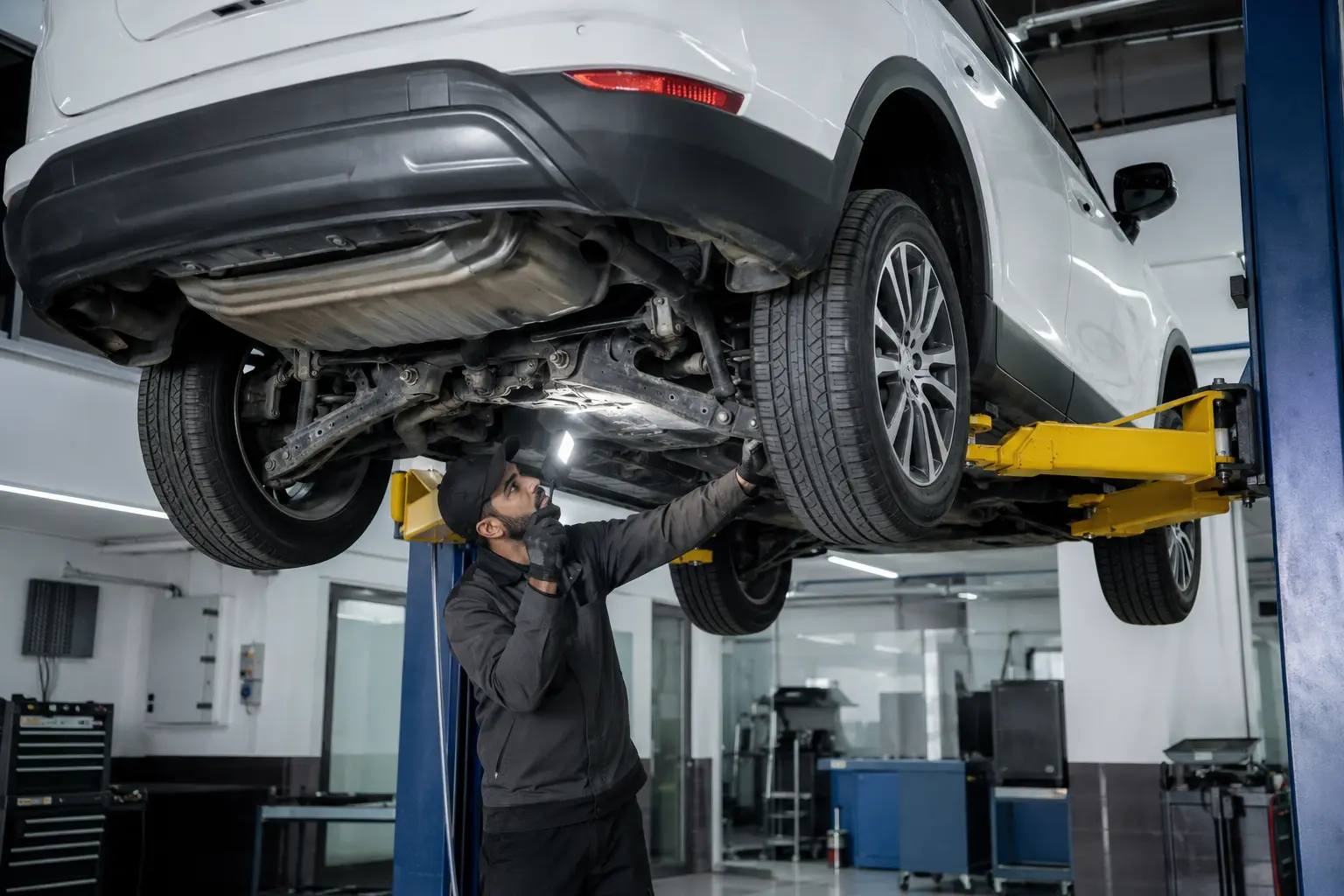
Surface measurements help map possible refinishing. Underbody access helps review lower structure, suspension mounting areas and repair work that cannot be judged from the exterior alone.
Workshop and mobile accident inspection
The better setting is the one that permits the required evidence. Confirm the inspection method and access, not only the address.
| Criterion | Workshop | Mobile |
|---|---|---|
| Price | Confirm whether the booking covers a particular repair concern or a detailed accident inspection. | Confirm the checks, location and travel charges together. |
| Underbody access | Lift access may be arranged when the quotation states it. | Ground-level viewing is more limited unless suitable access is separately available. |
| Lighting and space | A controlled bay can support finish, gap and lower-body observations. | Parking, shade, weather, security rules and surrounding vehicles affect the work. |
| Diagnostic scan | Confirm vehicle coverage and whether targeted testing is included. | Portable scanning may be available, but the same diagnostic limitations remain. |
| Road test | Only with permission, suitable registration, insurance, fuel and safe condition. | Seller authority, location and vehicle safety can prevent it. |
| Main limitation | No automatic dismantling or geometry measurement. | Reduced underbody visibility and less control over the working environment. |
No fixed mobile travel formula is published for accident inspections. The written quotation should confirm location, delivery method and total together. Review mobile inspection access requirements before arranging attendance at a seller or repairer.
What the accident report should clarify
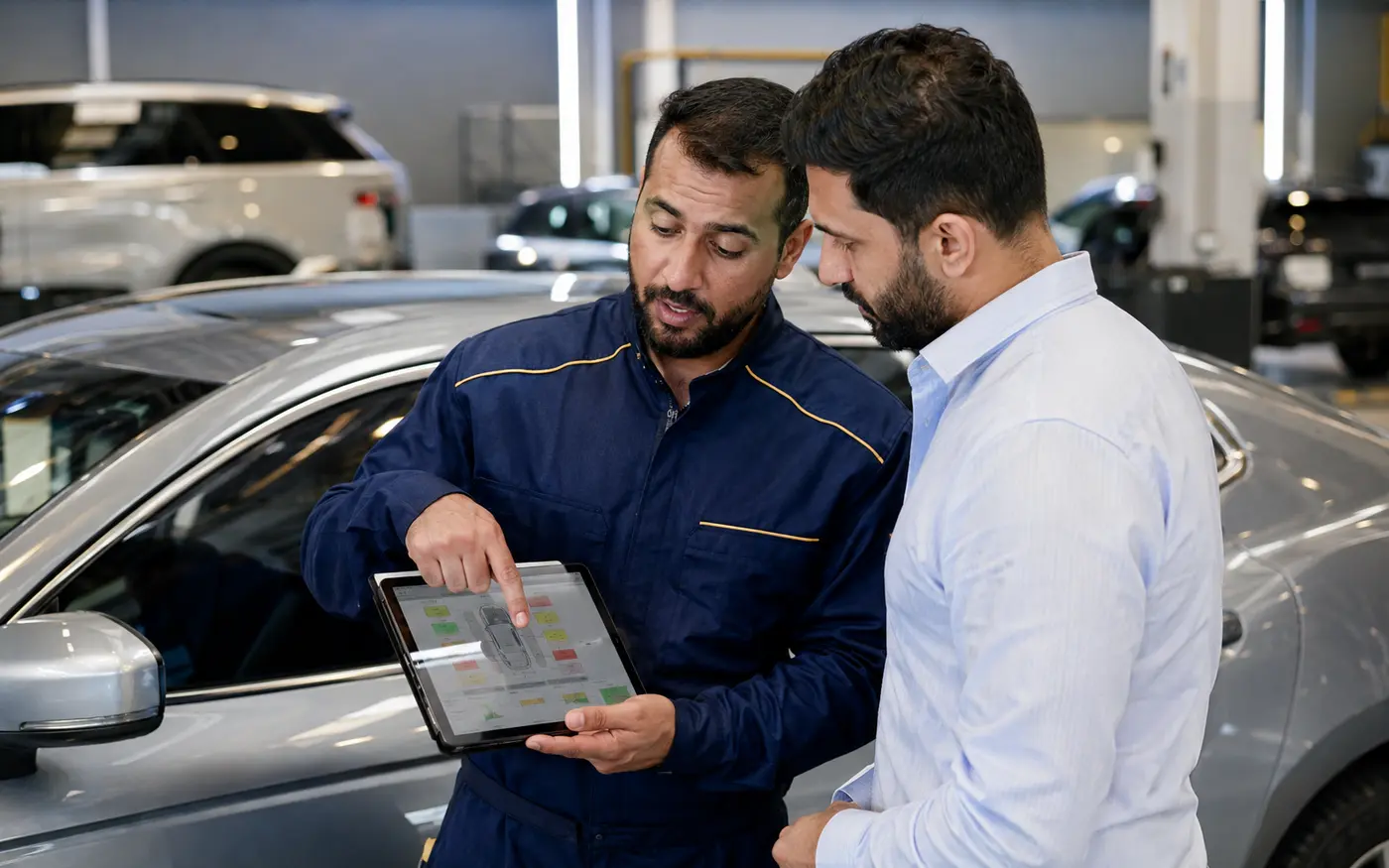
Ask for the vehicle identity, inspection date and location, reported damage, agreed methods, repair-evidence observations, photographs when included, diagnostic findings when included, inaccessible areas and recommended next tests.
The report should not certify repair quality, authenticate the complete accident history or promise future reliability. It should distinguish visible repair evidence from an engineering measurement and a stored fault from a confirmed diagnosis. The inspection report guide explains how to compare those findings.
What cannot be concluded automatically
Collision forces can affect several connected areas without leaving equal visible evidence in each one. A body observation, diagnostic result or short road test therefore answers only the question supported by that method. Restraint-system deployment, wheel geometry, driver-assistance calibration, cooling pressure loss or internal drivetrain damage may require dedicated equipment, measurements or dismantling after the inspection. The report should identify that next step without presenting an observation as a confirmed diagnosis.
No complete hidden-damage guarantee
Trim, insulation, sealant, covers, batteries and mechanical assemblies can conceal damage. A non-invasive inspection cannot see through them.
No automatic accident-history authentication
Observed repairs can be described. Their date, cause and complete history require reliable records or database access that must be separately verified.
No official certificate
Inspector’s private condition assessment is not an RTA roadworthiness test, government approval, insurer acceptance or repair-authorisation document.
No repair estimate by default
Geometry work, parts identification, dismantling and workshop quotations may create separate costs after the inspection identifies the next question.
Details needed for an exact quote
Send the vehicle make, model, year, location and whether it is driveable. State the impact area, current repair state, warning lights, steering or cooling symptoms, seller or repairer access, available photographs and the decision the inspection must support.
Also identify whether lift access, paint-depth readings, diagnostic scanning, a road test, photographs or a written report are essential. Inspector can then confirm the repair-evidence or detailed accident scope, VAT status and total payable amount.
Accident inspection questions
How much does a car accident inspection cost in Dubai?
Guide prices start from AED 250 for checks of a particular repair concern and AED 750 for a detailed accident inspection. Luxury-car checks can extend to AED 1,200. Confirm the included work, location, access, VAT and total in your quote.
How do focused repair checks and a detailed accident inspection differ?
Focused checks address a particular bodywork or repair concern. A detailed inspection can cover bodywork, accessible structure, underbody, mechanical systems and diagnostics. Ask for the exact checks and report details in the quote.
Can the inspection prove a car has never been in an accident?
No. It can document visible and measurable repair evidence within the agreed access. It cannot guarantee a complete accident history or reveal every concealed repair without suitable records and dismantling.
Is paint-depth testing included?
Only when the quotation includes it. Readings need comparison across panels and materials. They can support a refinishing observation but do not prove the date, cause or complete extent of a repair.
Does the inspection include chassis measurement?
Do not assume it does. Accessible structural observations are different from dimensional geometry measurement. If alignment or chassis dimensions are central to the decision, request the required method before booking.
Can Inspector check the underbody?
Yes when the agreed location and access allow it. A lift can improve visibility. Covers, coatings and ground-level mobile access may leave material areas unseen, and the report should record that limitation.
Are airbags and seat belts checked?
Visual, warning-lamp and diagnostic observations may be included in the agreed scope. These do not prove every concealed restraint component is original, correctly installed or capable of future operation.
Will a diagnostic scan find accident damage?
A scan may reveal conditions in accessible control units, but it does not find physical damage by itself or prove why a code was stored. Wiring, voltage, software and related sensors can produce similar results.
Can the inspection be performed at a seller or body shop?
If you searched for a car accident inspection near me, mobile attendance may be possible at an agreed location with permission, safe working space, suitable lighting, and vehicle access. An appointment at Al Quoz 4, Dubai may be more appropriate when the inspection needs lift access, controlled measurement, extended diagnostics, or safer road-test planning.
Is a road test always included?
No. It depends on the quotation, owner permission, safe vehicle condition, registration and insurance status, fuel and suitable roads. A repaired but unsafe or incomplete vehicle should not be driven for inspection.
Does the report work for an insurance claim?
Inspector should not be assumed to issue an insurer-approved or certified claim document. Ask the insurer what evidence and provider criteria it requires, then confirm whether the proposed inspection output is suitable.
Can Inspector estimate the repair cost?
A condition inspection can identify observations and recommended diagnosis. Parts pricing, dismantling, geometry work and a repair estimate are separate unless the written quotation specifically includes them.
Should I book accident inspection or pre-purchase inspection?
Choose accident inspection when repair evidence is the main question. Choose a broader buyer inspection when you also need unrelated mechanical, functional and transaction condition reviewed. Inspector can combine requirements in one written scope where offered.
What if the seller refuses access?
Restricted access reduces what the inspection can establish. Confirm permission before attendance and ask how cancellation, incomplete work or a return visit would be handled. No universal public policy is assumed.
Is Inspector’s assessment an official RTA test?
No. It is a private vehicle-condition inspection. It does not issue an official roadworthiness certificate, approve registration or guarantee that a vehicle will pass government testing.
What should I send before requesting a quote?
Send the make, model, year, location, impact area, repair stage, known symptoms, available photographs or invoices, access conditions and the evidence or report needed. These details determine the suitable scope.
Arrange the accident checks you need
Prepare the vehicle details, damage location, repair state, access conditions and required output. Inspector can then confirm the inspection scope, exclusions, VAT treatment and payable total.