
Volvo Inspection in Dubai
Have a Volvo checked before buying or planning maintenance. Inspector reviews the agreed bodywork, mechanical and diagnostic checks, powertrain, safety and comfort functions, with road observations where possible. The report explains important findings, their urgency and any further tests needed.

Choose the Volvo inspection around your decision
The right scope depends on your goal. A pre-purchase decision, an ownership condition review, a warning investigation, and a post-repair check need different evidence.
Buying a used Volvo
Before purchase, you need evidence that can affect safety, value, near-term cost, or confidence. This includes repair clues, current faults, deferred maintenance, tires, brakes, electronic warnings, fluid leaks, and unresolved limits. Volvo’s approved-used inspection information also highlights engine and gearbox, brakes and tires, body, lighting, interior condition, lift inspection, and service history. Inspector’s assessment is separate from Volvo Selekt certification.
Checking an owned Volvo
An inspection can help you plan maintenance or prepare for a long trip, warranty expiry or sale. It records the car’s current condition; hidden and future faults remain possible.
Investigating symptoms
A warning, vibration, noise, charging concern, or intermittent electrical issue may need diagnosis beyond a general inspection. We record the symptom, test conditions, and accessible data so the right specialist work can follow.
Reviewing repair quality
After body or mechanical work, we can review accessible workmanship, panel fit, operation, and visible components. Hidden repair quality still requires dismantling or specialist measurement.
Before booking, share the year, exact model, gas, hybrid, or electric powertrain, mileage, GCC or import specification where known, warning messages, location, and reason for inspection.
Volvo Inspection in Dubai priorities by model
Model family helps set the brief, but generation, equipment, drivetrain, history, and previous use determine what deserves attention.
XC40 and EX40
Confirm the exact XC40 or EX40 powertrain because similar-looking vehicles can use gas, mild-hybrid, plug-in hybrid, or fully electric systems depending on year and market. Charging and battery-related checks need a separately defined scope.
XC60
For XC60 models, we inspect family-use wear, wheels and tires, suspension response, driver-assistance warnings, cooling evidence, and comfort systems. Plug-in hybrids require clarity about available high-voltage checks and battery information.
XC90
A seven-seat XC90 can bring higher tire, brake, and suspension costs. We check seating and rear climate functions, tailgate, cameras, parking systems, fitted ride-height equipment, and signs of heavy use or poor repair.
S60 and S90
S60 and S90 sedans need attention to steering precision, straight-line behavior, tire wear, cabin electronics, seat functions, and evidence of fleet or high-mileage use. Import specification and incomplete history remain explicit limitations.
V60 and V90
V60 and V90 wagons add cargo-area, tailgate, rear-trim, and load-use evidence. Cross Country versions can require extra attention to underbody exposure, wheel and tire suitability, and suspension condition.
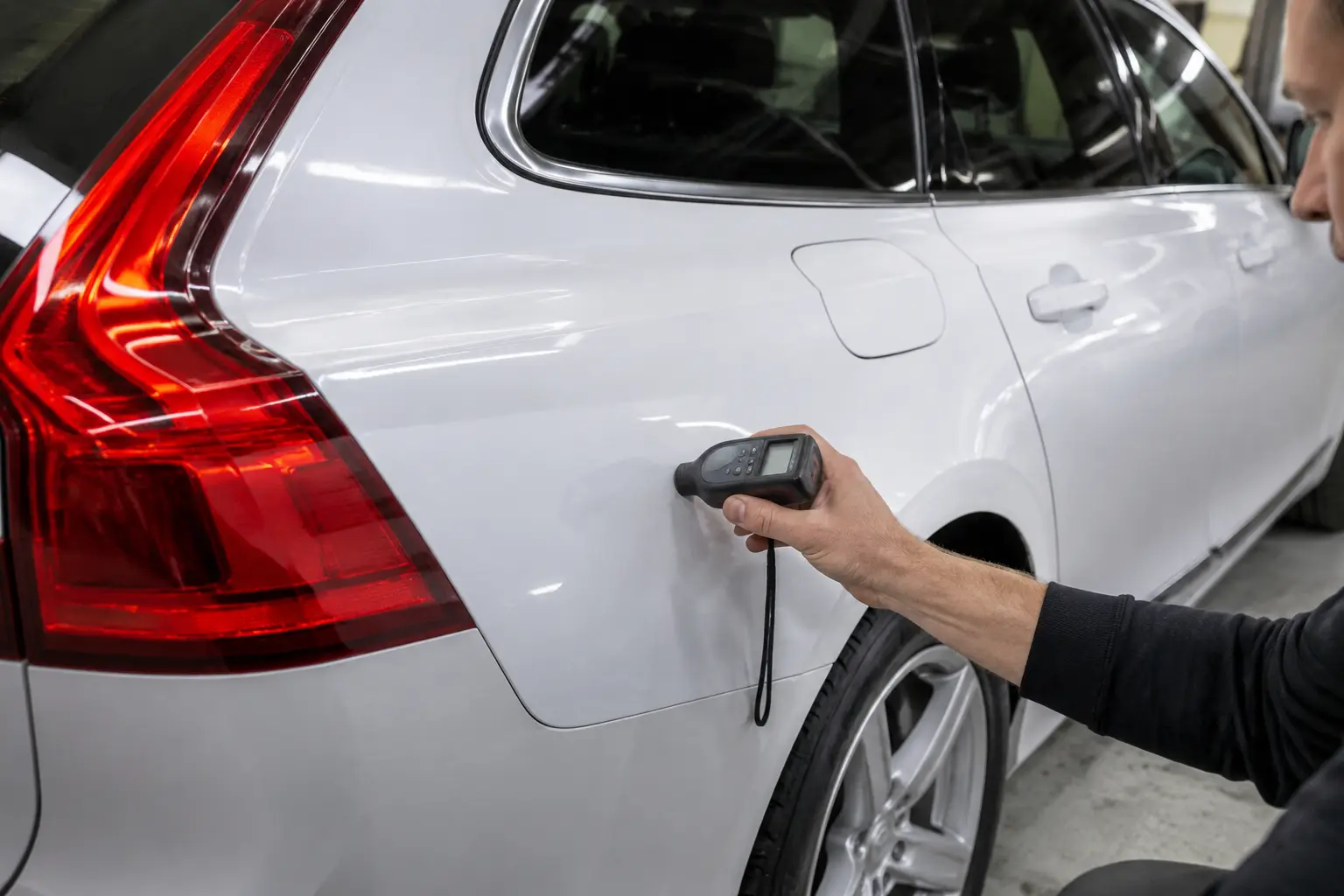
Compare the findings across the car
A paint reading, code, or service invoice rarely proves a complete story. We compare independent observations and separate what was seen from what it may mean.
Vehicle identity
We record VIN visibility, registration details, model, displayed mileage, powertrain, and visible specification. Any inconsistency stays in the report until supported evidence resolves it.
Bodywork
We compare paint-depth patterns, finish, overspray, masking lines, gaps, fasteners, glazing dates where visible, and accessible structure. These clues identify areas for review but do not prove complete accident history.
Mechanical checks
We look for leaks, contamination, abnormal noise, mount movement, cooling residue, belt or hose condition, underbody damage, and wear that conflicts with the supplied history.
Diagnostic checks
Warnings, supported module data, and code context help identify affected systems. A scan is a snapshot and cannot prove every control module or intermittent fault is healthy.
Choose the correct powertrain pathway
Volvo inspection scope should identify the powertrain before testing. Gas, mild-hybrid, plug-in hybrid, and electric vehicles expose different evidence and limitations.
Gas vehicles
We check cold-start behavior when available, visible leaks, cooling, noises, exhaust behavior, mounts, accessible intake and hoses, fluids, and supported diagnostics. Turbo concerns may need further testing if boost, smoke, or performance symptoms appear.
Mild hybrids
A mild-hybrid Volvo is not the same as a conventional gas model. We check system warnings, 12-volt condition, start-stop behavior, and accessible battery or charging information. Integrated starter-generator concerns may need specialist testing.
Plug-in hybrids
For plug-in hybrids, we review the charge port, charging behavior where facilities allow, warnings, gas-engine operation, drive-mode transitions, and accessible high-voltage information. A general inspection does not certify battery capacity.
Fully electric models
For electric Volvos, we review charging equipment, charge port, warnings, thermal-management evidence, visible battery enclosure, tires, brakes, and drive behavior. Battery state of health requires suitable data and must be explicitly included.
Volvo Inspection in Dubai cooling and thermal checks
Dubai heat makes cooling and thermal-management checks important, but a visual review cannot predict every future failure. The goal is to identify present clues and recommend the next test when needed.
- Coolant level and visible condition when safe to inspect
- Residue around accessible hoses, connections, radiator and expansion tank
- Fan operation and temperature behavior within the agreed test conditions
- Oil, coolant or other fluid contamination clues
- Underbody stains and signs that leaks may have been cleaned recently
- Air-conditioning operation as a separate comfort and load-related observation
- Thermal-management warnings on hybrid and electric variants
For deeper coverage, Inspector’s cooling-system and radiator inspection guide explains when pressure tests, temperature data, or leak diagnosis may go beyond a general inspection.
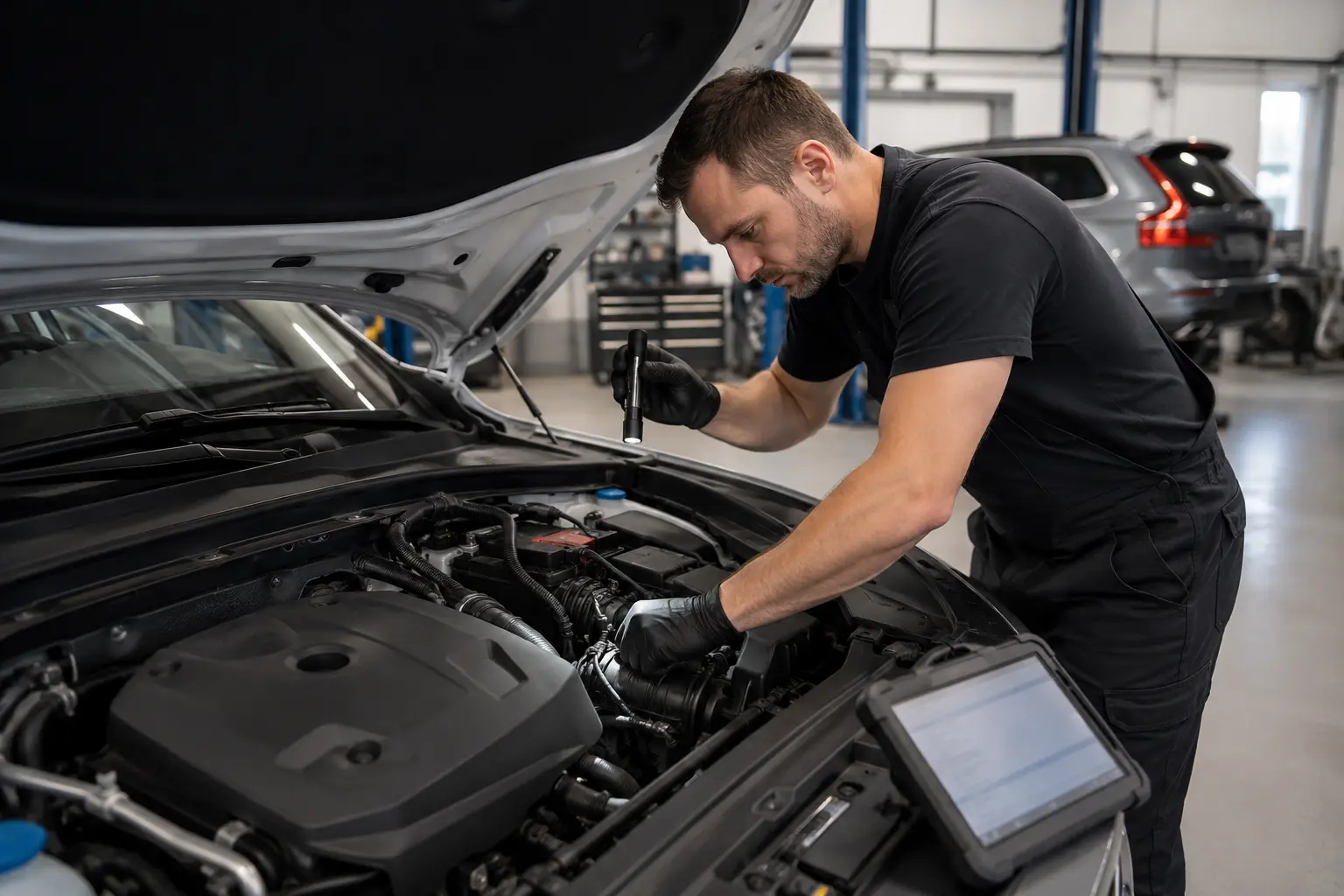
What your Volvo inspection can cover
Confirm the exact checklist before booking. The table shows common evidence areas and where additional access or testing may be needed.
| System | Checks that can help | Why it affects the decision | Important limit |
|---|---|---|---|
| Body and structure | Paint patterns, finish quality, gaps, fasteners, glass, lamps, accessible underbody and repair clues | Previous work can affect value, corrosion risk, alignment and confidence | Concealed repairs cannot be excluded without dismantling or measurement |
| Engine and cooling | Start behavior, noise, visible leaks, residue, fluids, hoses, mounts and supported data | Overheating or lubrication concerns may lead to significant diagnosis and repair | A short inspection cannot predict component life or reproduce every intermittent fault |
| Transmission and driveline | Selection behavior, shift quality, vibration, noises, boots, visible leaks and road response | Abnormal operation may affect safety, usability and ownership cost | Internal condition is not proven without specialist testing or dismantling |
| Steering and suspension | Play, noise, bushes, joints, dampers, springs, ride-height behavior and tire-wear clues | Wear influences control, comfort, alignment and tire life | Lift access and road-test permission affect what can be checked |
| Brakes and tires | Visible friction condition, fluid evidence, warning lights, tire age, tread, damage and matching specification | These are immediate safety and near-term expenditure considerations | Wheel removal, measured disc thickness or internal hydraulic testing must be agreed |
| Electrical and diagnostics | Battery condition where tested, functions, warning messages, supported module scan and fault context | Networked faults can affect several systems and may be expensive to trace | No-code results do not exclude cleared, intermittent or unsupported faults |
| Driver support and cameras | Where fitted, check visible camera and sensor condition, warning status and basic operation of systems such as Pilot Assist and BLIS alongside other driver-support functions | Collision repair, windshield replacement, wheel alignment or sensor disturbance can create calibration or function concerns | Equipment varies by model and year, and calibration accuracy requires appropriate Volvo-compatible procedures and equipment |
| Cabin and convenience | Climate, displays, seat functions, locks, tailgate, cameras, windows and moisture clues | Multiple small faults can materially change repair priorities and value | Identify the fitted options and confirm which will be checked |
Check tire age, heat damage, sidewalls, type, load rating and uneven wear as well as tread depth. See the car tire inspection guide for more detail.
How the inspection moves from checks to a decision
A consistent sequence prevents presentation or one warning code from dominating the whole assessment.
Define the vehicle
We confirm identity, generation, market specification, powertrain, displayed mileage, and the decision you need to make. Missing records and access restrictions are recorded early.
Observe without assumptions
We examine the exterior, cabin, engine bay, and accessible underside, keeping physical evidence, function results, and possible explanations separate.
Test under the relevant conditions
Where permitted, we combine supported diagnostics and a safe road test with warnings, noises, temperature, shifting, steering, braking, and static observations.
Prioritize the findings
We group urgent concerns, near-term work, monitoring items, and unresolved questions so you know what to do next instead of simply counting defects.
A road test depends on registration, insurance, fuel or charge, vehicle condition, owner permission, traffic and a safe route. If it cannot be performed, the report should state exactly which dynamic observations remain unavailable.

Turn the Volvo report into action
Your report should identify the vehicle, date, location, inspection conditions, and scope. Each material finding needs plain language, useful images where included, and clear limitations.
A stored code can be historical, current, or intermittent. Paint variation may indicate refinishing without proving structural damage. Uneven tire wear may justify alignment or suspension checks without diagnosing the cause by itself.
For buyers, the report should answer four questions: Is there an immediate safety concern? Is diagnosis needed before purchase? What could affect negotiation? Which uncertainty must you accept? Inspector’s vehicle inspection checklist guide can help you prepare.
Read the Volvo report by consequence
A long list without priorities creates anxiety instead of clarity. Findings should be ranked by evidence, urgency, and their effect on your decision.
Questions your report should answer
- What was actually inspected and under which conditions?
- Which systems could not be checked and why?
- Which observations or readings support each important finding?
- What is confirmed, suspected or still unknown?
- Which item needs immediate action or specialist testing?
- Which issues may influence price or ownership planning?
- Were warning lights, codes or drive symptoms present?
- Does the visible condition broadly align with age, mileage and records?
Dubai heat, history, and specification
Heat exposure
High ambient temperature adds demand to cooling, air conditioning, batteries, tires, and interior materials. We look for present deterioration and operational evidence without claiming climate alone caused a defect.
Imported vehicles
An imported Volvo may differ in lighting, cooling, navigation, connected features, charging hardware, warranty position, and available history. Country of origin does not determine condition, but specification and documentation matter.
Service records
Invoices and digital records strengthen the condition story when VIN, date, mileage, work description, and provider are coherent. Stamps or screenshots alone are not authenticated history.
Long storage
Low mileage does not equal low risk. Storage can affect batteries, tires, brakes, seals, fluids, and fuel. We compare dates and actual condition instead of relying on the odometer alone.
If dashboard messages or intermittent warnings are central to your decision, the warning-light diagnostics guide explains why code reading, symptom reproduction, and electrical testing are separate steps.
Prepare the Volvo for a useful inspection
Send exact details
Provide model, year, VIN where appropriate, mileage, market specification, powertrain, location, and purpose. Mention modifications, warnings, collision disclosure, or recent repairs.
Arrange access
Confirm keys, registration, seller permission, secure access, enough fuel or charge, and whether lift access and a road test are included. Ask whether diagnostics support the exact model.
Gather records
Collect service invoices, prior reports, tire receipts, repair documents, and charging equipment. For safety campaigns, use Volvo’s official recall information and the appropriate retailer or market channel.
Confirm report details
Confirm the report format, images, limitations, follow-up explanation, current price, and timing before booking.
What a Volvo Inspection in Dubai can prove
A responsible inspection separates completed checks from conclusions that need specialist equipment, dismantling, or longer observation.
Visible condition
Exterior, accessible structure, cabin features, engine-bay components, tires, brakes, and underbody areas can provide valuable evidence. Covers, ride height, light, and access still limit visibility.
Diagnostic snapshot
Supported module data can reveal current, stored, or intermittent faults. It cannot guarantee access to every control unit or exclude mechanical wear, cleared codes, dormant conditions, or unsupported systems.
Road behavior
A permitted road test adds evidence about steering, braking, shifting, vibration, noise, temperature, and drivability. It remains a short observation under available route and traffic conditions.
Battery readings
On hybrid and electric Volvos, warnings, charging behavior, and accessible data are different from a measured capacity assessment. Internal health and remaining life require an appropriate model-specific method.
Repair history
Paint patterns, finish differences, gaps, overspray, fasteners, and accessible structural clues may indicate work. They cannot authenticate complete accident history or rule out concealed professional repairs.
Future reliability
An inspection records condition at one time. It may identify wear, leaks, abnormal operation, and maintenance needs, but cannot guarantee future reliability or remaining component life.
Use limitations as decision information
If a road test, lift, cold start, diagnostic connection, charging check, or record review cannot be completed, that missing evidence can affect your decision. The report should say what was unavailable and what next step could reduce uncertainty.
This is more useful than a generic pass or fail. Buyers can separate cosmetic issues from unresolved high-cost concerns, while owners can distinguish maintenance planning from fault diagnosis.
Used Volvo shortcuts to avoid
Inspection quality depends on interpretation, not only the number of checks. These shortcuts can make a long report less useful.
Do not buy the badge
Volvo’s safety reputation cannot describe one used vehicle. Collision repair, maintenance gaps, unsuitable tires, warnings, and incomplete history still need individual evidence.
Do not count codes
Ten stored codes are not automatically worse than one active, decision-critical fault. We record status, module, warning state, and symptoms instead of treating code count as a verdict.
Do not treat mileage as condition
Low displayed mileage can coexist with long storage, short trips, heat exposure, overdue time-based maintenance, or repair. We compare wear, dates, records, and mileage without claiming to authenticate complete history.
Do not price unknown work
A coolant trace, vibration, or network fault may need pressure testing, measurement, or system-specific diagnosis before anyone can quote responsibly. We separate confirmed defects from recommended diagnosis.
Ask what would change the decision
Decide what evidence would make you proceed, renegotiate, seek specialist help, or walk away. Cosmetic repair may be acceptable at the right value, while unclear overheating history or damaged high-voltage protection may need investigation first.
Owners may use a different threshold to separate maintenance from diagnosis and build an order of work. In both cases, useful language states what was found, how it was checked, what remains unknown, and the proportionate next action.
How previous use changes a Volvo inspection
Two Volvos with the same year and mileage can present different risks because previous use, storage, roads, and modifications leave different evidence.
Urban family use
Frequent short trips and parking can show through wheel scuffs, bumper repairs, door-edge damage, battery stress, brakes, seats, tailgate, and climate controls. These clues do not prove neglect but can explain accumulated wear.
Motorway mileage
High-mileage use may produce stone chips, windshield marks, tire wear, and seat wear while other systems remain orderly. We still check straight-line behavior, vibration, driver-assistance warnings, cooling stability, and maintenance intervals.
Desert and rough access
For construction, gravel, or unpaved access, we inspect lower bumpers, undertrays, wheel-arch liners, tires, wheels, accessible suspension, and the underside for impact or abrasion.
Long-term storage
A stored car may show tire flat spots, brake-surface corrosion, weak batteries, stale fluids, seal deterioration, or incomplete readiness. Ask when it last completed a normal drive cycle.
Modified vehicles
We document non-standard wheels, suspension, software, lighting, audio, or body parts and any related warnings, rubbing, alignment changes, tire concerns, or calibration uncertainty. The inspection does not certify legality, insurance acceptance, or warranty status.
This use-based view prevents a cosmetic defect from becoming a mechanical crisis and stops an immaculate detail job from hiding cooling residue, warnings, or inconsistent repairs.
Before booking, confirm cold-start availability, diagnostic access, road-test permission, keys, charging cables, and removable accessories. If access changes, the report should identify the reduced scope.
Volvo Inspection in Dubai questions from customers
These answers explain what the service can and cannot establish for the exact Volvo.
Share the model, year, powertrain, location, and inspection purpose before confirming the appointment.
What is included in a Volvo inspection?
The agreed scope may cover identity, body and paint evidence, engine bay, cooling, tires, brakes, steering, suspension, accessible underbody areas, electrical functions, warnings, supported diagnostics, cabin equipment, and road behavior. Confirm lift access, wheel removal, road testing, high-voltage testing, and history verification separately.
Can you inspect a used Volvo before purchase?
Yes. A Volvo pre-purchase inspection, or Volvo PPI in Dubai, can focus on current condition, repair evidence, diagnostic context, likely near-term work, and unresolved limits. It supports your purchase decision but cannot guarantee future reliability or prove every concealed fault is absent.
Can every Volvo control module be scanned?
Not always. Access depends on model, year, system condition, communication, and equipment. A scan can retrieve data from supported modules but cannot exclude cleared codes, dormant conditions, unsupported systems, or intermittent faults.
Are plug-in hybrid and electric Volvos covered?
They can be inspected when exact capability and scope are confirmed. Visible battery-enclosure checks, warnings, charging observations, and accessible data differ from a measured state-of-health assessment.
Can the inspection verify accident history?
The inspection can identify visible signs of refinishing, replacement, or repair, including paint patterns, finish differences, gaps, fasteners, and accessible structural clues. It cannot authenticate complete accident history or exclude concealed repairs.
Does a clean diagnostic scan mean no faults?
No. A clean supported scan means no relevant code was retrieved under those conditions. Mechanical wear, cleared codes, unsupported modules, and intermittent problems may remain.
How long does a Volvo inspection take?
Time depends on model complexity, scope, condition, access, diagnostic communication, road-test availability, and findings. Ask for a realistic window after sharing the exact Volvo and purpose.
How much does a Volvo inspection cost in Dubai?
Cost depends on package, model, location, lift requirements, diagnostic scope, and specialist testing. Confirm the total, VAT treatment, and inclusions before booking. The car inspection cost guide explains what can change the price.
Book a Volvo Inspection in Dubai
Send the model, year, powertrain, location, purpose, known warnings, and preferred time. Inspector can confirm the right scope, access requirements, report format, and current price before the appointment.