
Uneven panel fit, unexplained repairs or abnormal handling can justify a closer structural assessment, but none proves frame damage on its own. A useful inspection records the observation, its location and the further checks needed.
Do not rely on polished paint, a clean scan or a short drive as proof that a car’s structure is undamaged. Equally, a repaint does not automatically mean the frame is bent.
What “frame damage” needs to clarify
Ask which part is involved: an outer panel, a removable subframe or a structural body or chassis component. These are different findings. The report should identify the location rather than use a broad label without photographs or explanation.
Whether a damaged structural component can be repaired depends on the vehicle, material and manufacturer procedure. I-CAR’s repair information resources emphasise using vehicle-specific repair information. A small-looking bend should not be declared harmless from its appearance alone.

Signs worth recording during a viewing
- Panel gaps that differ noticeably from the corresponding area on the other side.
- A door, bonnet or boot lid that binds or does not close normally.
- Unexplained welds, disturbed seams or fresh coatings in an accessible repaired area.
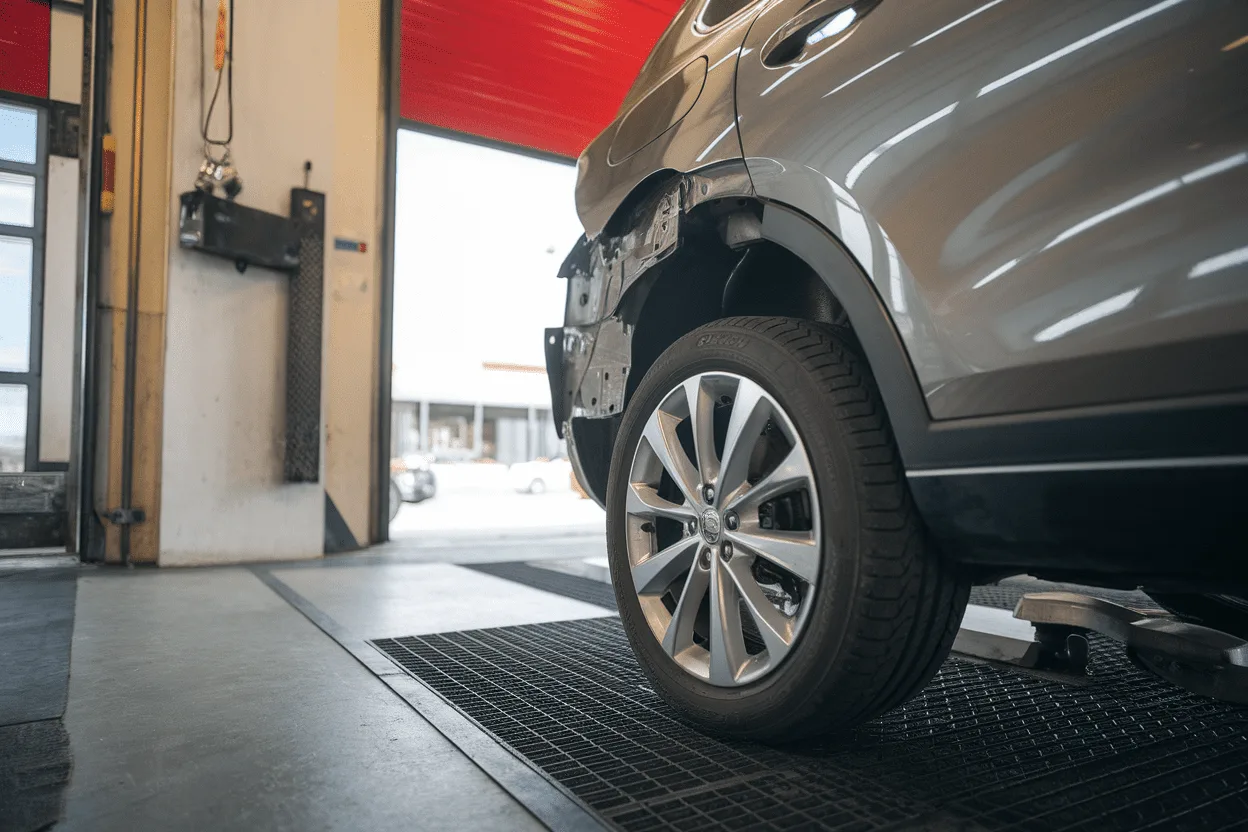
- Visible damage around an accessible mounting point or underbody area.
- Unusual tyre wear, steering pull or a vehicle that sits unevenly.
Each observation can have more than one cause. For example, hinge adjustment, a replaced outer panel, tyre condition or suspension faults can affect what you see or feel. Record the symptom and ask for diagnosis rather than declaring a bent chassis.
Keep the viewing safe
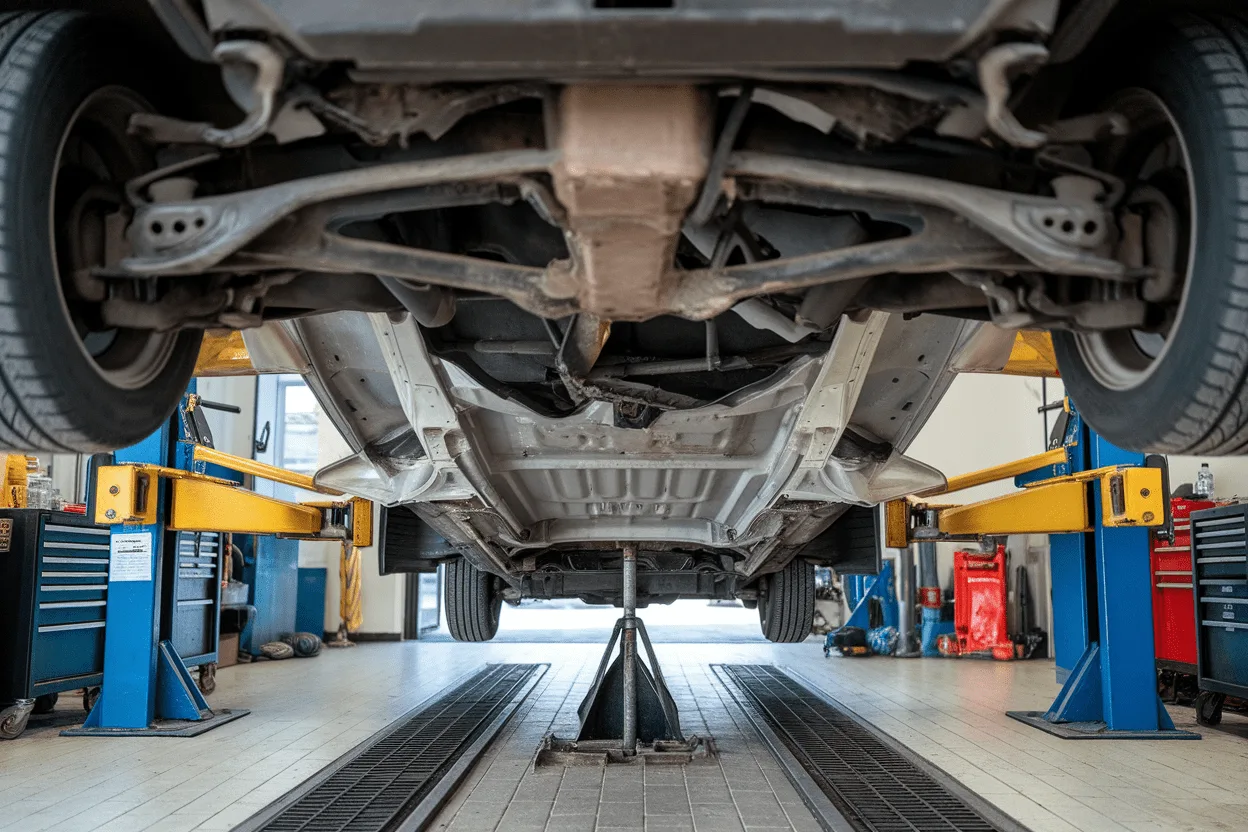
Look only from positions you can reach safely. Do not crawl underneath a car supported only by a jack. Underbody access should be arranged with suitable lifting equipment and a trained technician. Do not remove trim or coatings from a seller’s vehicle without permission.
What the different checks can establish
Visual inspection
This can record accessible damage and repair signs. Trim, undertrays and other components may conceal areas. Ask the report to state these access limits.
Paint measurements
Readings on compatible panels can support an assessment of previous refinishing. They do not measure chassis alignment or establish the cause of a repaint. See our body and paint inspection guide for that separate task.
Wheel alignment
Alignment readings describe wheel geometry. If a reading is outside specification, its cause still needs diagnosis. Do not treat an alignment printout as a complete structural assessment.
Structural measurements
Where indicated, a specialist can compare relevant reference points with the correct manufacturer information. Ask which points were measured, what data was used and what remains inaccessible. A generic ruler or laser-level check is not a substitute for an appropriate measuring procedure.
Electronic diagnostics
A diagnostic scan can add information about supported electronic systems. It cannot certify that the frame is straight, and a scan with no relevant codes does not rule out previous collision work.
Ask for evidence of previous repairs
Request original damage photographs, itemised repair invoices and any relevant structural measurement, restraint-system or calibration records. Match the VIN and dates to the vehicle you are considering.
Ask a specialist to explain whether the documented work follows the applicable manufacturer procedure. Do not assume every component can be straightened, heated or welded. A repair decision needs the correct model-specific information.
Our accident-history guide explains the limits of record searches. An empty history result does not cancel out a physical concern, and an accident entry alone does not describe the quality of a completed repair.
What a useful report should say
- The exact area and the observation, supported by clear photographs.
- Whether the finding is confirmed damage, a repair sign or an unresolved concern.
- Which inspections or measurements were actually completed.
- Access restrictions and any checks not performed.
- The next assessment needed before a purchase or repair decision.
Confirm whether your pre-purchase inspection includes suitable underbody access or whether structural measurements need a separate specialist booking.

What to do if a structural concern remains
Pause the purchase and ask for the missing evidence or a suitable independent assessment. Request a written scope and cost for further checks. A discount does not resolve uncertainty about the repair method or present condition.
If the car already belongs to you and its handling or structure is in question, ask the assessing technician whether it should be transported rather than driven. Do not continue road testing a car that may be unsafe.
Questions about frame-damage inspection
Can a road test rule out frame damage?
No. It can reveal symptoms under the conditions tested, but it does not expose or measure every structural area.
Is every uneven panel gap evidence of a crash?
No. Fitment, adjustment and other causes need to be considered. Ask for the observation to be assessed in context.
Can an inspection guarantee there is no hidden damage?
No. The report should identify its scope and access limits so you can decide whether further measurements or specialist checks are needed.