
Car inspection checklist in Dubai
Use this checklist to prepare for an inspection and understand the findings. It covers mechanical, electrical, bodywork, tire, underbody and function checks that may be included. Agree the areas and methods needed for your vehicle before booking, and ask the report to identify anything that could not be checked.
The included checks depend on the service, vehicle and access. A visible symptom or fault code may need further testing to confirm an internal problem.
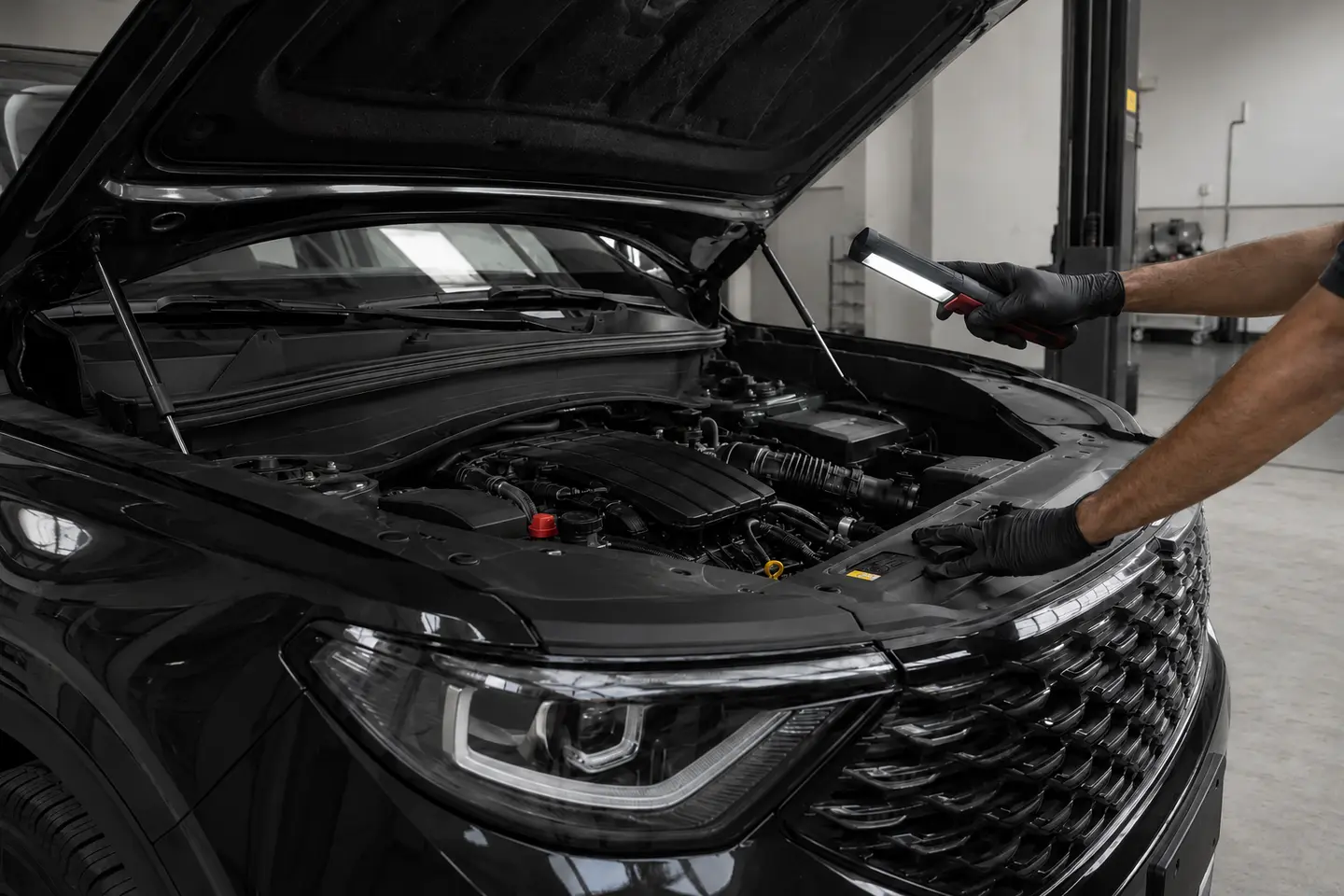
What a useful checklist should record
A useful checklist is built around findings, not the largest point count. Each important item should show the location, method, evidence and limitation. A 100-point or 200-point label can still leave major uncertainty when the car cannot be lifted, road-tested, scanned or accessed safely.
Body panels, finish, lights and closures
Look at visible panel alignment, paint finish, dents, scratches, corrosion clues, glass condition, mirrors, lamps, seals, hood, doors and trunk operation. Where paint-depth measurement is included, readings can support repair-evidence assessment on suitable materials.
Tires, wheels, brakes, steering and suspension
Review tire tread, visible damage, age markings where readable, pressure warnings, wheel condition, accessible brake components, fluid clues, steering play or noise and suspension leaks or damage. Uneven tire wear can suggest an alignment, suspension, pressure or usage issue, but the wear pattern alone does not diagnose the cause.
Accessible mechanical condition
Inspect visible oil or coolant leaks, fluid levels where safe and meaningful, hoses, reservoirs, mount areas, belts where exposed, battery condition, cooling-system clues and abnormal noises. Engine oil appearance, coolant level or a visible leak is an observation. It is not laboratory analysis, pressure testing or proof of complete internal engine condition.
Controls, restraints and comfort equipment
Operate agreed lights, windows, locks, mirrors, displays, horn, wipers, washers, climate controls and accessible seat or restraint functions. Confirm the dashboard warning-lamp state before and after starting. A lamp that illuminates during self-check and then goes out is different from a lamp that remains active.
Underbody, leaks and impact damage
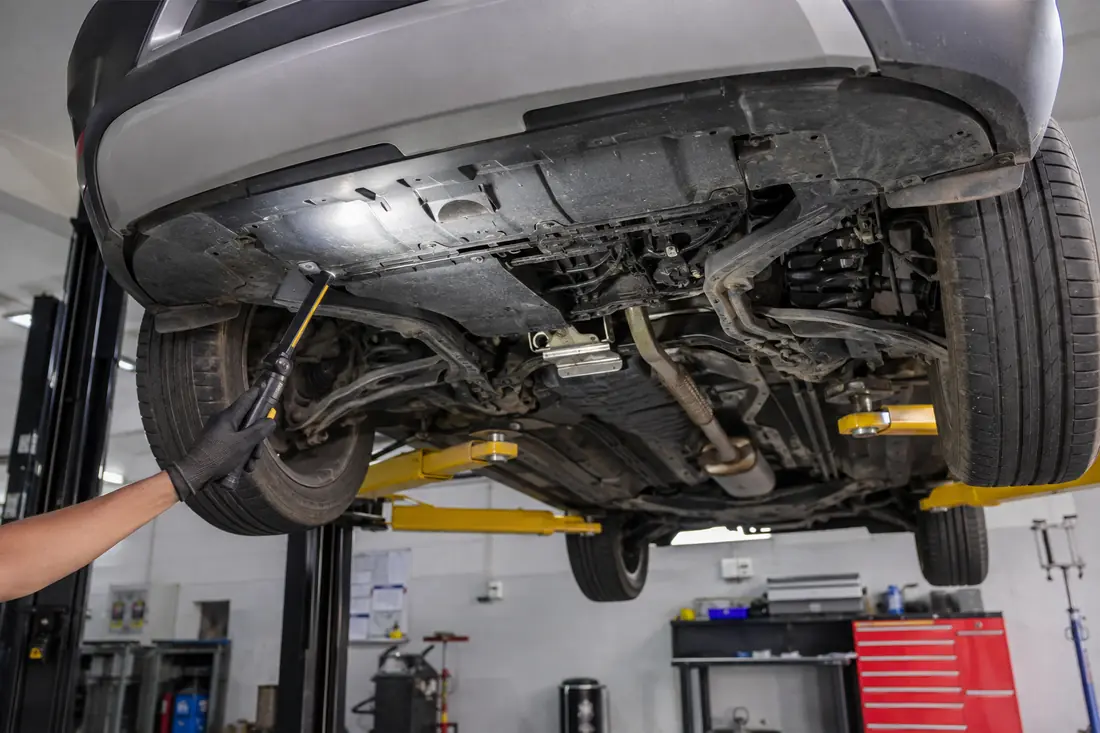
When lift access is included, inspect visible lower structure, shields, suspension mounts, drivetrain areas, exhaust, leaks, corrosion clues and impact damage. Ground-level inspection is materially more limited. Large covers can still hide components even on a lift, and a non-invasive check does not reveal concealed structure behind trim or sealed assemblies.
Diagnostics and driving symptoms
When included, scan accessible control modules and record relevant stored, active or pending conditions and available data. Relate the result to warning lamps and symptoms. A diagnostic trouble code identifies a detected condition or affected circuit. It does not automatically prove that the component named in a code description has failed. A road test can add steering, braking, vibration, transmission, temperature and noise observations when the vehicle is safe, authorized and legally driveable.
Compare photos, measurements and scan data
Photos, measurements and scan data are useful only when connected to the exact vehicle area, test method and customer question. A paint reading, fault code or tire measurement should not be turned into a stronger conclusion than the available evidence supports.

Record tread and wear with the wheel and brake access actually available. A tire pattern can suggest where further chassis or alignment checks are needed.
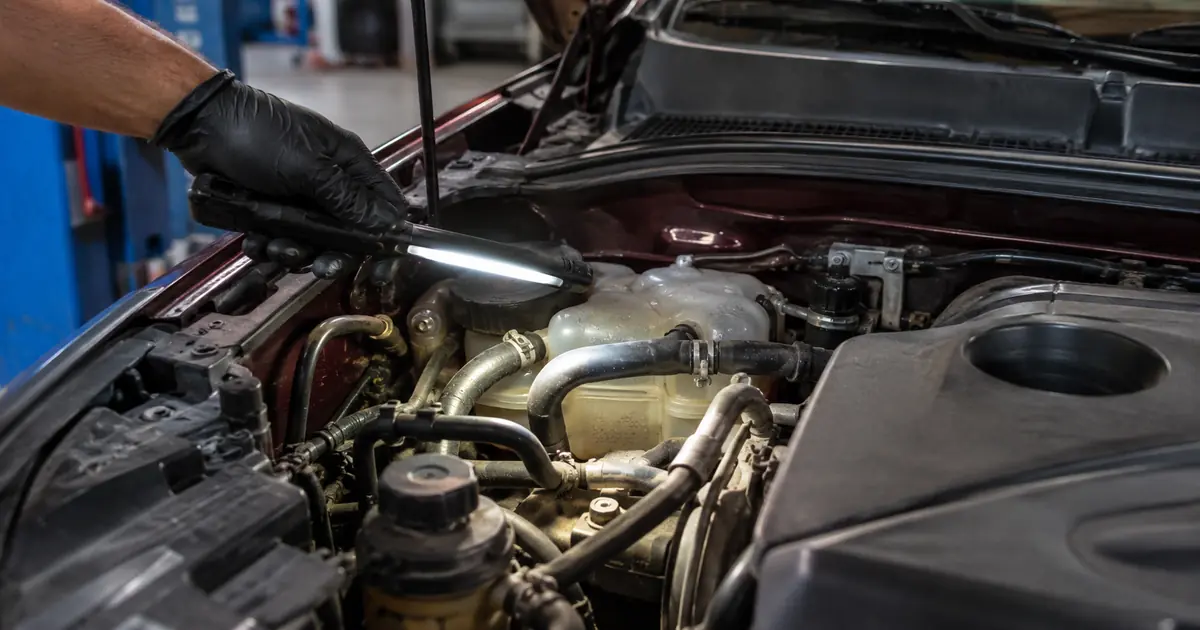
Visible level, staining, leakage or hose condition can justify follow-up. Pressure, circulation or internal faults need the appropriate targeted test.
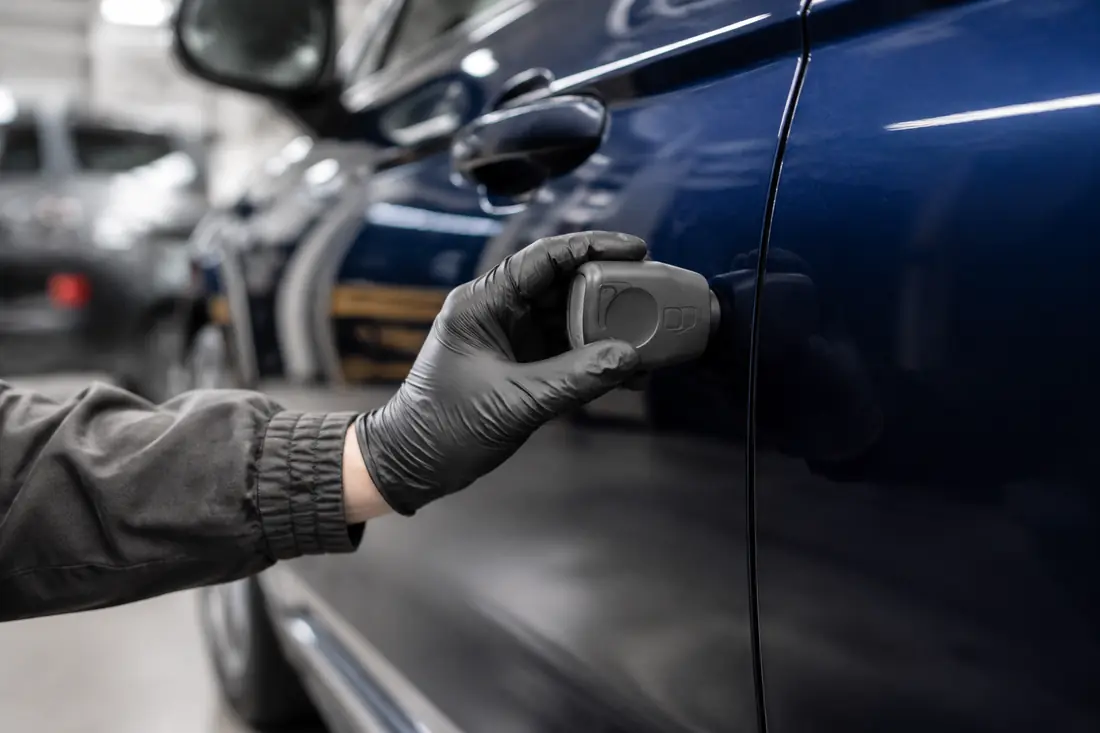
Readings can support a repair-evidence finding when the panel material and measurement conditions are suitable. They do not prove a complete accident history.
Adjust the checklist for workshop or mobile access
The checklist should describe the method actually used. A workshop may provide controlled light, working space and lift-supported access to the underbody, suspension, leaks and lower drivetrain. At a seller or home location, parking, light, ground clearance, security rules and road-test permission can limit those same checks.
Mobile inspection can still be useful when the vehicle cannot conveniently be moved. The dedicated mobile car inspection requirements explain location readiness and the current mobile pricing category. If underbody condition, active leakage, chassis impact or low-clearance access is central to your decision, say so before booking so the appropriate location can be discussed.
Physical access also changes diagnostic interpretation. A scan may identify a recorded condition while the follow-up test needs a multimeter, pressure equipment, smoke testing, lift access or model-specific tools. When a warning light is the main reason for the appointment, use the car computer diagnostics process rather than treating a general checklist as a full fault investigation.
Use this checklist to choose the right service
The checks needed before buying may differ from an annual review, fault diagnosis or repair check. Select the areas you need assessed, then read the relevant service for its tests and price details.
| Situation | Checklist emphasis | Use the specialist page for |
|---|---|---|
| General condition review | Agreed mechanical, tire, brake, bodywork, function and warning checks. | Multi-point inspection methods and access. |
| Buying a used car | Condition evidence plus seller access, road behavior, body repair clues, unresolved faults and transaction-critical limits. | Pre-purchase inspection methodology and used-car condition decisions. |
| Warning light or symptom | Warnings, fault records, visible signs and the conditions in which the symptom occurs. | Diagnostic fault investigation. |
| Possible previous repair | Panel finish, paint readings, seams, underbody signs and any inaccessible areas. | An accident inspection if closer bodywork and repair checks are needed. |
| Understanding the result | Checks completed, findings, urgency, uncertainty and recommended action. | Detailed inspection report interpretation. |

What the final report should preserve
The report should identify the vehicle and inspection purpose, record the checks actually completed, note material observations, distinguish a symptom from a diagnosis and state restrictions that affected the result. Where photographs, measurements or scan data are included, they should connect to a specific finding rather than appear as unexplained attachments.
Priority should also be separated from certainty. A condition can deserve prompt follow-up even when the root cause has not yet been established. Conversely, a stored code can be technically precise about the control unit that detected a condition while still being insufficient to name the failed component.
For report structure, evidence, delivery questions and interpretation boundaries, see Inspector’s detailed car inspection report guide.
Inspection prices and included checks
Inspector’s current pricing authority lists a comprehensive inspection at AED 400–600 for a broader multi-system condition review. That is contextual package pricing, not a fixed price for every checklist described on this URL. Do not add diagnostic, mobile or other ranges to it unless those are separately agreed services.
The exact quotation should identify the selected inspection, vehicle make and model, model year, location, inspection purpose, known symptoms, physical access, workshop or mobile preference, specialist requirements, included methods, report output and total payable amount.
VAT treatment is not stated consistently across the current public price references, so confirm VAT treatment and the final total in writing. For all current Inspector ranges and pricing conditions, use the car inspection cost guide.
What to send when asking about an inspection
A clear brief helps Inspector decide whether your question needs a multi-point review, buyer inspection, mobile visit or targeted diagnostic service. Send the vehicle, purpose, location, symptoms, access and report needs together.
- Your name and contact number
- Vehicle make and model
- Model year and relevant variant
- Vehicle location
- The inspection purpose
- Known symptoms, warning lights or recent work
- Seller or dealer contact where relevant
- Access permission for the vehicle and diagnostic port
- Preferred date
- Workshop or mobile preference
- Any specialist requirement such as low-clearance access, high-voltage systems or a specific warning
Do not assume that sending these details completes the booking. The scope, access and appointment need to be confirmed through the current booking process.
Confirm the checklist before booking
Ask which sections will actually be inspected, whether lift access or a road test is included, which diagnostic systems are in scope, whether paint-depth readings are required and what report output will be delivered. If a seller restricts access, ask how the limitation will be recorded.
Car inspection checklist questions in Dubai
What should be on a car inspection checklist in Dubai
A useful checklist can cover visible body and glass condition, tires, wheels, brakes, steering, suspension, accessible engine-bay items, fluids, battery, lights, cabin functions, underbody areas, diagnostics and road behavior. The booked scope should identify which of these methods are actually included.
Is a checklist the same as a comprehensive inspection
No. A checklist is the structure used to record checks. A comprehensive inspection is a priced service category with an agreed depth. Inspector currently publishes AED 400–600 for its comprehensive category, but the exact scope still needs to be quoted.
Does every checklist item mean a pass or fail
No. Many useful records are condition observations, measurements, restrictions or recommendations. A binary pass or fail can hide uncertainty, wear that needs monitoring or a check that could not be completed.
Can a checklist prove that the engine is healthy internally
No. A non-invasive visual and operating review cannot establish complete internal engine condition. Compression, leak-down, oil analysis, pressure testing or other specialist methods may be required for a specific concern.
Will a diagnostic scan find every electrical fault
No. Scan access depends on the vehicle, modules, tool compatibility and fault state. A code records a detected condition or circuit and does not by itself prove which component has failed.
Should paint-depth readings be included
Include them when repair-evidence assessment is part of the agreed scope and the panel material supports the method. Readings should be interpreted with panel finish, seams, alignment and access rather than treated as a complete accident-history check.
Does the checklist include an underbody inspection
Only if the selected service includes the required access. A lift can expose more than a ground-level view, but shields and covers can still obstruct components. The report should say which method was used.
Are tires checked only for tread depth
No. Depending on scope and access, tire review can include visible tread, uneven wear, sidewall damage, age markings where readable, pressure or TPMS warnings and wheel condition. A wear pattern can suggest further alignment or suspension investigation without proving the cause.
Can the checklist tell me whether to buy a used car
It can organize condition evidence, but a purchase decision also needs seller access, transaction context, relevant records and the buyer-focused limitations covered by Inspector’s pre-purchase and used-car inspection pages.
Can the same checklist be used for a mobile inspection
The categories can be similar, but the method and access are not identical. Parking space, light, ground clearance, diagnostic access and road-test permission can restrict a mobile visit. The report should record those restrictions.
Does a road test form part of every inspection
No. A road test depends on the booked scope, permission, vehicle condition, registration and insurance status, and a safe lawful route. If it is not completed, the reason should be recorded where road behavior matters.
Can an inspection verify the full accident history
No. Visible repairs, paint readings, seams and underbody evidence can indicate previous work, but a non-invasive inspection cannot reveal every concealed repair or automatically access a complete official history.
Is this an RTA inspection checklist
No. This is a private vehicle-condition checklist. It is separate from official RTA testing, certificates, fees and registration decisions.
How much does the checklist inspection cost
The price depends on the inspection and checks you book. The comprehensive inspection guide range is AED 400–600 for a broad review of several systems; ask for a quote for your vehicle.
Is VAT included in the quoted range
The current public pricing source does not state VAT treatment consistently. Ask the written quotation to state VAT treatment and the final payable amount.
What information should I provide for an exact quote
Send your name and contact number, make, model, model year, location, inspection purpose, known symptoms, seller or dealer contact where relevant, access permission, preferred date, workshop or mobile preference and any specialist requirement.
Choose the inspection that matches your checklist
Use the car inspection checklist in Dubai to identify the vehicle systems, access and evidence that matter to your decision. Then confirm the exact service, location, included methods, report output, VAT treatment and total payable amount before the appointment.