
Pulling, an off-centre steering wheel or uneven tyre wear can have several causes. Alignment measurements help establish whether wheel angles are part of the problem.
Suitable laser alignment tools for car suspension measure wheel alignment so the technician can compare the results with the vehicle’s specifications. Suspension wear or damage may need attention before adjustment.
How Laser Alignment Tools Work in Car Suspension Checks
Alignment checks need a correctly prepared vehicle and suitable measuring equipment. Depending on the system, laser alignment tools for car suspension use wheel-mounted targets or sensors to collect readings. The setup follows the equipment manufacturer’s procedure.
- Clamp-On Sensors
Four laser heads are mounted on each wheel. These are secured in minutes without removing tyres or jacking up the car. Once attached, they start scanning instantly. - Laser Beams Across Wheels
The sensors shoot straight laser lines across the front and rear wheels. These beams detect angles and track wheel positions against each other with millimeter accuracy. - Reads Key Suspension Angles
The tool calculates toe (side angle), camber (vertical tilt), and caster (steering pivot). These readings help pinpoint the root cause of pulling, wobbling, or uneven tyre wear. - Live Digital Feedback
A digital screen shows the real-time data. Mechanics know right away which angle is off and how far. Most tools highlight values with color codes: green for correct and red for out of spec. - Vehicle-Specific Settings
These tools are preloaded with factory alignment specs for thousands of models, like GCC-spec SUVs and sedans. That way, the readings match exactly what your car needs, not just averages. - Before-and-After Reports
Once adjustments are done using laser alignment tools for car suspension, a printed or digital report shows the before-and-after readings. This kind of transparency is exactly what our car inspection services in Dubai are built on, proof-based checks that show you the real condition of your vehicle. This is often shared with car owners during car suspension inspection so they know what was fixed and why.
When the roads wear your suspension down, laser tools help pull everything back into place precisely. That’s why more workshops in Dubai now rely on laser alignment tools for car suspension where they suit the vehicle and the measurements needed.
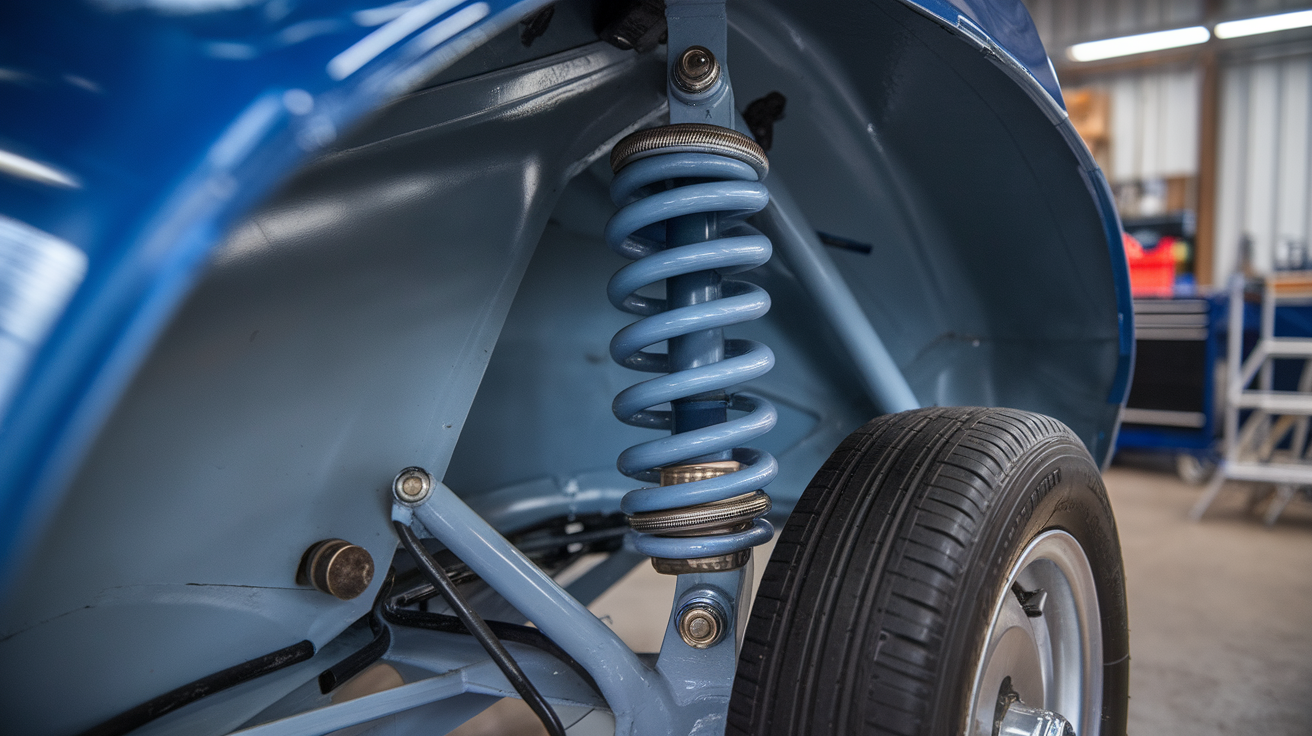
Top Benefits of Using Laser Alignment in Car Suspension Inspection
Alignment readings help assess wheel angles and guide adjustment. When comparing laser alignment tools for car suspension inspection, consider:
- Pinpoint Accuracy
Laser tools measure alignment angles down to 0.01°, reducing errors caused by manual methods. That level of detail helps spot issues long before they turn into major repairs. - Faster Inspections
A complete four-wheel alignment check takes about 15 to 20 minutes with laser systems, nearly half the time of older setups. Ideal for busy garages and quick turnaround needs in Dubai. - Improves Fuel Efficiency
Poor alignment can increase rolling resistance. Studies show that proper alignment improves fuel economy by up to 10%, especially for front-wheel-drive vehicles. - Assesses Wheel Angles and Tyre Wear
Misaligned suspension can ruin new tyres in under 5,000 km. Laser tools ensure alignment matches OEM specs, helping tyres last longer and wear evenly. That’s why pairing alignment with a car suspension inspection in Dubai ensures both tyre health and safe driving, especially under Dubai’s road heat. - Enhances Handling & Safety
By correcting toe and camber, the vehicle tracks straighter, brakes more evenly, and handles corners better. That makes a noticeable difference at high speeds or during emergency stops. - Supports Data-Driven Repairs
Printouts and digital reports give customers proof of what was wrong and what was fixed. This builds trust and improves service transparency during car suspension inspections.
Laser alignment tools for car suspension provide measurements that can support suspension diagnostics. Check the setup and specifications before relying on the result.
Alignment Equipment to Compare
Tired of tools that promise accuracy but end up wasting your time? When it comes to suspension diagnostics, not every tool delivers. We looked into what top garages in Dubai, and performance shops globally, actually use. Here are the laser alignment tools for car suspension that stand out not for their branding, but for their consistency, speed, and real-world reliability.
- Hunter HawkEye Elite
A favorite in high-volume shops. Uses four precision cameras and quick-grip adaptors that speed up setup. Known for its 0.01° accuracy, wide vehicle database, and reliable customer support. - John Bean V2400
High-speed laser technology with a tilt-compensation system, great for lowered cars and modified suspensions. The compact design fits tight garage spaces without sacrificing accuracy. - Hofmann Geoliner 678
Offers live alignment readings with 3D graphics. Great for garages that prioritize detailed visual diagnostics. Comes with fast compensation features, reducing inspection time per vehicle. - Bosch FWA 4750
Bosch brings industrial-grade precision here. It handles everything from small sedans to 4x4s and commercial vans. Its intuitive interface makes it ideal for Dubai garages handling diverse fleets. - Corghi EXACT Linear Plus
Laser-guided with automatic positioning, it works without lifting the vehicle in some cases. Solid pick for shops focusing on tyre services and quick suspension diagnostics.
Each tool above has been pressure-tested in real shops, with real cars, and under real Dubai conditions. Whether you are running a garage or upgrading your bay, laser alignment tools for car suspension pay off in real accuracy, speed, and long-term trust.
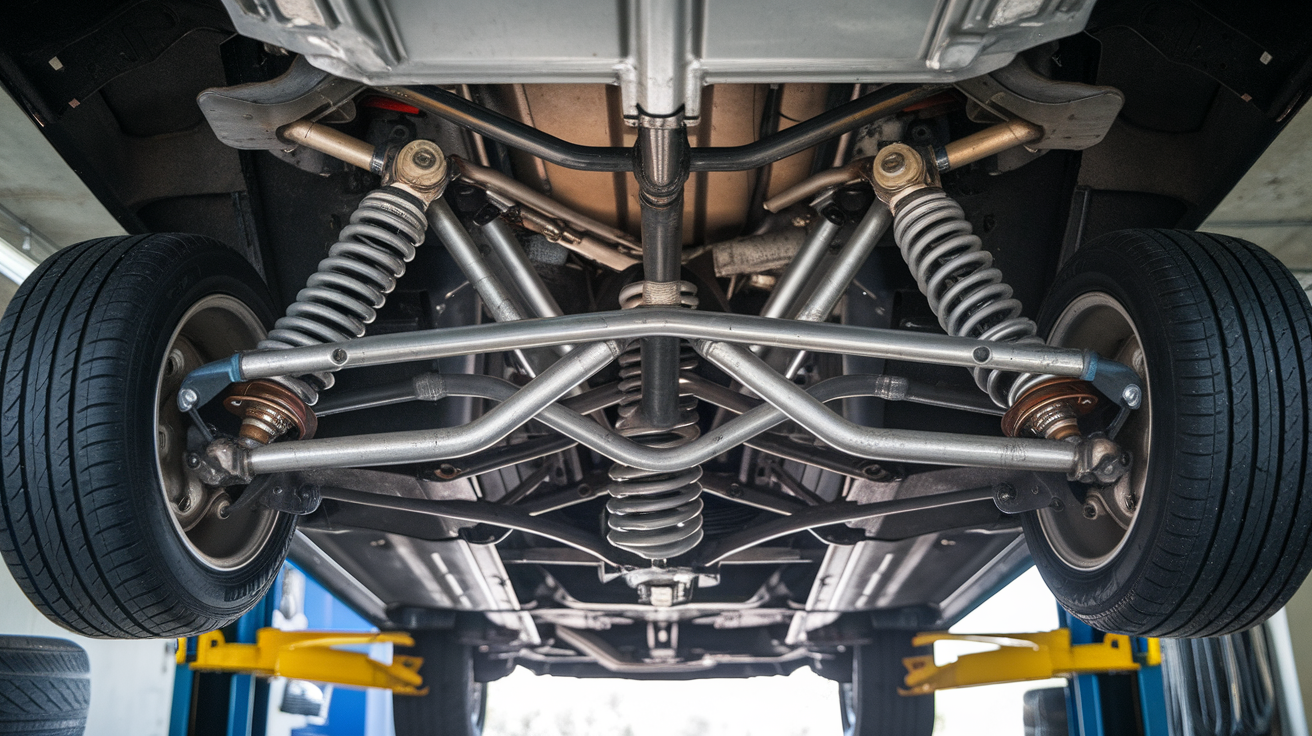
Laser Alignment vs 3D Wheel Alignment | Which One Checks Suspension Better?
Still confused between laser and 3D alignment tools? You are not alone. Both are used in car suspension inspections, but setup, functions and cost vary. Compare the specifications of the particular systems.
Laser Alignment
If you want fast, precise readings without heavy setup, laser alignment tools are a solid choice.
- Uses laser beams and reflectors to measure wheel angles
- Clamps directly onto each wheel with minimal adjustment
- Reads camber, caster, and toe instantly
- Accuracy range: ±0.01° to 0.05°
- Setup + inspection time: 15–20 minutes total
- Works well for daily use in small and mid-size Dubai garages
Laser alignment tools for car suspension are best for quick diagnostics with reliable results.
3D Wheel Alignment
If you’re working on modern vehicles with advanced suspension, 3D systems offer deeper analysis.
- Uses high-res cameras and targets to measure all angles
- Tracks ride height, frame angle, and multi-axle systems
- Ideal for low-clearance, performance, or modified cars
- Accuracy range: typically ±0.01° or better
- Setup + job time: 10–15 minutes, but needs more calibration
- Requires more space and initial investment
3D alignment tools bring full-scope diagnostics and are preferred for advanced suspension setups.
Which One Works Best for Suspension Checks?
It depends on your garage size, vehicle type, and how detailed the inspection needs to be.
- Laser alignment tools: Best for quick, accurate readings in standard cars and SUVs
- 3D alignment tools: Better for detailed diagnostics, especially with advanced or modified suspensions
Both tools have their place in a proper car inspection; choose based on your workflow, not hype. If you’re curious about how scanning accuracy changes results, check our breakdown on best scanning tools for inspections.
Common Suspension Faults Detected with Laser Alignment
Think your suspension feels off but cannot spot anything with the naked eye? Suitable laser alignment tools for car suspension measure wheel angles that may point to a condition needing closer inspection. Possible findings include:
- Incorrect Toe Angle
Toe misalignment means your wheels are pointing slightly inward or outward. Just 0.1° off can cause feathered tyres in under 5,000 km, and it often feels like your steering needs constant correction. - Negative or Positive Camber
If your wheels tilt in or out too much (camber), you get inner or outer tyre wear. Laser alignment picks this up fast and is especially helpful for vehicles that sit low or carry uneven loads. We’ve also highlighted tyre safety in our blog on TPMS tools for tyre inspection, which shows how pressure monitoring works alongside suspension accuracy. - Uneven Caster Angle
Caster affects steering return and high-speed stability. If one side reads lower by even 0.5°, your car might pull to one side during braking or drift on highways. - Thrust Angle Misalignment
When the rear wheels point in a different direction than the front, the car may “dog track” (body slightly angled while driving straight). Laser tools detect this instantly by comparing all four wheels in real time. - Bent Suspension Arms
If readings are wildly out of range and not adjustable, it often points to a bent control arm or damaged component. Laser results help spot this early,long before it becomes visible damage. - Ride Height Inconsistency
While not measured directly by all laser tools, inconsistent readings across camber and caster may signal sagging springs or worn-out bushings, especially in older SUVs or cars with air suspension.
These faults are tough to detect without proper tools, and in Dubai’s heat, they worsen faster than expected. That is why laser alignment tools for car suspension are a smart way to catch issues early, before they turn into tyre blowouts or suspension collapse.
Avoid Costly Mistakes | Best Practices for Accurate Laser Suspension Checks
Correct setup matters as much as the equipment. Follow the specified preparation and measurement procedure, including relevant tyre, load and suspension checks.
- Level Your Work Area First
If your garage floor is even slightly sloped, alignment angles get distorted. Always check the surface with a digital level before pulling the car in; a 1–2 mm tilt can lead to false toe readings. - Clean Contact Points
Do not rush this. Wipe the tyre face and rim edges before mounting the heads. Dust and old brake residue can cause misalignment at the sensor mount. Skipping this step = wrong numbers. - Set Tyre Pressure to Factory PSI
Tyres with low pressure sit lower and tilt the wheel inward. That changes camber values. Double-check all four tyres,if one is off by 0.3 bar, your reading will be too. - Empty the Vehicle Completely
Take out floor mats, tools, baby seats,everything. Even a 15 kg uneven load inside can shift a caster slightly, especially on cars with soft rear suspension or air shocks. - Check Calibration History
Follow the equipment manufacturer’s calibration and maintenance schedule. Investigate inconsistent readings before relying on them. - Use the Correct Vehicle Specifications
Select the exact model and applicable setup information before comparing or adjusting readings.
Record the before-and-after readings and any condition that prevents correct adjustment.
If the car pulls or wears tyres unevenly, ask for the tyres and suspension to be assessed. Measurements using laser alignment tools for car suspension can help establish whether the wheel angles need adjustment.
The readings guide the work; worn or damaged components may need repair first. Laser-based suspension diagnostics can support that assessment. Before booking, ask whether laser alignment tools for car suspension are appropriate for the symptoms and what checks are included.