
Car roadworthiness inspection in Dubai
Check the car before returning to regular driving after storage or repairs, taking a long trip or investigating several symptoms. Inspector reviews the accessible systems and explains the findings, further checks and any concerns about using the vehicle.
What roadworthiness means here
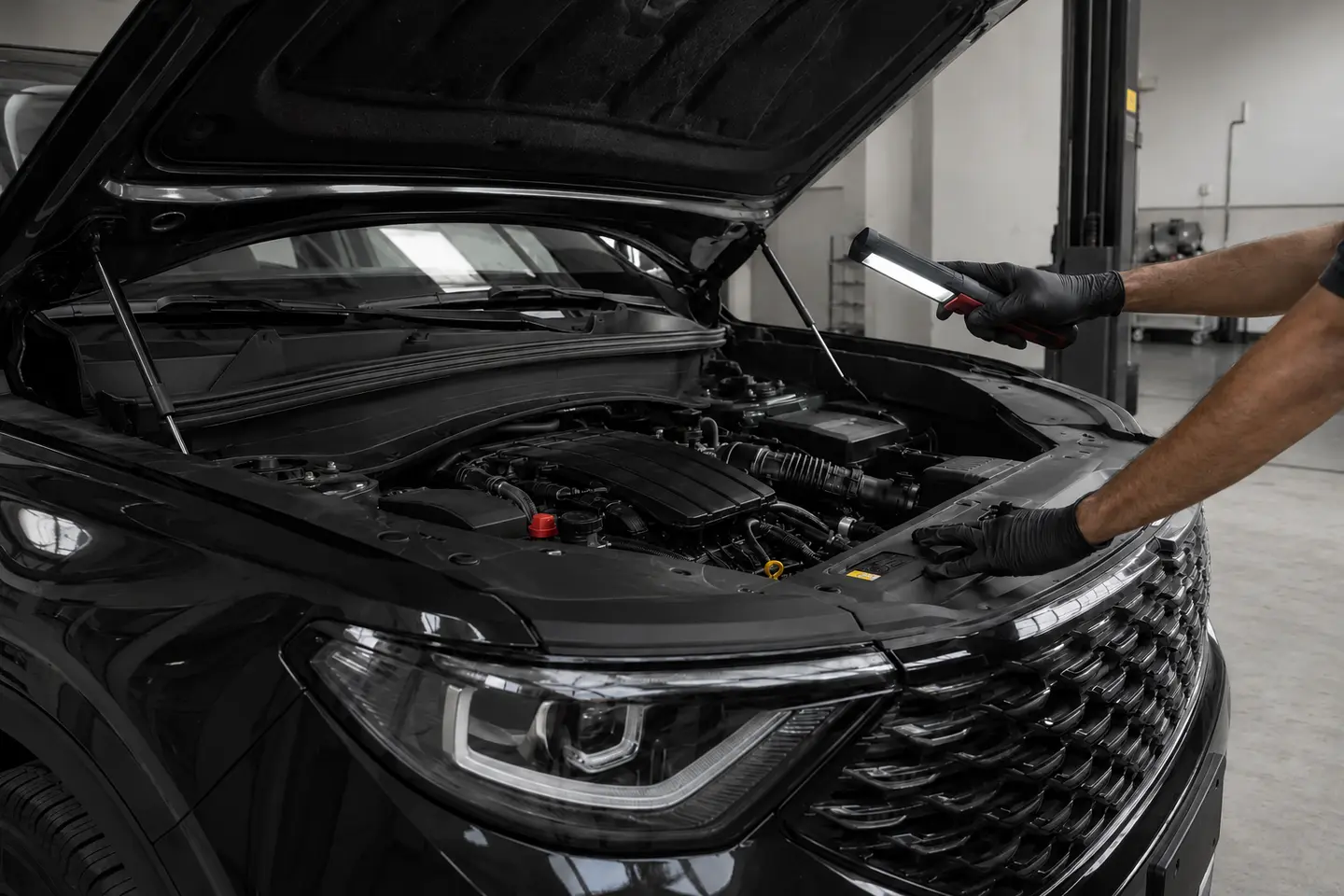
A private roadworthiness inspection reviews the car’s accessible mechanical condition, tires, controls, visibility, leaks, warnings and relevant bodywork. Tell us how you plan to use it so we can agree the checks.
The word roadworthiness can also describe an official authority decision. Inspector’s service must remain separate. It does not issue an RTA certificate, renew registration, create legal approval or guarantee that a vehicle will pass a government technical inspection. When the purpose is preparation before the official renewal test, use the dedicated registration renewal inspection preparation service.
For a check focused on safety concerns, see the car safety inspection . For regular maintenance planning, an annual car inspection may suit your needs. Before buying a car, choose a pre-purchase inspection methodto assess its condition and identify questions to raise with the seller.
When a broader condition review helps
A roadworthiness review is most useful when several vehicle systems may affect the same operating decision and the customer needs priorities rather than an isolated component opinion.
After storage
Review battery behavior, tires, brakes, fluids, leaks, warning indicators and initial operating evidence before routine use resumes.
Before a long journey
Check current concerns that could affect sustained driving, cooling, tires, visibility, stopping and roadside reliability without promising future performance.
After significant work
Compare the original concern, invoice and completed area, then identify related evidence that still needs verification. This is not a warranty decision.
Several new symptoms
Organise vibration, noise, warning, leakage and handling observations so the next diagnostic work follows evidence rather than unrelated parts replacement.
Before repair budgeting
Separate safety, diagnostic, maintenance, operating and appearance questions to support a realistic order of work.
Before transfer to a workshop
Assess whether controlled movement appears appropriate or whether recovery should be considered. The inspector does not replace emergency or roadside assistance.
Choose checks for your plans
The matrix shows why one checklist cannot answer every roadworthiness decision. Each use case changes which systems, access limits and next actions matter most.
| Decision | Checks to prioritise | Useful access | Report emphasis | Boundary |
|---|---|---|---|---|
| Return after storage | Battery, starting, tires, brake release, visible fluids, warnings and initial operating condition. | Safe static inspection, tire access, suitable start conditions and optional workshop checks. | Items that restrict use, require service, need diagnosis or can be monitored. | Stable operation during one check does not predict later reliability. |
| Long-distance journey | tires, cooling, fluids, braking, visibility, warning history and relevant road behavior. | Workshop access where lift, pressure or detailed tire checks are needed. | Known concerns to address before departure and contingency questions. | The inspection cannot guarantee the vehicle will complete the journey. |
| After repair | Original complaint, invoice, accessible repaired area, warnings and relevant function. | Records, safe reproduction conditions and any agreed focused measurement. | Repairs observed, any remaining symptom and checks still needed. | Inspector does not determine contractual warranty liability. |
| Changed road behavior | Speed, temperature, load and road conditions for vibration, pulling, noise or instability. | Road test only when safe and permitted, plus lift or alignment access where justified. | Conditions in which the symptom occurs, visible findings and the next diagnostic test. | A short road test cannot expose every intermittent or internal fault. |
| Continued ownership | Multi-system accessible condition, service history, recurring issues and repair priorities. | Workshop or mobile delivery selected by required methods. | Safety, diagnosis, maintenance, monitoring and appearance separated. | This is not a market valuation or a future-cost guarantee. |
What Inspector examines
The final scope should name the systems and methods included. Vehicle design, condition, covers and access can restrict even a workshop inspection.
tires and wheels
Visible tread, sidewalls, age markings, pressure context, damage, repairs, rim condition and wear patterns. Inner-edge inspection may require lift or wheel access.
Brakes, steering and suspension
Pedal and steering response, warnings, visible fluids, leaks, boots, joints, springs, dampers, ride height and relevant driving behavior. Measurements and dismantling are not assumed.
Engine, cooling and driveline
Starting, idle, accessible fluids, leaks, hoses, reservoirs, abnormal noise, exhaust clues, transmission warnings and operating behavior. Internal condition remains outside a non-invasive view.
Lighting, glass and driver controls
Headlamps, indicators, brake lamps, hazards, mirrors, glazing, wipers, washers, horn and selected controls. Legal acceptance of modifications belongs to the authority.
Cabin and restraint checks
Accessible seat belts, warning indicators, mounting concerns and relevant cabin functions. Concealed airbags, pretensioners and wiring require a focused scope.
Body, paint and underbody
Visible panel alignment, finish variation, corrosion, damage, leaks, exhaust areas, mounts and accessible structural evidence. Paint measurement and lift access must be confirmed.
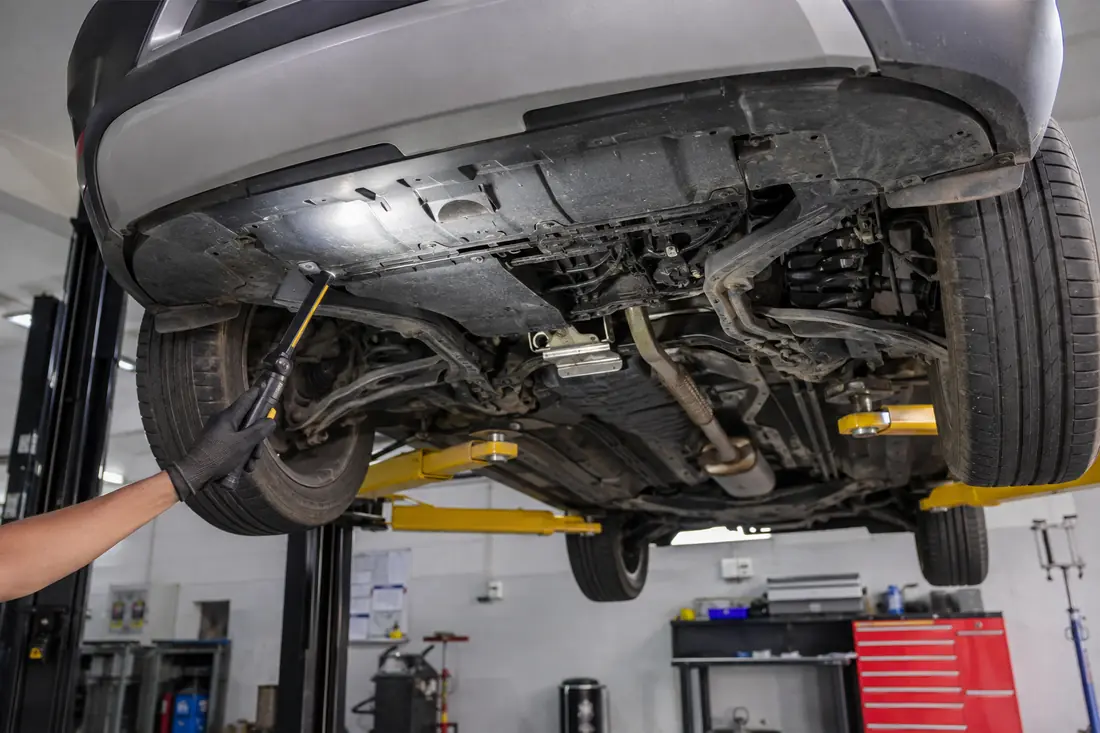
The underbody view has limits
Ground-level inspection cannot provide the same view as a safely raised vehicle. Workshop lift access can improve inspection of tires, suspension, steering areas, fluid leakage, exhaust components, covers, mounts and visible impact evidence. It still does not expose components hidden behind shields, corrosion inside closed sections or the internal condition of assemblies.
A mobile inspection can support many visual and functional checks when the site has suitable light, space, level ground and permission. It may be less suitable when the decision depends on a lift, alignment equipment, stable power, controlled temperature or safe wheel removal. Tell Inspector if the vehicle is in basement parking, a dealer compound, roadside space or storage with restricted access.
Body and paint evidence can matter when roadworthiness concerns follow a collision, flood exposure, severe kerb impact or previous repair. Visible alignment, finish variation, sealant, corrosion and mounting clues should be recorded as observations. Paint-depth readings or a detailed structural review are separate methods and cannot prove the complete accident history.
A code starts a pathway
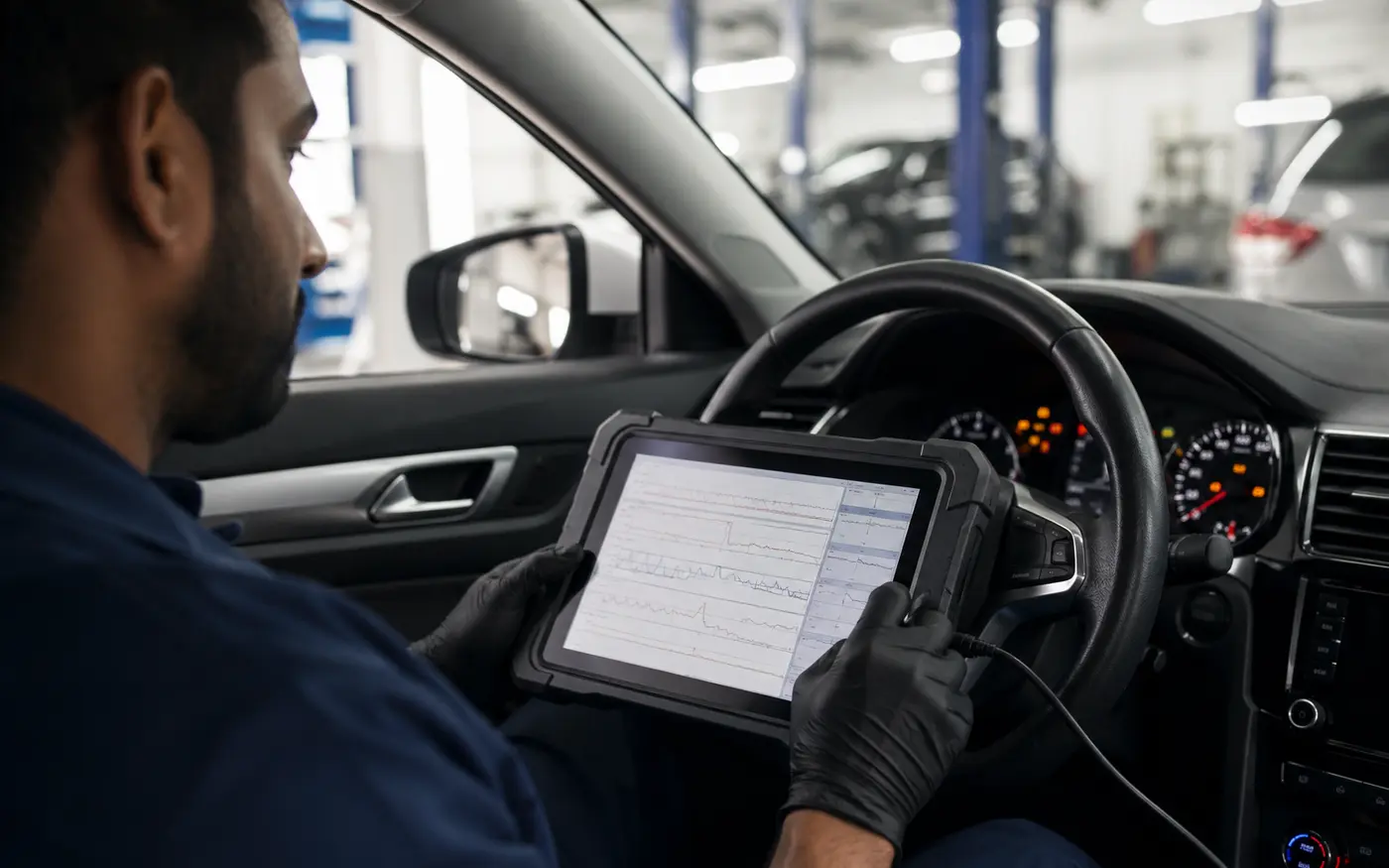
A scan can identify stored, pending or active diagnostic conditions, module communication and selected live data. It does not independently prove roadworthiness and must not be used to declare that the component named in the code has failed.
Low battery voltage, wiring faults, sensor signals, communication problems, calibration, mechanical conditions and previous repairs can produce related code families. The next step may involve electrical measurement, pressure testing, smoke testing, mechanical inspection, software information or specialist equipment. Clearing codes removes information and may reset readiness data without repairing the cause.
Tell Inspector whether a warning is constant or intermittent, what message appears, when it started, whether the battery was disconnected and what work has already been attempted. A deeper investigation can be arranged through the vehicle computer diagnostics service if the inspection identifies a concern in one system.
A five-stage inspection path
The process preserves the difference between observation, interpretation and confirmation so the customer does not receive certainty that the available evidence cannot support.
Define use
Say whether you are planning a trip, returning after storage, checking repairs or investigating a fault.
Record vehicle details
Share symptoms, events, warning history, storage and recent work.
Inspect access
Complete the agreed visual, functional, lift, scan or road observations.
Assess the findings
Separate restrictions, diagnosis, repair, maintenance and monitoring.
Choose action
Move, recover, repair, investigate, verify or continue with stated limits.
Report the decision conditions
The report should be useful before a workshop conversation and after further work. It needs enough detail to show what was checked, what was not available and why a recommendation was made.
The detailed inspection report guide explains how to interpret observation, limitation and diagnostic language without treating the report as certification.

Roadworthiness inspection cost
No fixed standalone roadworthiness-inspection price was verified on Inspector’s current pricing authority. The service is therefore available by quotation. Price depends on the decision, vehicle, delivery setting, methods and report depth.
These ranges are not cumulative and are not official RTA fees. Ask for one coherent quotation. The current Inspector pricing authority remains the owner of broad package and price information.
Information needed to quote
An inspection request becomes useful when the intended road use, symptoms and access are clear. It is not a confirmed appointment until Inspector accepts the scope, price, location and date.
Clarify the service boundary
What is a car roadworthiness inspection?
It is a private review of accessible condition and operating evidence for a defined road-use decision. It can cover road contact, control, visibility, mechanical operation, warnings and selected body or underbody evidence.
Is this an official RTA roadworthiness test?
No. Inspector does not issue an RTA certificate, registration approval or legal determination. Official technical inspection must be completed through the authorized process when required.
How is it different from a safety inspection?
A safety inspection focuses narrowly on safety-critical systems and immediate risk priority. A roadworthiness review considers a broader operating decision, including mechanical, warning, fluid, access and continued-use evidence.
How is it different from an annual inspection?
An annual inspection checks wear and maintenance needs regularly. A roadworthiness review usually addresses a particular situation, such as returning after storage, preparing for a long trip or investigating a change in how the car drives.
Can the inspection guarantee the vehicle is roadworthy?
No. It records accessible evidence at a point in time and supports a private decision. Concealed, internal, intermittent and future conditions cannot be guaranteed.
Can a stored vehicle be inspected before use?
Yes, subject to access and vehicle condition. Battery, tires, brake release, visible fluids, warnings and initial operation may be reviewed. Do not start or drive a vehicle when leakage, damage or another condition may make that unsafe.
Is it suitable before a long trip?
It can identify current evidence and preparation questions, but it cannot guarantee that the car will complete the journey. Share the route type, expected load, recent history and known concerns.
Will Inspector road test the vehicle?
Only when road testing is included, safe, legal and permitted. Vehicle condition, registration, insurance, route and driver arrangements must support it. A severe concern should not be reproduced on the road.
Is a lift inspection included?
Lift use must be confirmed. It can improve underbody, steering, suspension, exhaust and leakage views, while covers and vehicle construction can still conceal components.
Does a scan prove a failed component?
No. A code identifies a detected condition or affected circuit. Voltage, wiring, communication, calibration, sensor inputs and mechanical faults can create similar code families. Further testing may be necessary.
Are body and paint checks relevant?
They can be relevant after impact, corrosion, flood exposure or previous repair. Visible observations, paint-depth measurement and structural inspection are different methods and should be agreed separately.
Can the inspection be mobile?
If you searched for a car roadworthiness inspection near me, mobile delivery may be suitable when the location provides permission, light, safe level ground, space, and access. Lift access, alignment, wheel removal, and extended diagnostic work may require an appointment at Al Quoz 4, Dubai.
How much does a roadworthiness inspection cost?
No fixed service price was verified, so it is available by quotation. Published context includes AED 150–300 for a basic inspection, AED 400–600 for a comprehensive inspection and AED 200–500 for focused diagnostics.
Is VAT included in the quoted range?
The published ranges do not state VAT treatment consistently. Ask for the VAT position and total payable amount in the written quotation before the appointment.
What should the report include?
It should identify the road-use decision, vehicle context, methods, position-specific findings, unavailable checks, priority and next action. Measurements and images should appear only when included and completed.
What information should I send to book?
Send your name, number, make, model, model year, mileage, location, intended use, symptoms, recent repairs or storage history, preferred date, delivery preference and required access or specialist methods.
Choose the checks you need
Send the vehicle details, location, operating purpose, symptoms, recent work and required access. Inspector can then confirm a suitable scope, VAT treatment, total quotation and appointment availability.