
Multi-point car inspection in Dubai
A multi-point inspection checks several vehicle systems in one appointment. Use it to review the car’s overall condition and plan maintenance. The report should explain what was checked, what was found and which issues need a separate diagnostic test.
Tell us about the vehicle, its location and your concerns so we can agree the checks. Workshop and mobile appointments offer different access. Diagnostic data can help, but a fault code alone cannot confirm which part has failed.

A strong multi-point inspection connects findings across systems. Uneven tire wear may need steering, suspension and pressure context. A coolant trace may need temperature, hose and pressure-test context. A dashboard warning may need scan data and physical checks. Treating each item as an isolated tick can make the final report less useful. For an item-by-item reference to the systems commonly reviewed, use the car inspection checklist in Dubai.
What the service can document
Document accessible body, tire, brake, steering, suspension, engine-bay, cabin, electrical, diagnostic and road-behavior observations where the agreed scope and conditions allow.
What the service cannot guarantee
It cannot establish future reliability, reveal every intermittent fault, prove internal component condition without the right test, or certify a complete accident or maintenance history.
Who benefits from a broad condition review
Owners establishing a baseline, drivers with several minor concerns, vehicles with incomplete maintenance context, and customers deciding whether focused diagnostics or another specialist inspection is justified.
When a specialist service fits better
Use a buyer-focused pre-purchase car inspection, dedicated computer diagnostics or accident-repair assessment when that is the main decision.
Confirm access for the checks you need
Confirm the inspection setting before booking. A mobile visit can cover many accessible observations at the vehicle, while a workshop can improve underbody visibility and support equipment that cannot be used safely at a seller, home, office or parking location.
| Method or access | What it can add | What should be confirmed | Main limitation |
|---|---|---|---|
| Exterior and engine-bay access | Panel condition, visible repair clues, fluids, hoses, leaks, battery and accessible mechanical observations | Lighting, vehicle cleanliness and whether covers prevent viewing | Sealed or covered areas remain unseen without dismantling |
| Diagnostic scan | Stored, active or pending conditions and available control-module information | Vehicle compatibility, systems included and whether code status is recorded | A code describes a detected condition, not automatic proof of a failed component |
| Road test | Steering, braking, vibration, shifting, noise and operating-temperature observations | Permission, legal use, suitable route and vehicle condition | Intermittent or load-specific symptoms may not reproduce during a short drive |
| Ground-level underbody view | Some visible lower-body, leak, exhaust and impact observations | Ground clearance, lighting, safe access and surface | Visibility is limited compared with controlled lift access |
| Workshop lift access | Better view of lower structure, drivetrain areas, leaks, exhaust and suspension components | Whether lift use is included and whether undertrays can remain fitted | Covers, dirt and component position can still hide condition |
| Focused specialist testing | Pressure, compression, alignment, electrical or component tests | Exact test, reason, price and reporting method | Separate from the general inspection unless agreed |
How Inspector reviews the vehicle by system
The sequence below keeps the inspection organized without implying that every vehicle receives identical tests. The exact specification, symptoms, safe access and booked package determine which checks are completed and how limitations are reported.
Vehicle details and customer concerns
Confirm make, model, year, mileage shown, inspection purpose, known warning lights, recent repairs, fluid loss, noise, vibration, overheating history and seller or owner access. A symptom that occurs only cold, hot or under load should be described before testing begins.
The same physical observation can mean different things depending on the decision and recent history.
Exterior, bodywork and previous repairs
Review accessible panels, paint finish, alignment, glass, lights, closures, mirrors and visible damage. Paint-depth measurement can support repair-evidence assessment when it is included and the surface is suitable, but readings must be compared across related panels rather than treated as a complete accident-history test.
Structural involvement, repair quality or accident history is the primary concern.
Tires, brakes, steering and suspension
Record tire tread and visible damage, wheel condition, accessible braking components, warning indicators, steering response and suspension leaks or damage. Wear patterns can help identify where further alignment or suspension checks are justified, but the pattern itself does not confirm the root cause.
Some joints, brake surfaces and mountings require lift or wheel-off access for a stronger assessment.
Engine bay, cooling and drivetrain condition
Check accessible fluids, leaks, hoses, reservoirs, belts where exposed, battery condition, mount areas and abnormal sounds. Transmission and drivetrain observations may include leaks, mount clues, warning behavior and road-test operation. Internal wear, oil pressure, compression and sealed transmission condition require the relevant test rather than visual inference.
Separate what was seen from what is suspected and what still needs confirmation.
Cabin functions and diagnostic checks
Operate agreed windows, locks, mirrors, displays, horn, wipers, climate controls, lights and warning indicators. When a scan is included, review accessible modules and relate relevant code status to the dashboard state and physical symptoms. Low voltage, wiring or related systems can produce codes that should not be translated directly into a parts replacement.
A fault code helps identify what to investigate; it does not confirm a failed part.
Road behavior and report priorities
Where permission and safety allow, road-test observations can connect steering feel, braking, vibration, shifting, noise and operating temperature to static findings. The report should then separate priority concerns, maintenance items, observations to monitor, inaccessible areas and focused tests recommended before a repair or purchase decision.
A decision-ready report is clearer than a long list in which every item appears equally important.
Match engine-bay and underbody checks to access
Engine-bay and underbody checks show why point count alone does not measure depth. The same checklist item can produce very different evidence depending on lighting, covers, ground clearance, lift access and whether the component can actually be seen.

Visible leaks, reservoirs, hoses, belts and battery condition can be documented, while covers and sealed assemblies limit internal conclusions.

Lift access can improve visibility of lower structure, suspension, drivetrain areas and leaks, but undertrays and component position still matter.
Read fault codes alongside the symptoms
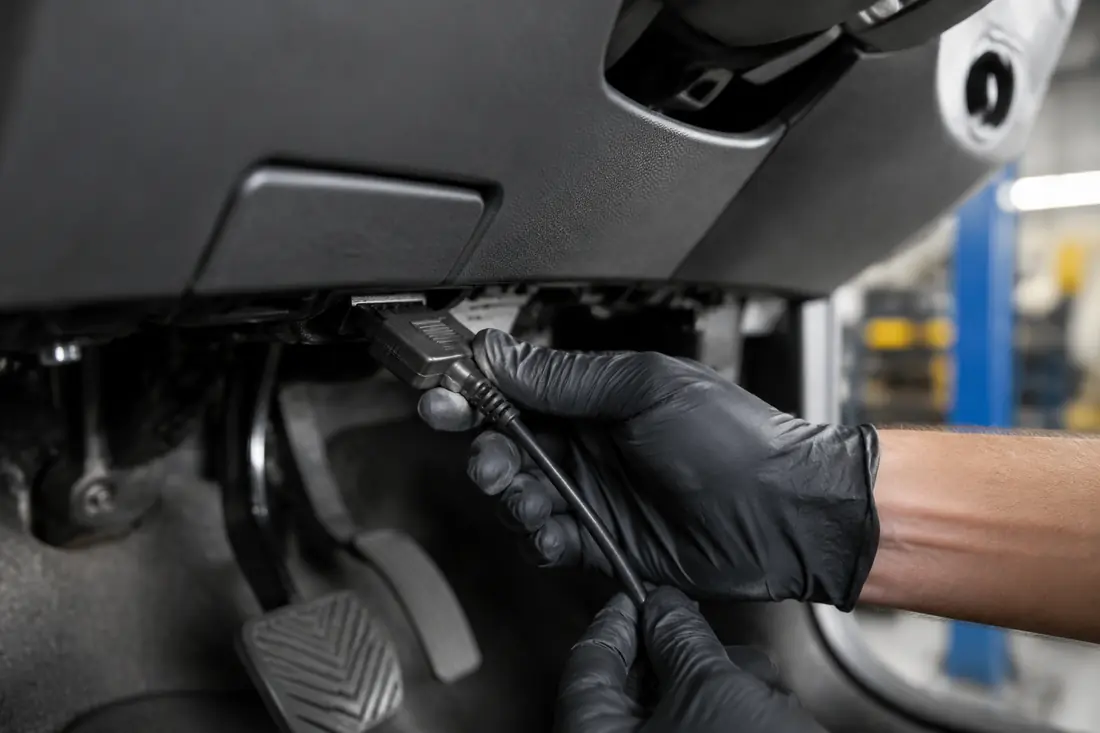
A diagnostic scan can reveal information stored by vehicle control systems. That can be valuable when it is interpreted beside warning lamps, symptoms, voltage condition, service history and physical observations. An isolated code description should not be treated as proof that a particular sensor, actuator or control unit requires replacement.
When warning lights or electrical symptoms are the main reason for the booking, a dedicated car computer diagnostics service can provide a more focused investigation than a broad multi-point review.
Choose multi-point checks for overall condition
Several Inspector services can cover overlapping systems, but each serves a different customer decision. Choose a multi-point car inspection in Dubai for a broad condition baseline, then use the routes below when a purchase, location or specific fault is the main concern.
Current condition
Useful for a structured view across multiple systems when no single fault or buyer decision dominates the scope. It can help decide what needs maintenance, monitoring or further diagnosis.
Used-car buying decision
Use the dedicated pre-purchase inspection when the evidence must support a purchase before payment or transfer. The buyer context changes how findings are prioritized.
Condition and ownership history
The used car inspection page addresses broader used-vehicle condition decisions and ownership risks rather than functioning as a duplicate checklist.
Inspect at the vehicle location
Use mobile car inspection when the car should be reviewed at an agreed location and the requested methods can be completed safely there.
Investigate a symptom or warning
Choose focused diagnostics when the central problem is a warning light, electrical fault, transmission behavior or other symptom that needs confirmation beyond broad condition observations.
Repair or structural concern
Use a dedicated accident-damage scope when previous repair quality, paint evidence or structural involvement is the primary question. A broad multi-point inspection should not pretend to replace specialist structural assessment.
Use the report to separate findings from next steps
A useful report shows what was observed, how it was checked, why it matters and what remains uncertain. It should separate urgent concerns, maintenance, monitoring and follow-up diagnosis instead of presenting every note as equally important or turning a fault code into an unverified parts recommendation.
- Observed condition for accessible areas and functions at the time of inspection.
- Priority concerns when a finding needs prompt attention.
- Maintenance planning for wear or service items that can be scheduled.
- Further diagnosis when a symptom or code needs focused confirmation.
- Inspection limitations for inaccessible areas, unsafe tests, blocked views or unavailable permissions.
See the detailed car inspection report guide for help reading the findings and deciding what to do next.

Multi-point inspection prices
Inspector’s current pricing authority is the car inspection cost guide. It should control broad package pricing so specialist pages do not create overlapping or conflicting ranges.
Send your vehicle details and the checks you need before booking.
The published comprehensive inspection range is AED 400–600 for a broader multi-system condition review. That range is useful context, but it should not be presented as a fixed multi-point total for every vehicle because access, methods, delivery setting and specialist requirements can change the agreed work.
Confirm the selected scope, workshop or mobile arrangement, any approved addition, VAT treatment and total payable amount in writing. Inspector does not publish a separate fixed lift fee, road-test fee, weekend surcharge or universal travel formula, so none should be assumed here.
What to send when enquiring
Before booking, provide the details that change access, compatibility and method. This helps Inspector define what the multi-point service can cover and what belongs in a separate buyer, mobile, diagnostic or repair-focused inspection.
- Your name and preferred contact method.
- Vehicle make, model, model year and relevant derivative or powertrain.
- Vehicle location and whether workshop or mobile inspection is preferred.
- The decision you need the inspection to support.
- Known symptoms, warning lights, noises, overheating, fluid loss or recent repairs.
- Seller or dealer contact and access permission where someone else controls the vehicle.
- Preferred date or booking window.
- Whether a road test, diagnostic scan, lift access or specialist check is important to the decision.
The appointment page collects the request, but availability, final scope, price and timing should still be confirmed for the exact vehicle. Use online inspection booking, call or WhatsApp to provide the details.
Multi-point car inspection questions
These answers define the practical boundaries of the service before you book.
What is a multi-point car inspection?
A multi-point car inspection in Dubai is a structured review of multiple vehicle systems within one agreed inspection scope. It can include accessible body, tire, brake, steering, suspension, engine-bay, cabin, electrical, diagnostic and road-behavior observations depending on the vehicle and methods booked.
How many points are checked?
Inspector should define the actual systems and methods rather than rely on a marketing point count. A high point number does not prove deeper inspection if access, lift use, scanning or a road test are unavailable.
Is a multi-point inspection the same as a pre-purchase inspection?
No. They can overlap technically, but a pre-purchase inspection is organized around a buyer’s decision before payment or transfer. Multi-point inspection is broader condition territory and may be used for maintenance or condition baselines as well.
Can the inspection be done at my location?
It may be arranged as a mobile inspection when the location, permission, light, working space and vehicle condition support the requested checks. Lift access and some specialist tests should not be assumed at a mobile location.
Is workshop inspection always better than mobile inspection?
No. The better setting is the one that supports the methods needed for the decision. Workshop access can improve underbody visibility and controlled testing, while mobile inspection can be suitable when the vehicle cannot conveniently be moved and the required checks are accessible.
Does the service include a computer diagnostic scan?
Confirm scan inclusion before booking. Diagnostic coverage depends on the selected scope, vehicle compatibility and systems that can be accessed. When scanning is included, relevant codes should be interpreted beside symptoms and physical evidence.
Does a fault code prove which component failed?
No. A diagnostic trouble code identifies a detected condition or affected circuit. Voltage, wiring, communication, another component or an operating condition may still need testing before a failed part is confirmed.
Is a road test included?
Confirm it in the agreed scope. A road test depends on owner or seller permission, legal road use, vehicle condition and a suitable route. Unsafe or unregistered vehicles should not be driven merely to complete a checklist.
Can the inspection reveal every hidden fault?
No. Non-invasive inspection cannot reveal every internal, concealed or intermittent fault. Components behind covers, faults that occur only under specific conditions and internal mechanical wear may need dismantling, measurement or focused testing.
Will the inspection show previous accident repairs?
It can record visible repair evidence and, when included, suitable paint-depth observations. Those findings do not establish a complete accident history or prove the severity of every past repair. Structural concerns require the appropriate dedicated assessment.
What is the multi-point inspection price?
The exact service price is available by quotation. Inspector currently publishes AED 400–600 for a comprehensive broader multi-system inspection, but the final multi-point scope and total depend on the vehicle, location, access and methods confirmed before booking.
Is VAT included in the price?
VAT treatment should be confirmed in the written quotation together with the total payable amount. Do not assume a published range automatically states the final VAT-inclusive total for every scope.
Is this an official RTA vehicle inspection?
No. Inspector’s multi-point inspection is a private vehicle-condition service. It does not replace an official RTA technical test, government certificate, registration approval or official testing fee.
What should I send before booking?
Send your contact details, make, model, year, location, inspection purpose, known symptoms, warning lights, recent repairs, seller or dealer contact where relevant, access permission, preferred date and whether workshop, mobile or specialist testing is important.
What should the report include?
The report should distinguish observed condition, priority concerns, maintenance items, further diagnosis and meaningful access limitations. It should connect diagnostic information to physical evidence rather than presenting codes as confirmed failed parts.
When is a follow-up inspection useful?
A focused follow-up is useful after significant repairs, when previously unavailable access becomes possible or when an intermittent symptom can finally be reproduced. The follow-up should answer the unresolved question rather than repeat the full inspection without a reason.
Book the checks your car needs
Send the exact vehicle, location, symptoms and inspection purpose. Inspector can then confirm whether a multi-point car inspection in Dubai is the right route, together with the access, included methods, report output, VAT treatment and final quotation.