
Porsche Inspection in Dubai
Before buying a Porsche or arranging further work, check its model and specification, bodywork, engine or electric systems, gearbox, chassis and supported diagnostics. A permitted road test can help assess driving symptoms. Inspector explains the findings, limits and recommended actions. See our other car inspection services in Dubai for different inspection needs.
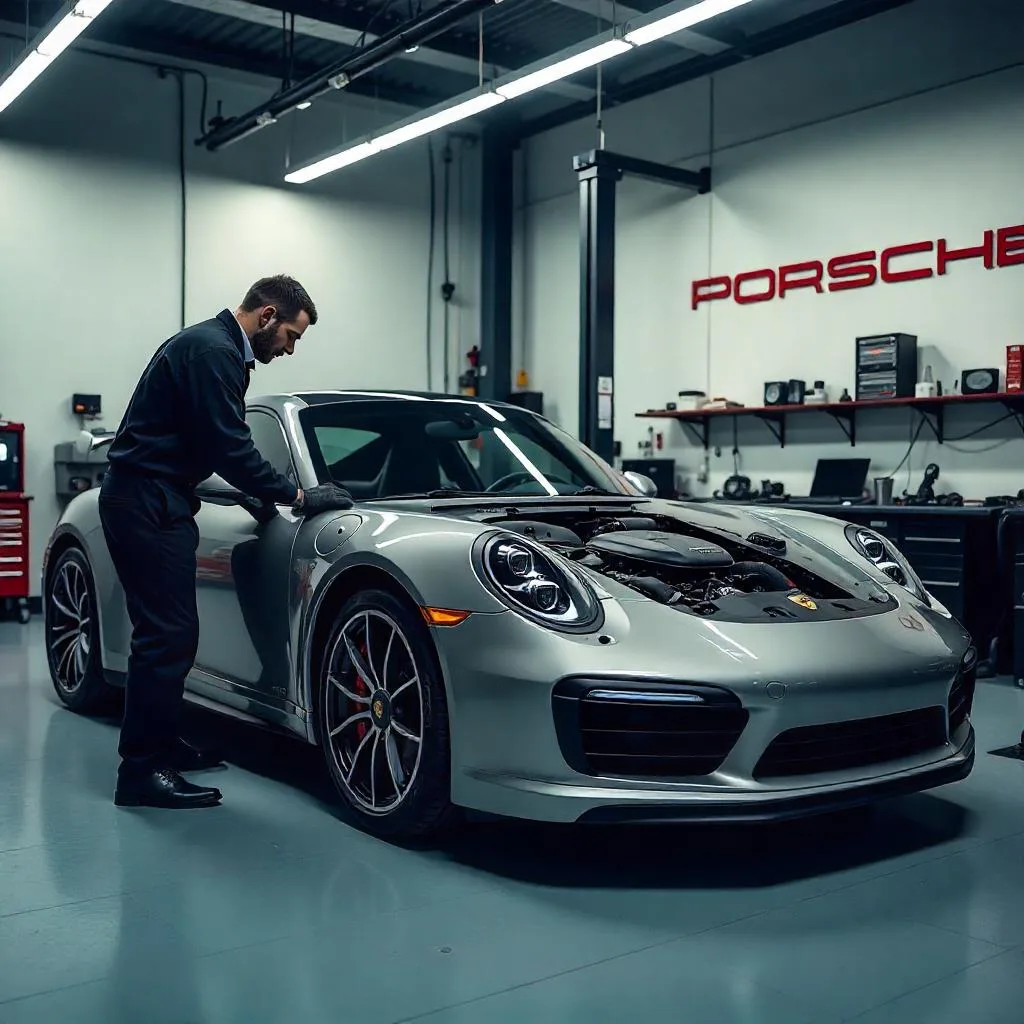
Inspect the Porsche around your decision
The badge alone does not define the right inspection. We shape the scope around the Porsche generation, powertrain, options, condition, use, and the decision you need to make. Buyers can compare the pre-purchase car inspection approach, while owners seeking broader system coverage can review the multi-point car inspection.
Identity and specification
We record the VIN, displayed mileage, registration context, model designation, body type, drivetrain, and visible option evidence. Carrera, Turbo, GTS, E-Hybrid, and Taycan versions raise different questions. Import specification, replacement modules, coding changes, and modifications can also affect what can be verified. Confirm manufacturer records, campaigns, and authorized-service questions separately through Porsche Centre Dubai service information or its VIN-based service request.
Bodywork and previous repairs
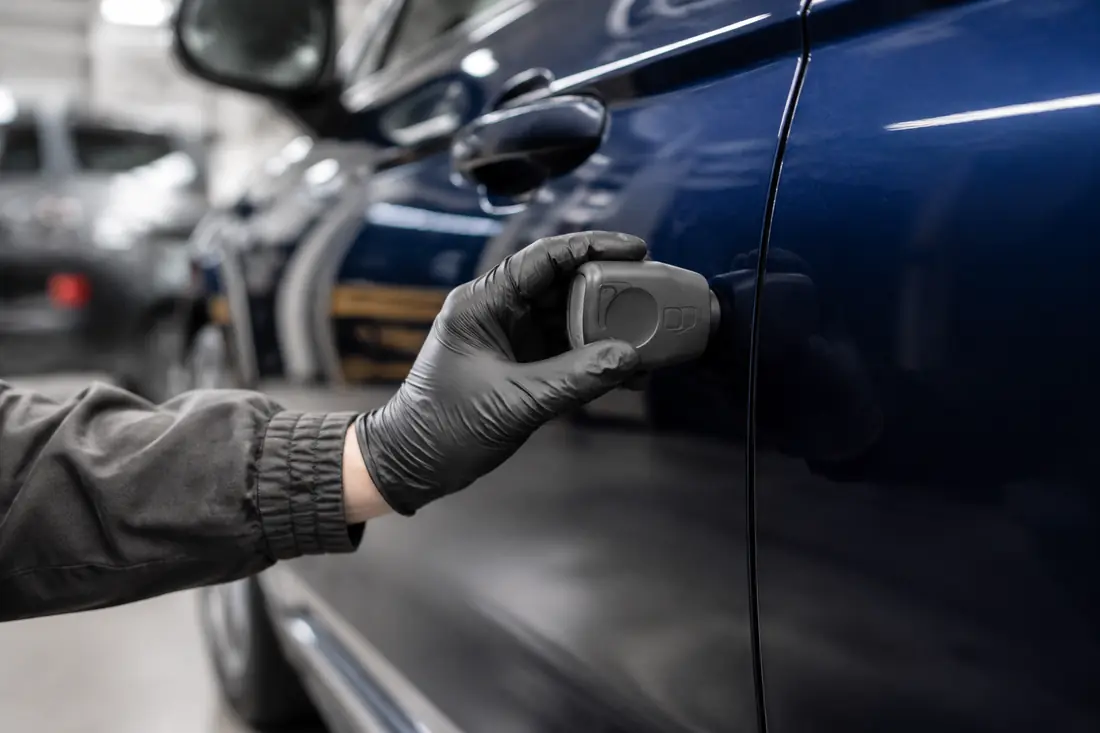
We review finish, panel alignment, fasteners, seams, glass dates, lamps, underside clues, and sampled paint-depth readings to identify visible repair patterns. One reading cannot prove a complete accident history, and concealed areas remain outside a non-invasive check. If impact or structural evidence could change your decision, compare the dedicated accident damage inspection checks.
Mechanical condition
We observe starting, idle, fluid condition, accessible leakage, cooling behavior, noises, mounts, exhaust evidence, and response. Rear- and mid-engine packaging can restrict visibility, so the report states access limits instead of turning them into assumptions.
Chassis and braking
We inspect visible suspension, steering, tires, wheels, brakes, and underbody condition. The check identifies conventional steel brakes or Porsche Ceramic Composite Brakes and considers whether adaptive damping, air suspension, rear-axle steering, or active anti-roll hardware changes the risk. See the separate tire condition inspection and car safety inspection guidance if either area needs a deeper decision.
Diagnostic checks
We review warning lights, battery behavior, accessible control modules, stored and active faults, readiness context, functions, and option operation. A code is one piece of evidence, not automatic proof that the named part needs replacement. The car computer diagnostics guide explains when scan results need physical tests to confirm the cause.
Road behavior
When permission, registration, route, and vehicle condition allow, we observe take-up, shifts, steering, braking, ride, vibration, temperature, and warning behavior. The report states when traffic or road speed prevents a useful check. A short drive cannot guarantee that every intermittent or heat-related symptom will appear.
Porsche systems that need closer attention
Sports cars, SUVs, four-door models, hybrids, and EVs do not create the same ownership risks. We identify the fitted technology, then connect PDK, PASM, PCCB, drivetrain, maintenance, modifications, and test conditions to the decision you face. A system name does not establish condition on its own.
Flat-six and four-cylinder engines
Rear- and mid-engine layouts change access, sound, and heat patterns. We check starting quality, idle, smoke, leaks, cooling behavior, abnormal mechanical noise, and diagnostic context without assuming that a widely discussed fault applies to every engine family.
Turbocharging and intake control
Turbo models add charge-air plumbing, boost control, and heat-management questions. We can observe accessible hoses, residue, warnings, and response. If evidence points deeper, pressure, smoke, or workshop testing may be the next sensible step.
PDK and manual gearboxes
For PDK cars, we connect selection, engagement, low-speed control, shift quality, vibration, leakage evidence, and module data during the available temperature window. Manual cars add clutch take-up, pedal feel, and shift quality. The inspection cannot guarantee remaining clutch or internal gearbox life.
PASM and air suspension
We consider ride-height consistency, warnings, visible leakage, damping response, suspension noise, and mode changes together. Cayenne, Panamera, Taycan, and some other configurations may use air suspension. Intermittent valve or compressor behavior can require longer observation.
Steel brakes and PCCB
Rotor material changes both inspection priorities and ownership cost. We review surface appearance, edge condition, visible damage, pad evidence, warnings, and braking behavior. Ceramic rotor appearance alone cannot establish remaining service life or an exact repair price.
AWD and active chassis hardware
All-wheel drive, torque distribution, rear-axle steering, and active chassis options add hardware and control modules. Tire matching, driveline behavior, warnings, and accessible underside evidence become more important, so exact fitted equipment should be identified before conclusions are drawn.
Taycan and electric models
Porsche documents an 800-volt architecture for the Taycan. We can inspect identity, warnings, charging interface, visible underbody battery enclosure, tires, brakes, cooling, and accessible diagnostic information. A general check does not open the high-voltage battery or guarantee capacity, future range, or charging speed.
Inspection priorities by Porsche model family
The 911, 718, Taycan, Panamera, Macan, and Cayenne families use different layouts and systems, while used vehicles span many earlier generations. Tell us the exact model, year, and specification so the inspection focuses on the risks that could affect your purchase or ownership plan.
911
We confirm generation, Carrera or Turbo family, driven wheels, gearbox, body style, and chassis options. Rear-engine packaging, front radiators, low clearance, tire specification, roof operation on Cabriolet or Targa models, and signs of track-oriented use can all affect access and interpretation.
718 Boxster and Cayman
Mid-engine access, convertible-roof condition where fitted, cooling inlets, underside exposure, tire wear, and luggage-area evidence shape the check. Because engine and gearbox choices vary, the inspection follows the exact 718 rather than a generic sports-car checklist.
Macan
We first identify combustion or electric architecture. Combustion examples require engine, cooling, transmission, and driveline evidence. Macan Electric shifts the focus toward high-voltage warnings, charging, thermal management, battery enclosure, and electric-drive behavior.
Cayenne
Weight, wheel and tire costs, air-suspension options, torque transfer, cooling demand, and underbody condition deserve attention. E-Hybrid versions add charging and high-voltage context. We still identify the exact drivetrain and chassis equipment on Coupe models.
Panamera
Long-body condition, complex comfort equipment, adaptive chassis systems, rear-seat functions, and E-Hybrid hardware where fitted broaden the scope. We inspect ride height, warnings, cooling, drivetrain behavior, and valuable options instead of treating the Panamera like a conventional sedan.
Taycan
We confirm variant, battery and charging context, equipment, import specification, and available service evidence. The check covers visible battery protection, cooling, tires, brakes, suspension, charging interface, and warning state. Because station power, state of charge, and battery temperature affect charging, one session is not a universal capacity test.
See where condition can affect safety and cost
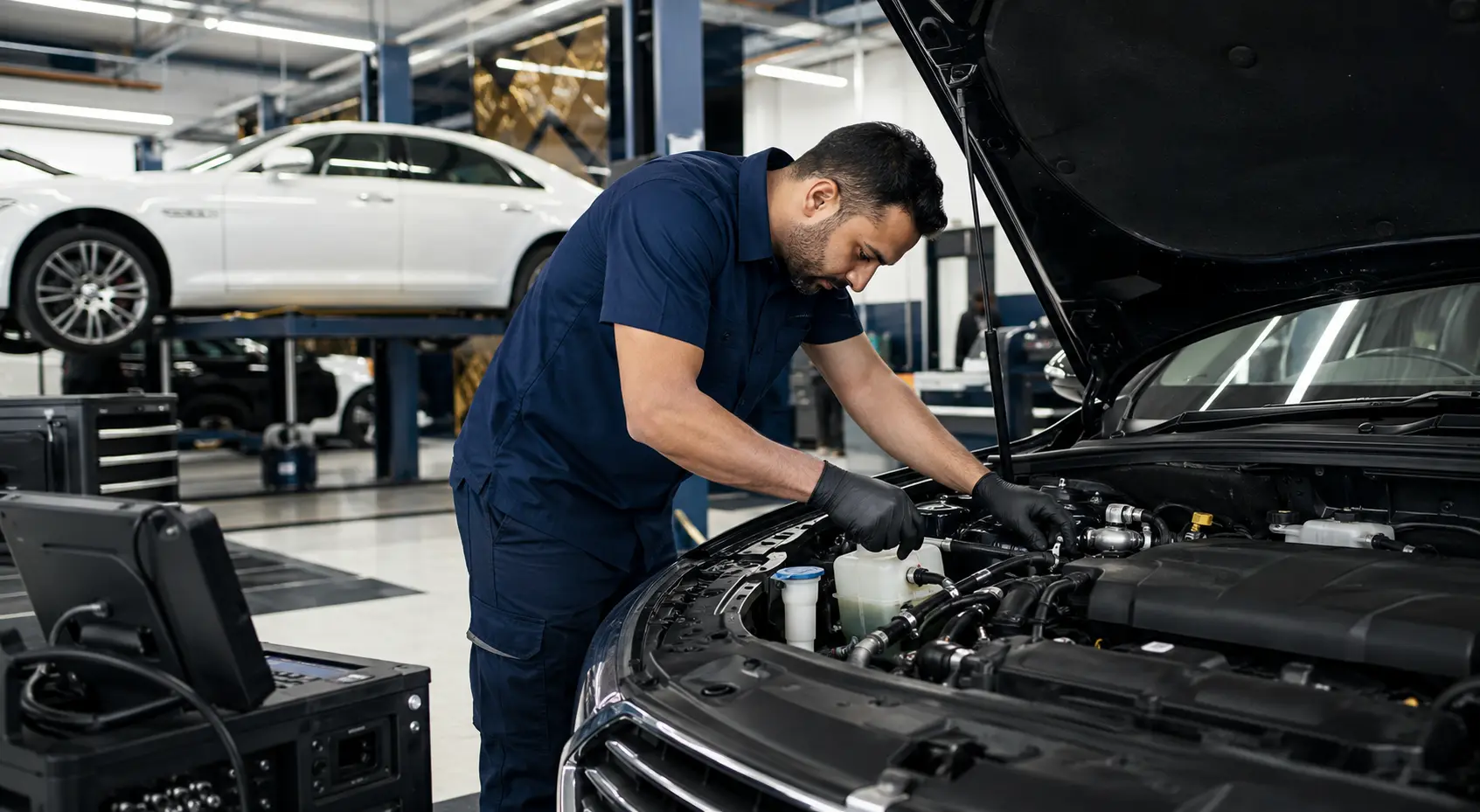
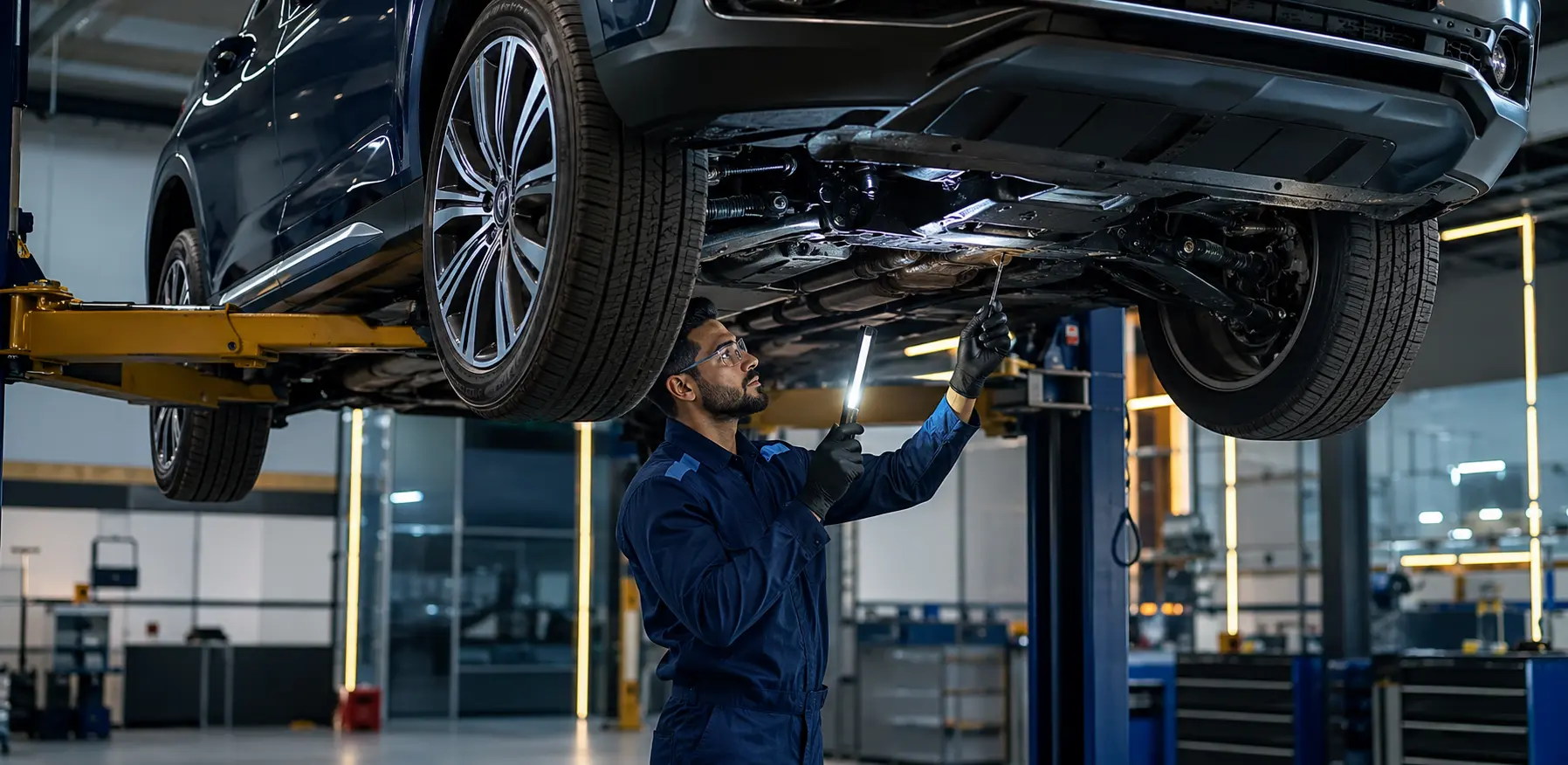
Useful photographs connect a finding to its location and context. They support your decision, but they are not proof of work performed on another customer vehicle and cannot show concealed condition.
What you can learn from the Porsche inspection
Your report separates what was observed from what is inferred. It also tells you which unresolved questions need records, extended testing, dismantling, or a Porsche-capable specialist before you commit money.
| Area | Typical observations | Decision value | Important limit |
|---|---|---|---|
| Vehicle identity and history | VIN, displayed mileage, model, visible specification, records and seller statements | Checks whether the vehicle presented matches the transaction brief | Does not authenticate every record or guarantee complete history |
| Body and paint | Finish, gaps, fasteners, seams, glass, lamps, paint-depth samples and underside clues | Shows visible repair patterns and areas needing closer review | Trim, films, replacement panels and hidden cavities can prevent a full view |
| Engine and cooling | Start, idle, smoke, noise, fluids, leakage, accessible hoses, response and temperature | Identifies present symptoms and diagnostic priorities | No dismantling, compression guarantee or remaining-life prediction |
| Transmission and driveline | Gear selection, clutch take-up, PDK operation, shifting, vibration, noise and leaks | Records behavior during the available test conditions | Temperature, route and intermittent faults may prevent a symptom from occurring |
| Suspension and steering | Ride height, visible leaks, bushes, joints, tires, steering response, modes and warnings | Connects wear patterns with handling and cost questions | Alignment geometry and internal damper condition need dedicated equipment |
| Brakes and wheels | Visible rotor and pad condition, tire dates, matching, wheel damage, warnings and braking | Highlights safety priorities and high-cost hardware | Visual inspection alone does not price PCCB wear or hidden damage |
| Diagnostics and functions | Warning state, accessible module faults, readiness context, controls, roof, AC, cameras and options | Shows functional loss, communication gaps and next tests | A scan does not find every mechanical fault or prove the cause of a code |
| Electric and hybrid systems | Warnings, charging interface, cooling, visible battery enclosure and accessible data | Frames battery, charging and import questions | No opening of high-voltage parts or independent capacity guarantee |
Why the road test matters in a Porsche
A road test is included only when permission, safety, registration, and the route allow it. The sequence matters because PDK behavior, cooling, vibration, suspension response, and warnings can change with temperature, load, speed, or drive mode.
Initial take-up
We observe selection, clutch or PDK engagement, steering effort, low-speed noises, brake feel, and warnings before traffic and temperature hide early clues.
Temperature build
We watch coolant or thermal warnings, fan behavior, shift quality, idle, and leakage clues as the Porsche moves away from a cold or settled state.
Controlled response
Where lawful and safe, we assess moderate acceleration, steering response, ride, vibration, and braking. The road test is an inspection step, not a performance demonstration or track evaluation.
Return check
After the drive, we recheck warnings, smells, visible leakage, fan activity, and any symptom that appeared. If a concern cannot be reproduced, the report says so instead of declaring it absent.
Choose the right setting for a Porsche Inspection in Dubai
Mobile and workshop settings can both be useful. We recommend the setting that can answer the important question about this Porsche. The wider mobile car inspection page explains seller-location access, road-test permission, and workshop escalation.
An initial pre-purchase assessment at a seller, dealer or private location.
Questions that depend on controlled access, lifting or closer underside visibility.
Identity, body condition, cabin functions, accessible engine areas, tires, warnings, compatible diagnostics and an authorized road test.
Underbody, cooling areas, leakage, suspension, exhaust, driveline and visible battery-enclosure condition.
Safe space, adequate light, keys, seller permission and a suitable route if driving is included.
Suitable workshop space, safe lifting points and equipment for the agreed checks.
Low ground clearance, site restrictions, traffic and lack of lift access can reduce confidence.
Sealed assemblies, internal gearbox wear and high-voltage modules remain concealed without authorized further work.

Turn the report into a clear decision
Do not judge the Porsche by the length of its defect list. Start with safety, identity, and purchase-critical findings, then consider unresolved diagnosis and future ownership costs. The detailed car inspection report guide shows how observations, limitations, and follow-up actions should be separated.
Priority 1 · Decision-critical
Structural repair evidence, serious tire or brake concerns, overheating behavior, major leakage, a high-voltage warning, a severe driveline symptom, or any condition that prevents safe road testing belongs at the top. Resolve it before cosmetic negotiation.
Priority 2 · Diagnose before commitment
Abnormal PDK behavior, a suspension warning, cooling residue, repeated module faults, uncertain PCCB condition, a charging concern, or an intermittent engine symptom may need a focused test or quotation before you can judge value.
Priority 3 · Budget and maintain
Aging matched tires, service-record gaps, minor paintwork, trim damage, weak convenience functions, and routine wear still affect ownership cost. They remain visible in the report without obscuring safety or transaction risks.
Prepare your Porsche for inspection
Good preparation gives the inspector safe access while preserving the symptoms and warning state you want investigated.
Send exact vehicle details
Send the model, year, VIN if available, GCC or import context, engine or electric powertrain, gearbox, known modifications, location, and whether you are buying, selling, or diagnosing the Porsche.
Do not clear warnings
Ask the seller not to erase fault codes, disconnect the battery, wash an active leak, or reset a symptom before the appointment. Missing evidence is noted, but the report will not guess why it is absent.
Bring records and equipment
Bring service invoices, repair quotations, spare keys, the wheel-lock key, and charging cables where applicable. We compare records with the vehicle, but do not treat documents as automatic proof.
Describe symptoms precisely
Tell us when the issue occurs, including vehicle temperature, road speed, gear, steering angle, load, drive mode, and warning message. “Vibration at 100 km/h after warming” creates a better test plan than “drives badly.”
Confirm safe access
The Porsche needs adequate fuel or charge, permission to inspect, access to locked areas, and a suitable route if a drive is included. Remove valuables and disclose location restrictions before the appointment.
Confirm the report details
Confirm the report format, photographs, scan information, explanation, total price, and exclusions. If you have a purchase deadline, tell us before booking so timing can be confirmed.
What affects Porsche Inspection in Dubai price and timing
What affects the inspection price
The quoted price depends on the exact Porsche, inspection purpose, location, access, diagnostic depth, road-test requirement, and whether workshop facilities are needed. Taycan, E-Hybrid, heavily optioned Turbo, and modified cars can require a more carefully defined scope.
Ask for a written scope and total price before booking. Your quotation should confirm whether travel, VAT, report delivery, photographs, diagnostic scanning, and a follow-up explanation are included. We do not publish a fixed figure here because the required access and depth can differ materially.
What affects the appointment time
Vehicle complexity, temperature state, access, warning count, module communication, repair evidence, and symptom reproduction can all affect inspection time. A straightforward car with complete records will not follow the same path as a Porsche with multiple faults or an intermittent hot-running concern.
No inspection can guarantee that every intermittent fault appears within the booked window. The useful result is a clear record of what was checked, what was observed, what remained limited, and which next test could reduce uncertainty.
Porsche Inspection in Dubai questions from customers
These answers define what the service can and cannot establish before you book.
What does a Porsche inspection include?
The agreed scope can cover identity, body and paint evidence, accessible engine and cooling areas, transmission behavior, suspension, steering, brakes, tires, underbody, cabin equipment, warning state, compatible diagnostics, and a permitted road test. Coverage depends on the Porsche, access, and booked package, so confirm the checklist and exclusions before booking.
Can a Porsche inspection confirm a PDK gearbox is healthy?
It can record selection, engagement, low-speed take-up, shift quality, vibration, leakage evidence, warnings, and accessible diagnostic information during the available conditions. It cannot guarantee remaining clutch, mechatronic, or internal gearbox life. Temperature-dependent or intermittent symptoms may need longer testing or focused workshop diagnosis.
Can paint readings prove the Porsche has never been in an accident?
No. Paint-depth samples support an assessment only when read with finish, edges, fasteners, seams, alignment, and underside evidence. Factory variation, repainting, replacement panels, protective film, and inaccessible areas can limit interpretation. The report describes observed repair evidence rather than promising a complete lifetime accident history.
How are PCCB ceramic brakes checked?
We can review visible rotor surfaces and edges, pad evidence, warnings, wheel condition, and braking behavior. Ceramic brake condition and replacement cost need careful interpretation, and appearance alone may not establish remaining service life. If the result could change your purchase, obtain a model-specific measurement or specialist quotation.
Can you inspect a Porsche Taycan battery?
A general Taycan inspection can cover identity, warnings, charging interface, visible battery enclosure, cooling context, tires, brakes, suspension, and accessible electronic information. It does not open the high-voltage battery or independently guarantee capacity, cell condition, future range, or charging performance. Confirm whether a separate battery report is available and what it actually measures.
Is a mobile inspection enough for a Porsche?
It can be useful for an initial purchase decision when the site provides safe space, good light, access, diagnostic communication, and road-test permission. It may be insufficient when underside impact, low clearance, leakage, suspension hardware, PCCB condition, or high-voltage protection needs lift access or controlled testing.
Does the diagnostic scan find every Porsche fault?
No. A compatible scan reads information exposed by supported modules. Mechanical wear may create no code, a code may have been cleared, communication can fail, and one code can have several causes. We compare scan results with physical observations, battery condition, warnings, and road behavior.
Can the inspection verify Porsche service history and mileage?
We can record displayed mileage and compare supplied documents with the vehicle for consistency. That does not authenticate the complete history or guarantee odometer accuracy. Official or workshop records must come from their legitimate sources, and manufacturer, government, or insurer database access should not be assumed.
Should the Porsche be cold when inspected?
A genuine cold start can reveal starting, smoke, noise, idle, and leakage behavior that changes after warming. PDK or cooling concerns may also require operating temperature. Tell us what matters before the appointment so the sequence can be planned, and do not warm the Porsche if a cold start was requested.
Does a Porsche inspection include repair prices?
The report can identify findings and sensible next actions. Exact repair pricing usually requires confirmation of cause, parts choice, labor scope, calibration or coding needs, and a workshop quotation. We will not invent a precise internal repair cost when dismantling or focused diagnosis has not been completed.
Can the report guarantee the Porsche will remain reliable?
No. The inspection records accessible condition and behavior within the agreed time and scope. Concealed parts, intermittent symptoms, and future failures remain possible. Use the report to reduce uncertainty, prioritize specialist tests, and plan ownership costs. It is not a warranty or remaining-life prediction.
Book a Porsche Inspection in Dubai
Send the model, year, location, VIN if available, powertrain, known concerns, and whether you are buying or diagnosing the car. We will help define the right mobile or workshop scope before you book.